
Let's face it — most of us would rather do almost anything than think about tax planning. But when a windfall hits your bank account, suddenly tax considerations can take center stage in your financial life.
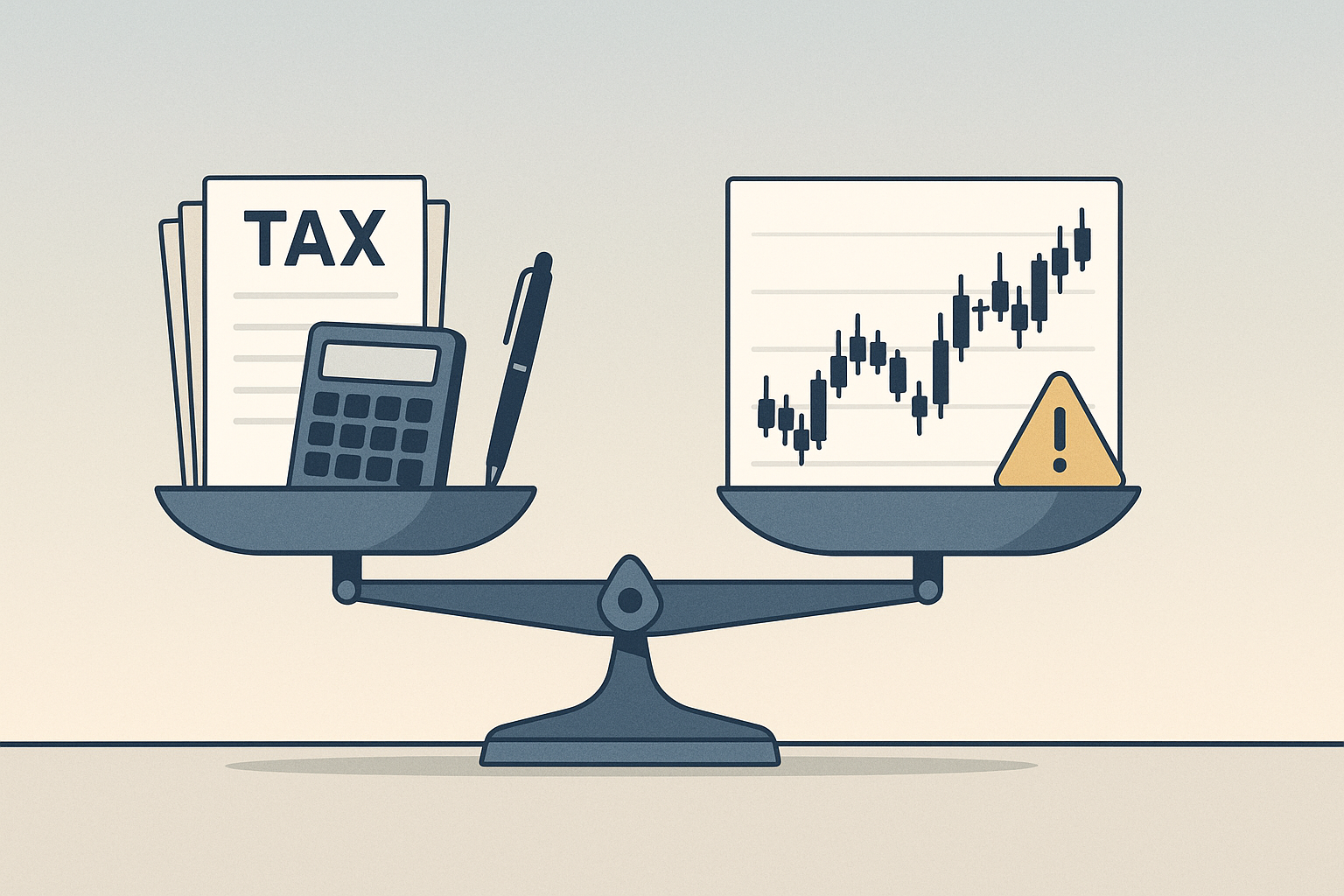
I've been advising readers on tax and investment strategies for years, and few questions capture the tension between the two as perfectly as this one: Should you deliberately take on riskier investments when you're facing an unusually high tax bill, knowing you could harvest any losses against that income spike?
It's an enticing proposition. After all, who doesn't like the idea of Uncle Sam subsidizing your investment gambles?
But hold on a minute. There's more to unpack here than meets the eye.
The Windfall Dilemma
When you experience what tax pros call a "lumpy income event" — like selling a business, receiving a massive bonus, or cashing in long-held stock options — your tax situation changes dramatically. Suddenly you're swimming in higher tax brackets than usual, which creates a unique (if temporary) set of incentives.
Tax-loss harvesting is nothing new. It's a time-honored tradition of selling investments at a loss to offset capital gains or up to $3,000 in ordinary income annually. In normal circumstances, it's practically financial planning gospel.
But what our reader is suggesting is something altogether different.
This isn't just regular tax-loss harvesting. It's deliberately cranking up the risk dial on investments because losses would carry a built-in government discount. That's the financial equivalent of driving faster in a rental car — when someone else bears part of the risk, behavior changes.
The Mathematical Mirage
Here's where things get interesting (if you're the type who finds tax arbitrage interesting, and hey, I've been to enough cocktail parties to know some people genuinely do).
When the government is essentially providing a 37% rebate on your investment losses through tax deductions, investments with shakier prospects suddenly look more mathematically attractive. A potential loss of $10,000 only feels like $6,300 out of your pocket after tax benefits. It's like having a partial insurance policy on your worst investments.
This creates what I'd call a "mathematical mirage" — the temporary illusion that you should accept lower expected returns because your downside is partially protected.
But... (and this is a big "but")... the market doesn't price assets based on your particular tax situation. Everyone else bidding on those same investments isn't enjoying your special tax circumstances. They're demanding proper risk premiums regardless of your one-time tax situation.
Why It Usually Fails in Practice
I spoke with several financial advisors who've seen clients attempt variations of this strategy. The results? Almost universally disappointing.
First, there's the timing problem. To capture tax benefits against this year's high income, you'd need to both make investments now AND realize any losses before tax filing time. That compressed timeline often leads to forced selling at inopportune moments.
"Clients start with tax benefits in mind but forget they're still losing real money," explained one advisor who requested anonymity to speak candidly about client mistakes. "A tax deduction only softens the blow of a bad investment; it doesn't make it good."
Then there's the psychological trap. Once you start viewing potential losses as "tax-subsidized," you're liable to choose investments with insufficient due diligence. The tax tail starts wagging the investment dog, as they say in the planning world.
Look, I get the appeal. Who doesn't want to feel like they've discovered a clever financial hack? But in my experience, investment decisions driven primarily by tax considerations rather than underlying economic merit rarely end well.
Smarter Alternatives for Your Windfall Year
Instead of using a high-income year to justify rolling the dice on risky ventures, consider these alternatives that tax professionals actually recommend:
Front-load deductible expenses. If you're charitably inclined, bunch several years of giving into your high-income year. If you own a business, accelerate deductible purchases you'd make anyway.
Max out retirement vehicles. Beyond the standard 401(k) limits, high-income years might justify exploring cash balance plans or other advanced retirement structures.
Consider tax-advantaged investments that align with your existing strategy. Certain renewable energy investments or Opportunity Zone funds offer tax benefits without requiring a fundamental shift in your risk tolerance.
Harvest losses from existing investments rather than creating new speculative positions just for tax purposes.
Having reviewed countless financial plans over the years, I've noticed a pattern: The most successful investors maintain consistent investment philosophies regardless of temporary tax situations. They adapt around the edges but don't fundamentally change their approach based on one year's tax bill.
The Verdict
Is our reader being foolish for contemplating this strategy? Not at all. Thinking critically about the intersection of taxes and investments puts them ahead of most Americans.
But there's a world of difference between smart tax planning and letting tax considerations drive investment decisions. One builds wealth consistently over time; the other... well, it makes for interesting tax return stories, but rarely builds lasting wealth.
The highest-returning investment strategy isn't the one that saves the most taxes this year — it's the one that survives and compounds over decades, through bull markets and bear markets alike.
And that's something no tax strategy, however clever, can replace.


