
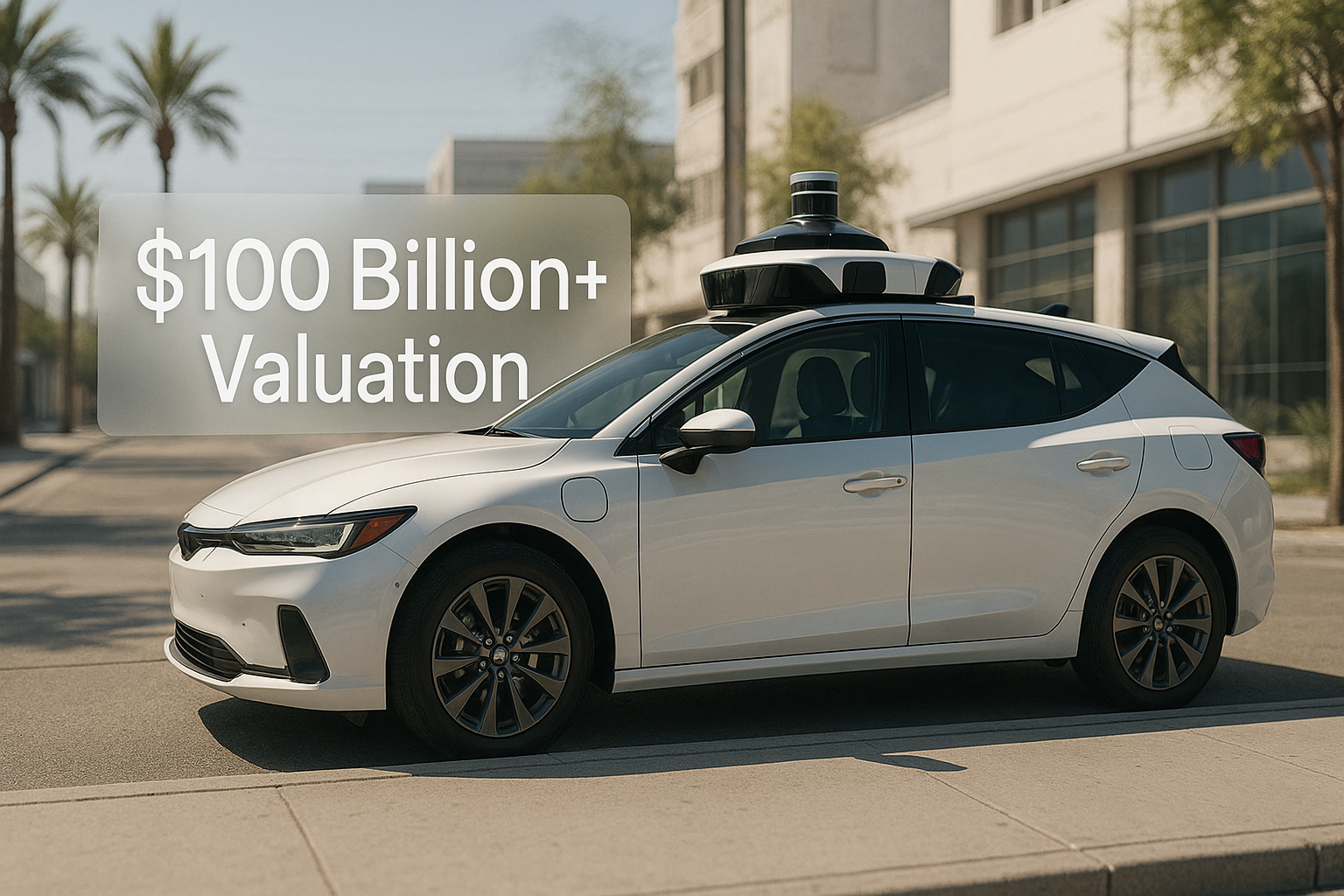
Waymo's reportedly seeking a fresh round of funding at a valuation exceeding $100 billion – a figure that should make anyone who's been watching the autonomous vehicle space do a double-take. Not because it's surprising, mind you, but because it highlights just how expensive the self-driving dream has become, even for a company backed by Google's parent Alphabet.
I've covered transportation tech for years, and if there's one constant, it's that autonomous vehicles always need more money. Always.
The pattern has become predictably cyclical. First comes a breakthrough demonstration. Then the glossy videos of cars navigating tricky scenarios without human hands on the wheel. Finally arrives the inevitable funding round with numbers so large they seem plucked from federal budget discussions rather than corporate finance.
What makes Waymo different (and perhaps worth that eye-watering valuation) is that they've actually got working robotaxis ferrying real passengers around Phoenix and San Francisco. No small feat.
But $100 billion? That's roughly half the combined value of GM, Ford, and Volkswagen – established automakers that, you know, make millions of actual cars people buy. Waymo's operating in a handful of neighborhoods where the sun shines 300+ days a year and the streets are mapped down to the inch.
There's something happening here that economists might call the "we're-not-completely-theoretical-anymore premium." Once these moonshot technologies start generating even modest revenue, investors tend to get... excited. Perhaps overly so.
The timing isn't coincidental. GM's Cruise unit has hit serious turbulence (to put it mildly) after one of their vehicles dragged a pedestrian in San Francisco last year. Operations halted, executives departed, investigations launched. It's the kind of scenario that creates a temporary leadership vacuum – and Waymo seems determined to fill it.
Let's be honest about the competitive landscape though. Tesla keeps promising "full self-driving" with the regularity of political campaign promises. Meanwhile, Chinese competitors like Baidu and WeRide are making substantial progress on their home turf. And don't forget about Zoox, Mobileye, and about fifteen other companies whose names sound like they were created during a Silicon Valley branding hackathon.
(I attended a transportation tech conference last spring where I counted no fewer than seven companies with the word "motion" in their name. Creativity isn't always the industry's strong suit.)
What fascinates me about this funding push is the tension between what Waymo has accomplished technologically – which is genuinely impressive – and the still-murky path to profitability.
The economic equation for robotaxis presents a genuine head-scratcher. Remove the driver, and you eliminate the biggest expense in ride-hailing. Simple, right? Except the technology package needed to replace that human costs about as much as a house in most American cities, plus it requires constant updates, maintenance, and remote monitoring.
At some point, this has to work... right? Transportation represents trillions in global economic activity. If you can crack the self-driving code, the potential market is massive. But potential doesn't pay the bills.
The question investors should be asking isn't whether Waymo can build autonomous vehicles – they've proven they can – but whether they can build a business model that doesn't require continuous capital infusions.
A $100 billion+ valuation suggests incredible confidence that Waymo won't just lead this revolution but capture enormous value from it. That seems... optimistic? The business remains incredibly capital-intensive, and competition gets fiercer by the quarter.
Then again, I remember when everyone thought Facebook overpaid wildly for Instagram at $1 billion. Sometimes the future arrives faster than spreadsheet projections suggest. And technologies that seem perpetually "almost ready" can suddenly cross the finish line when you're not looking.
As Waymo passes around the fundraising hat once again, they're not just asking investors to bet on their technology. They're asking for a $100 billion vote of confidence that robot taxis can transform from fascinating tech demos into sustainable businesses.
I, for one, am buckling up for what promises to be an interesting ride.


