
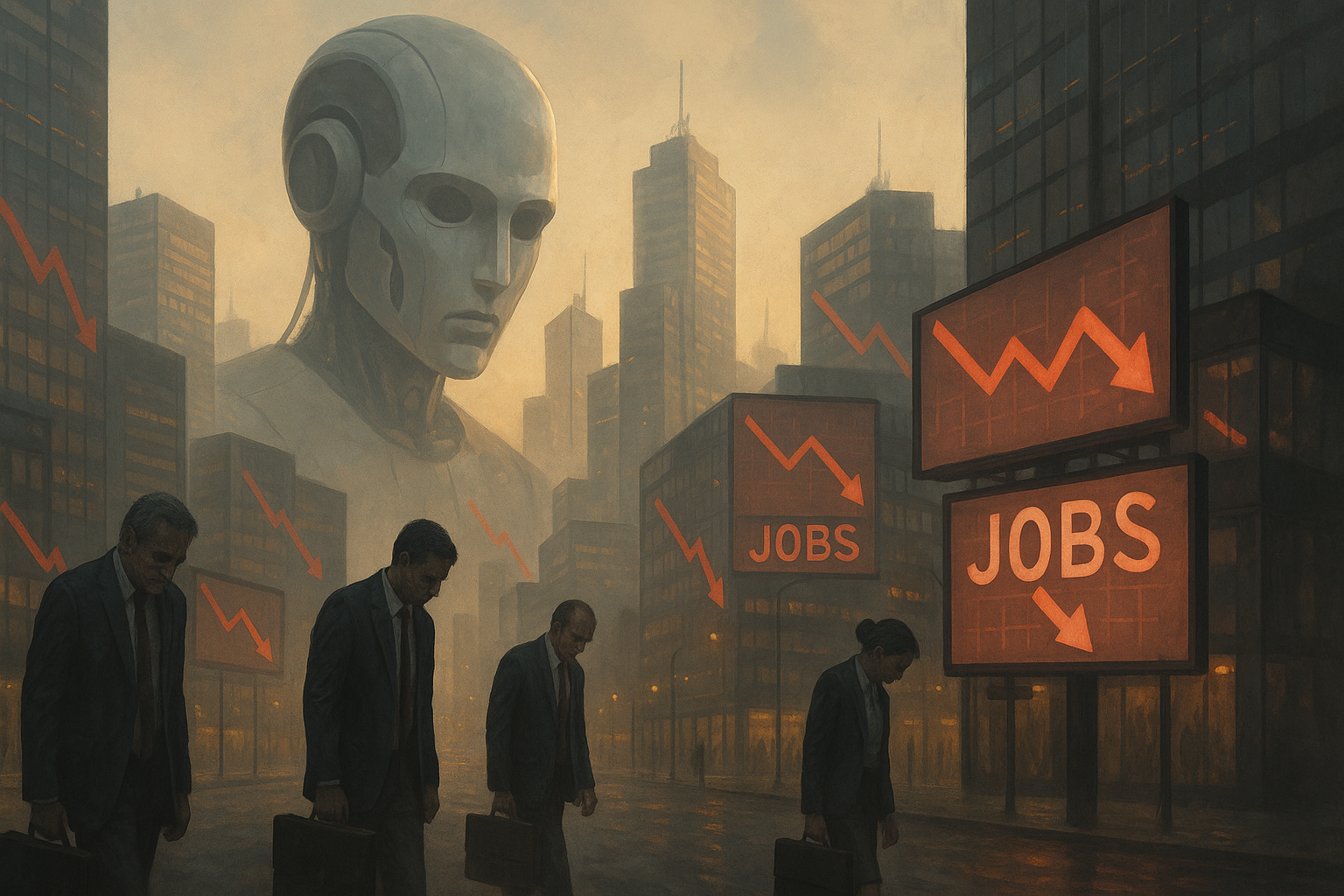
Howard Marks is freaking people out about artificial intelligence. And maybe we should listen.
The billionaire co-founder of Oaktree Capital Management just dropped what amounts to a financial sector bomb—calling the employment outlook under AI "terrifying" in a blog post that had investment types choking on their morning lattes. When the guy managing $170 billion starts using apocalyptic language, it's probably worth our attention.
I've followed Marks' career for years, and if you know anything about him, you know he's not exactly prone to Chicken Little proclamations. His investor memos are typically the financial equivalent of chamomile tea—thoughtful, measured, even soothing. So this sudden turn toward existential dread? That's new territory.
What's got Marks so worked up isn't just the standard "robots will take our jobs" argument that's been floating around since, well, forever. No—he's digging deeper into something economists haven't fully reckoned with: even if AI delivers this miraculous productivity boom everyone keeps yammering about, who's gonna be left with enough money to buy all the stuff we're producing?
It's a demand-side problem, plain and simple. (And one that's surprisingly overlooked in most AI discussions.)
The traditional economic story goes something like this: technology displaces some workers, creates new opportunities elsewhere, and eventually everyone's better off. But Marks is questioning whether that happy ending still applies when the benefits flow primarily to what he calls a "small number of highly educated multi billionaires living on the coasts" while "putting millions out of work."
That's not creative destruction. That's just destruction.
Look, technological revolutions have always created winners and losers. Nothing new there. What's different this time—and I think this is what's keeping Marks up at night—is both the pace and the nature of the disruption.
Previous waves of automation primarily replaced physical labor. AI comes for your brain. When machines can write, analyze, design, code, and even create art, where exactly are all those displaced knowledge workers supposed to go? The "just learn to code" advice becomes a sick joke when the AI does that better than you too.
What's particularly striking about Marks joining the doom chorus is that he represents a breed of investor not typically given to pessimistic forecasts. Unlike perma-bears who've built their brands on predicting financial apocalypse, Marks has cultivated a reputation as a clear-eyed realist—someone who sees opportunity while acknowledging risk.
(I met him briefly at a conference in 2019, and even then he struck me as unusually balanced in his worldview. Not the type to panic.)
So when someone with that temperament starts throwing around words like "terrifying," it suggests the conversation in financial circles is evolving beyond the simplistic "disruption equals opportunity" framework we've heard ad nauseam.
Of course, plenty of economists still maintain that technology always creates more jobs than it destroys. We can't imagine tomorrow's opportunities, they argue. Could a 19th-century blacksmith have envisioned becoming a social media manager or drone pilot?
Fair point. But it assumes two things: that transitions happen at a manageable pace, and that productivity gains eventually filter through the broader economy. Neither is guaranteed with AI.
And here's what I think Marks is really getting at—something more fundamental than employment numbers. He's worried about a fracturing of the social contract that's underpinned modern capitalism. The bargain has always been that creative destruction ultimately benefits society broadly, even if specific sectors temporarily suffer. If AI creates a world where productivity soars but the gains flow overwhelmingly to capital rather than labor... well, that bargain falls apart.
The consequences? As Marks suggests, probably even more extreme versions of the populist movements already reshaping politics across the developed world.
Not exactly a comforting thought for long-term investors. Or, you know, anyone who values democratic stability.
Then again, maybe I should stop writing articles about AI and start building my own algorithm-powered investment fund. At least then I'd be on the winning side of whatever comes next.
Nah. Some of us still prefer the human touch—terrifying economic forecasts and all.


