
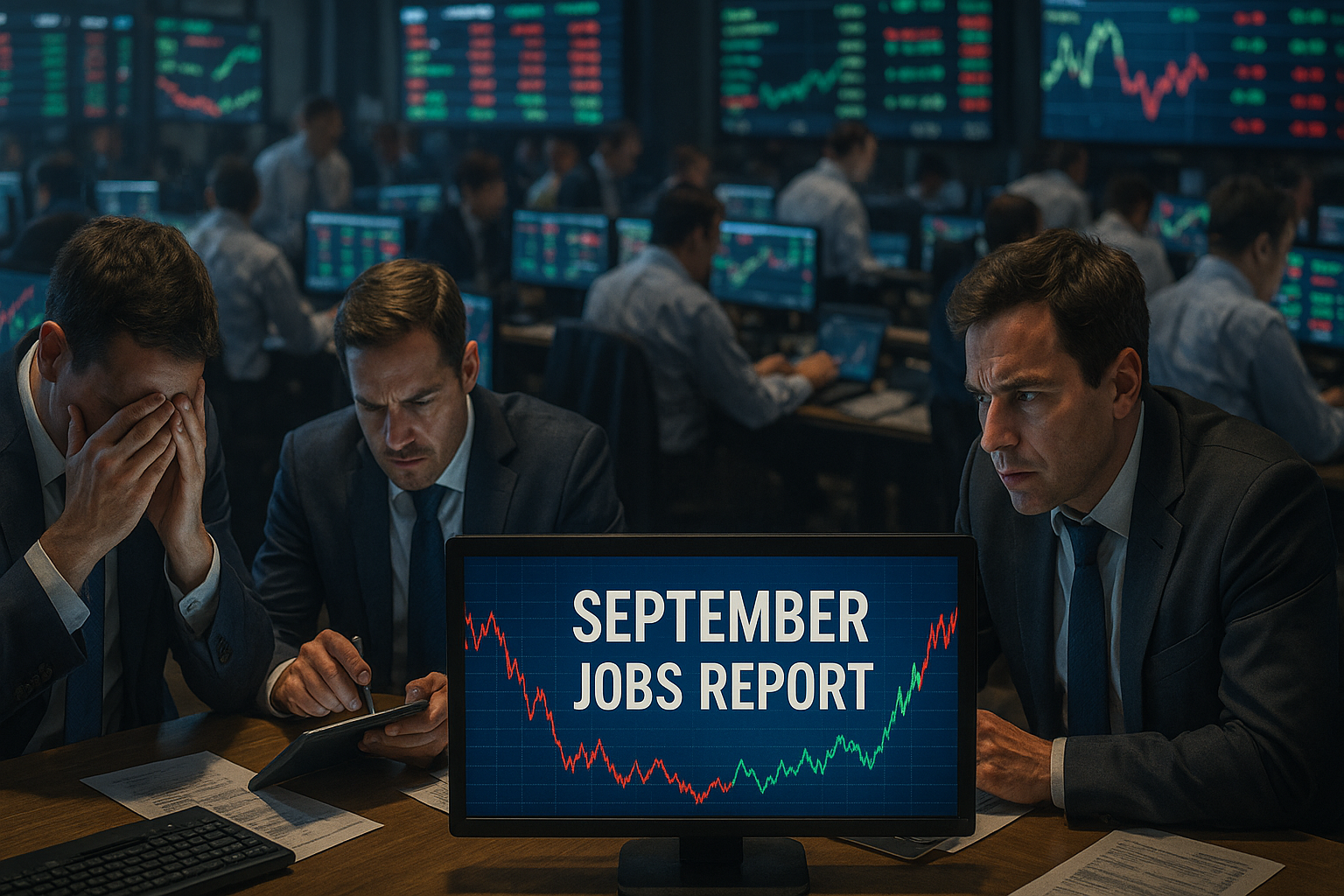
Tomorrow's September jobs report has Wall Street in a peculiar psychological bind. Traders are preparing for what might be the ultimate no-win scenario—a data release where literally every possible outcome carries downside risk.
I've been covering market reactions to economic data for years, and this one feels different. There's an unusual tension in the air, a sense that we've backed ourselves into an economic corner where the normal rules no longer apply.
Here's the twisted reality we're facing: If unemployment ticks up significantly? That theoretically helps the Fed justify more aggressive rate cuts in December—something markets typically celebrate. But (and this is a massive but) higher unemployment also signals the economy might be deteriorating faster than expected. Cue the immediate recession fears, earnings forecast reductions, and... yep, selling pressure.
So that's bad.
But what if jobs data comes in strong? Wouldn't that be good news?
Nope. Not anymore.
Strong employment figures would undermine the case for the Fed's rate-cutting cycle that markets have already priced in. Wall Street has developed such an addiction to monetary accommodation that anything threatening that sweet, sweet dopamine hit of easy money sends traders into what one portfolio manager I spoke with called "withdrawal tantrums."
"We're caught in this bizarre feedback loop," explained a chief strategist at a major investment bank who asked not to be named. "The market now actively roots against American workers keeping their jobs if it means getting an extra quarter-point rate cut. That's... not healthy."
Look, there was a time—and it wasn't that long ago—when strong economic data was actually considered positive for markets. Remember those days? Companies making money, people having jobs, wages rising—these used to be good things! Now we've created this warped paradigm where traders practically cheer for economic distress.
I call it the "Monetary Policy Doom Loop." And we're trapped in it.
What's particularly striking about this whole situation is that by historical standards, the American economy has performed remarkably well. Unemployment has stayed below 4.5% for years while inflation has moderated substantially. That's economic policy gold in normal times!
But markets don't trade on absolute performance. They trade on expectations and marginal changes.
The real comedy (if you appreciate dark humor) is watching market strategists attempt to predict which flavor of market pain might be milder tomorrow. They're like meteorologists trying to forecast which side of the boat will get less wet in a hurricane.
"If jobless claims rise but wage growth moderates, and participation rates hold steady, perhaps we only drop 1.2% instead of 2.4%!" one analyst wrote in a note to clients this morning.
It's exhausting. And kind of absurd.
For investors actually trying to navigate this mess... well, maybe the best approach is stepping back and remembering that single data points—even important ones—rarely change the long-term trajectory of fundamentally sound businesses.
As a grizzled trader told me years ago during a similarly neurotic market moment: "The jobs report comes, the jobs report goes, but the idiocy of short-term market reactions is eternal."
Words to live by.
So brace yourself for tomorrow's inevitable volatility. Keep some cash ready for potential opportunities if quality stocks get unfairly punished. And take comfort in knowing that absolutely everyone else is just as confused as you are.
That shared bewilderment might be the only certainty the market offers tomorrow.


