
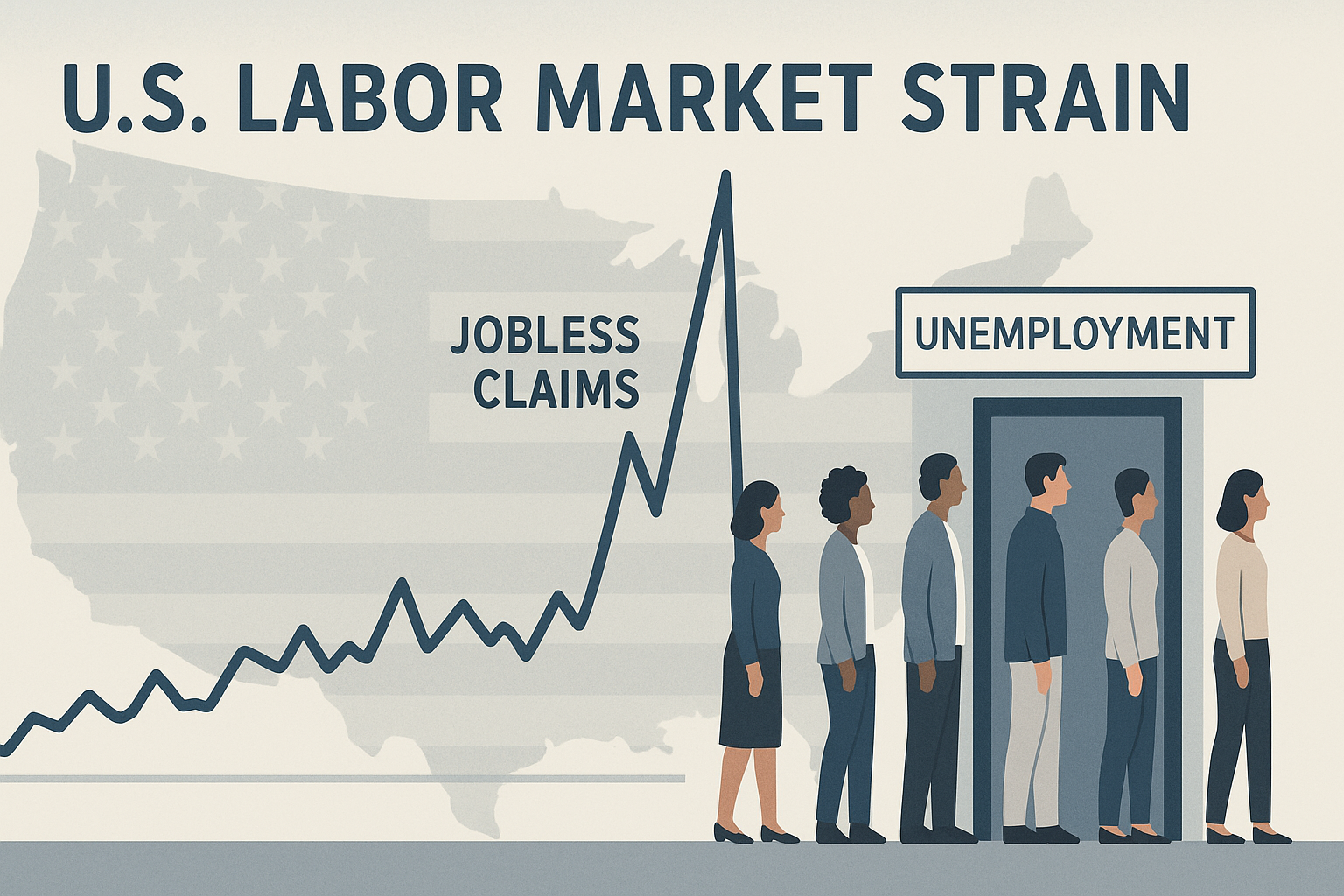
Initial jobless claims in the United States unexpectedly jumped to their highest level in nearly four years last week, catching economists off guard and potentially signaling a turning point in what has been a remarkably resilient labor market.
The Labor Department reported Thursday that 261,000 Americans filed for first-time unemployment benefits—a sharp increase from the previous week and significantly above the 215,000 economists had predicted. It's the highest weekly total since September 2021, when the economy was still clawing its way back from pandemic disruptions.
Markets reacted swiftly. Treasury yields dropped as investors bet the Federal Reserve might need to cut interest rates sooner than expected. Stocks wobbled but ultimately held steady—typical market schizophrenia when bad economic news might actually mean good news for monetary policy.
Look, one week doesn't make a trend. We've seen blips in this data before.
But there's something about this particular jump that feels different. For starters, it's not isolated to any single industry or region. The increase appears broadly based, which is precisely the kind of pattern that makes economists nervous. When layoffs spread beyond pockets of weakness, it often suggests deeper structural issues taking hold.
I've been tracking labor market data for over a decade, and these numbers definitely raised my eyebrows.
"This is concerning, but not yet alarming," said Jennifer Harris, chief economist at Capital Research Group, when I called her for comment. "We're seeing what might be the first real cracks in what has been an extraordinarily tight labor market. But the unemployment rate remains at 3.7%—historically very low."
That's the puzzle, isn't it? The headline unemployment rate remains enviable by historical standards, yet these initial claims—which tend to be a leading indicator—are flashing warning signs.
The timing couldn't be more awkward for the Federal Reserve. Just as policymakers were patting themselves on the back for potentially engineering that elusive "soft landing" (a term I've grown increasingly skeptical of with each passing Fed meeting), the labor market throws them this curveball.
Jerome Powell and company now face a delicate balancing act. Cut rates too quickly, and they risk reigniting inflation. Wait too long, and a deteriorating job market could tip the economy into recession.
"The Fed is probably secretly relieved," Harris suggested. "They've been waiting for the labor market to cool off. Though I doubt they wanted quite this much cooling this quickly."
The employment situation has been, frankly, weird for years now. The pandemic scrambled normal labor market dynamics in ways economists are still struggling to understand. Remember the "Great Resignation"? The "quiet quitting" phenomenon? The bizarre coexistence of labor shortages alongside layoff announcements?
None of it has followed the textbook.
So what should we make of this latest development? There are essentially two competing narratives.
The optimistic view: This is simply a healthy normalization after years of unsustainable tightness in the labor market. Companies that over-hired during the pandemic boom are right-sizing. In this scenario, a modest uptick in unemployment actually helps the economy achieve better balance.
The pessimistic take: Initial jobless claims have historically been one of our most reliable canaries in the economic coal mine. When they start rising meaningfully, trouble usually follows. Every recession in modern history has been preceded by an uptick in claims... though not every uptick in claims has led to recession. (An important distinction!)
The truth? Probably somewhere in between.
What's particularly striking about economic narratives is how quickly they can shift. Just weeks ago, the conversation centered on whether the Fed might delay rate cuts entirely because the economy was running too hot. Now we're discussing whether they might need to accelerate their cutting schedule.
The economy hasn't changed that dramatically in a month—but our perception of it sure has.
Next week's comprehensive jobs report should provide more context. If payroll growth remains solid and wage pressures moderate, this claims number might look like an outlier in retrospect.
But if there's one thing covering economics has taught me, it's that transitions rarely unfold as smoothly as forecasters project in their neat little models. The path from here to there typically has a few unexpected detours.
We might be hitting one now.


