
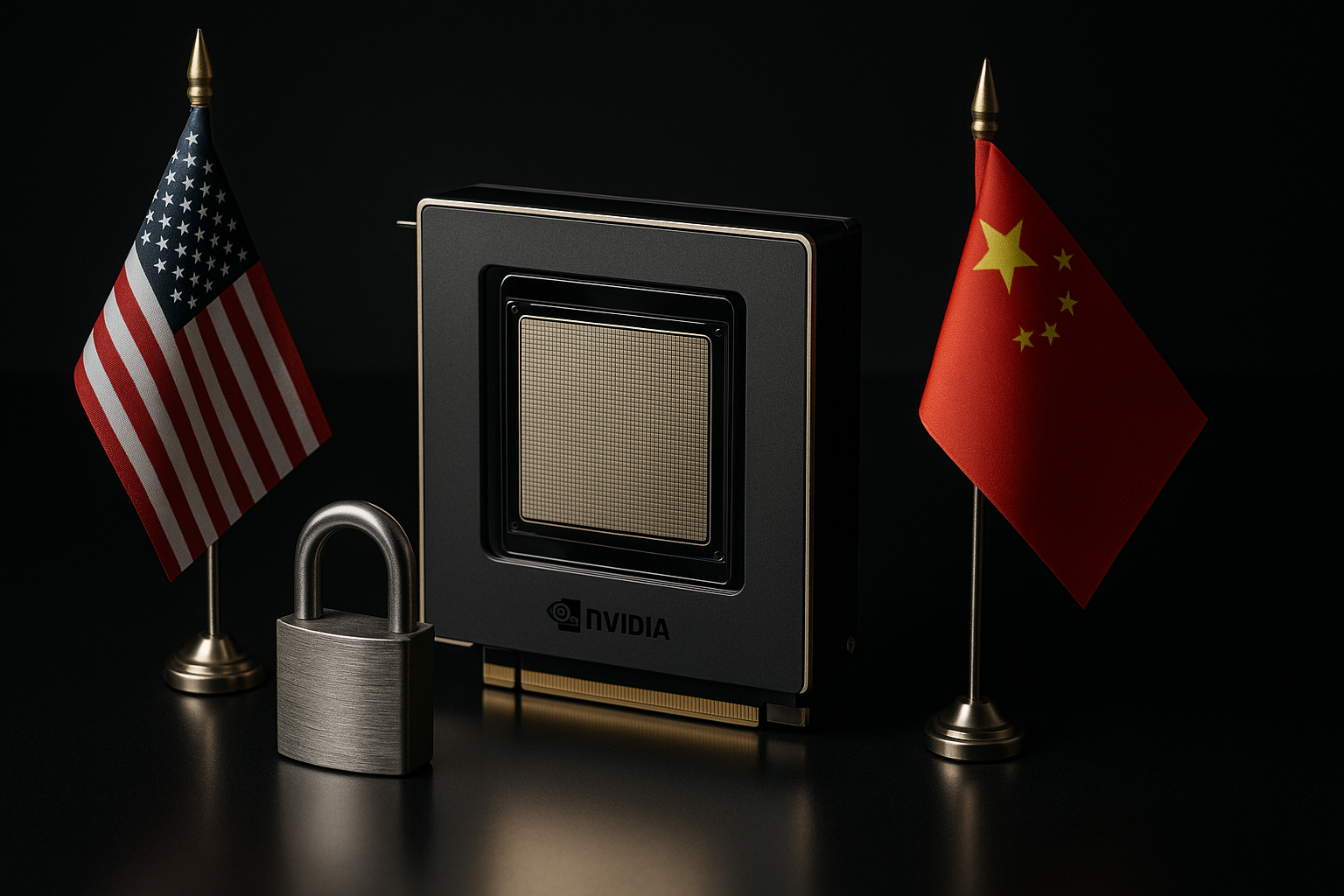
Former President Donald Trump took aim at one of the tech world's hottest geopolitical flashpoints yesterday, declaring that China and other foreign adversaries should be blocked from getting their hands on Nvidia's advanced AI chips.
Speaking to supporters at a Michigan campaign rally, Trump veered from his usual talking points to wade into semiconductor politics—hardly standard campaign fare, but increasingly central to U.S.-China relations.
"We can't let China get these chips. They're stealing everything else, we can't let them have our AI too," he told the crowd. "Nvidia makes the best chips, incredible chips, everyone says so, and China wants them badly."
Look, I've been covering tech policy since the first Trump administration, and what's remarkable here isn't the position itself—it largely mirrors existing Biden administration export controls—but rather the rare flash of bipartisan consensus it represents. Both administrations have targeted China's access to cutting-edge semiconductors, though Trump hinted he'd push for even tighter restrictions.
The timing is fascinating. Nvidia has emerged as Wall Street's AI darling, with its market cap rocketing beyond $2.5 trillion earlier this year on the strength of its H100 and upcoming Blackwell chips—the gold standard for training those massive AI models everyone's talking about.
What we're witnessing is a collision between Silicon Valley's global business ambitions and Washington's growing techno-nationalism. These aren't just components for faster PlayStation graphics anymore (remember when that's what we used GPUs for?). They're the fundamental building blocks of systems that could reshape military capabilities and economic hierarchies for decades.
I've spoken with semiconductor executives who privately acknowledge the complexity of their position. They're caught between shareholder demands for growth—which would typically mean selling to every possible customer—and increasing pressure to act as de facto national security assets.
The Chinese government, meanwhile, isn't exactly sitting on its hands. They've poured billions into domestic chip development through companies like SMIC, with... well, let's call the results "mixed" so far. But history suggests technological containment strategies merely delay rather than prevent capability development.
(Just ask anyone who studied how quickly the Soviet Union developed nuclear capabilities despite Western attempts to maintain a monopoly.)
For investors trying to make sense of all this, the calculation gets complicated. Restricted access to Chinese markets caps Nvidia's potential sales—obviously not ideal. But those same restrictions could hamstring Chinese competitors and preserve Nvidia's technological edge longer.
The market has generally viewed the tech decoupling as positive for American semiconductor leaders. Just look at their stock performance since export controls began—though I'd argue some of that optimism fails to account for the inevitable long-term consequences of fragmenting global innovation.
There's something almost ironic about watching politicians who champion free markets and deregulation in domestic policy transform into interventionists the moment international technology transfer enters the conversation. National security trumps laissez-faire economics, I guess, even among the market's biggest cheerleaders.
The semiconductor industry has effectively become a matter of national priority rather than just private enterprise. For decades, globalization pushed toward integrated supply chains and international cooperation. Now we're witnessing the deliberate construction of parallel technology ecosystems—a process guaranteed to be messy, expensive, and rife with unintended consequences.
Meanwhile, Nvidia continues selling every chip it can manufacture—just not to everyone who wants to buy them. Which, if you're a shareholder checking your portfolio lately, seems to be working out just fine.
At least for now.


