
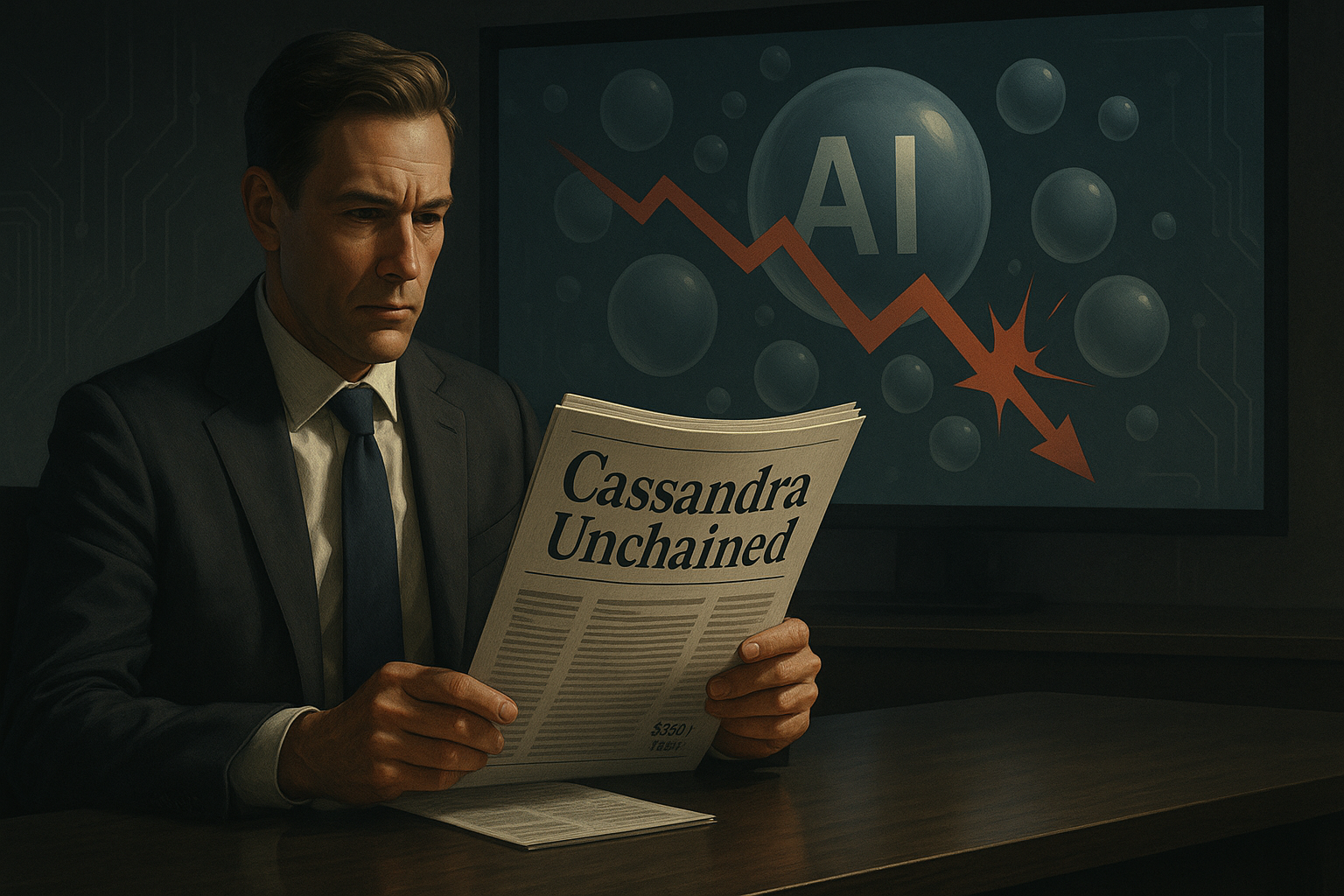
Michael Burry—yes, that Michael Burry—has decided to cash in on his pessimism.
The famously reclusive investor, immortalized by Christian Bale's twitchy portrayal in "The Big Short," has launched a subscription newsletter. If you want Burry's latest apocalyptic market predictions, it'll cost you a cool $379 a year. He's named it "Cassandra Unchained," which, honestly, might be the most on-brand thing I've seen in finance this year.
Look, Burry's entire career has been built on seeing disasters before anyone else. Now he's focusing his doom-colored glasses on what he considers the AI bubble inflating across markets. And he wants you to pay to hear about it.
I've followed Burry's career for years, and this pivot makes perfect sense. Instead of managing other people's money (with all the regulatory headaches that entails), he's selling his thoughts about money. The margins are better. The paperwork is lighter. And he still gets to be the smartest pessimist in the room.
The timing here? Absolutely fascinating.
Burry has been dropping breadcrumbs about his AI skepticism on X (formerly Twitter), where his 1.6 million followers frantically decode his cryptic posts before they vanish—Burry famously deletes most tweets within hours. Just as AI stocks reach stratospheric valuations, he's decided these particular thoughts are premium content.
"Feb 21, 2000: SF Chronicle says I'm short Amazon. Greenspan 2005: 'bubble in home prices … does not appear likely.' [Fed Chair Jerome] Powell '25: 'AI companies actually… are profitable… it's a different thing,'" Burry wrote on X, essentially creating a greatest-hits album of bubble denials he's proven wrong.
There's a brilliant structural argument here. Burry is essentially saying: I was right about dot-com (Amazon crashed before its eventual rise). I was right about housing when Fed Chair Greenspan was wrong. Now Powell is playing the Greenspan role with AI—another highly respected central banker making reassuring noises about a market segment that's heading for trouble.
The whole "this time is different" argument about AI companies' profitability? That's exactly the kind of distinction-without-difference that preceded previous crashes.
But here's where it gets really interesting (and slightly ironic).
Burry is launching this subscription business during what many are calling a creator economy correction. Substack—the platform he's using—recently laid off staff. Many newsletter writers report their subscription growth is flattening. Yet Burry probably isn't worried about those trends. His target customers—investment professionals and wealthy individuals anxious about their exposure to AI investments—will likely view $379 as cheap insurance for insights from finance's most celebrated contrarian.
There's something almost poetic about Burry targeting AI specifically. The man made his name by meticulously reading mortgage documentation that everyone else ignored. Now he's skeptical of technology that promises to make such human diligence unnecessary.
Burry's investment approach has always been about doing work others won't do—reading footnotes, questioning consensus, looking where others aren't. Technology that suggests we can automate that process? No wonder he's suspicious.
By deregistering his fund, Burry's no longer required to file quarterly 13F forms disclosing his positions. This creates a fascinating information asymmetry—his subscribers now become the exclusive audience for his market views. He's privatized his investment thesis.
Will he be right again? That's the $379 question.
The AI landscape does share uncomfortable similarities with previous bubbles—exponential growth projections, massive capital expenditures with uncertain payoffs, and that ubiquitous "this changes everything" narrative. Companies like Nvidia are trading at valuations that assume perfect execution for years to come.
But being early has often been Burry's curse. His housing market shorts nearly bankrupted him before making him wealthy and famous. His more recent bearish calls have been... mixed at best.
The beauty of the subscription model is that it gives him different incentives than fund management. He doesn't need to time markets precisely anymore—he just needs to be interesting enough that subscribers feel they're getting their money's worth. In that way, he's positioned himself to profit from bubble anxiety regardless of whether or when the bubble actually pops.
The prophet of doom finally found the perfect business model: getting paid to prophesy.


