
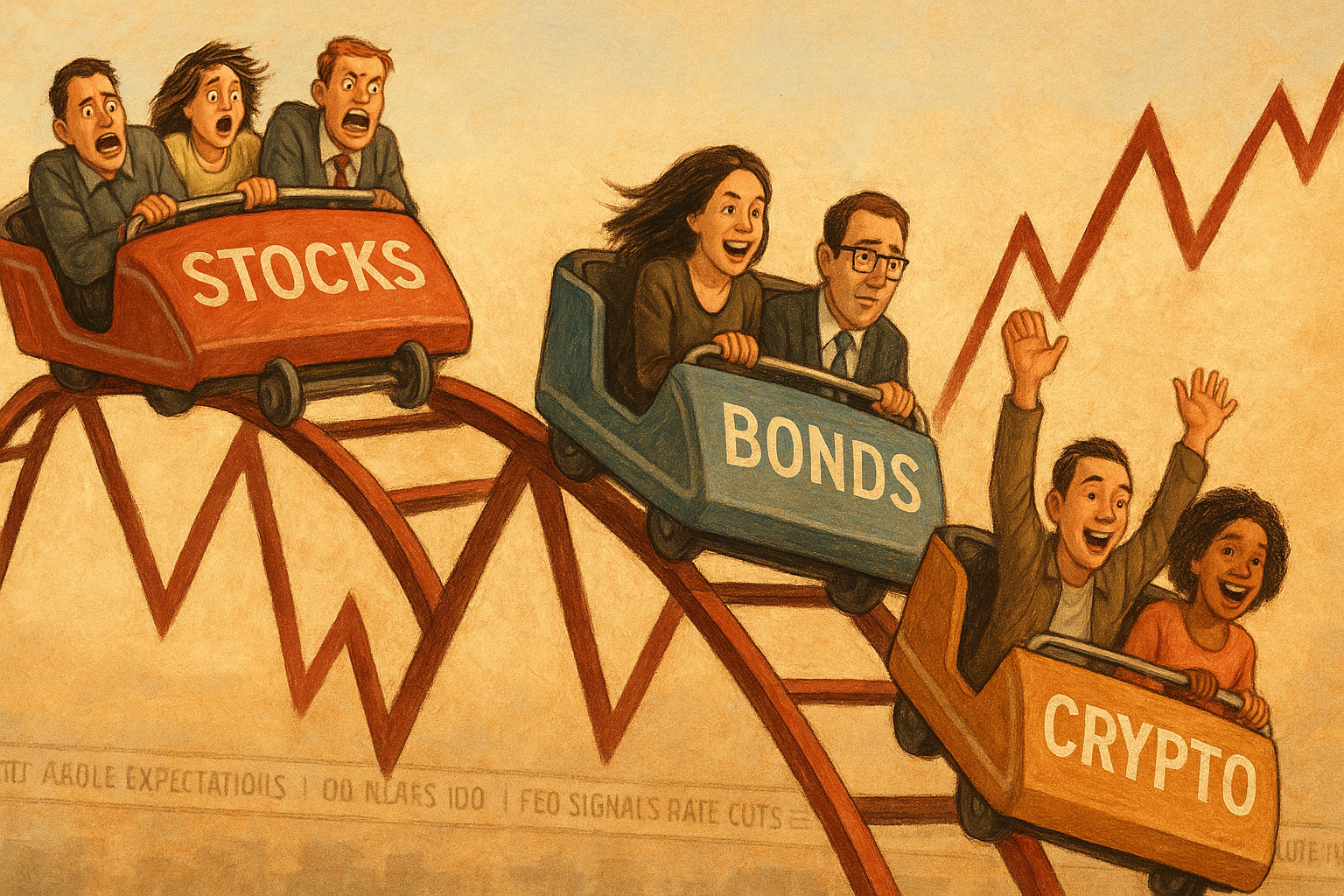
Last week's market plunge had my inbox overflowing. Friends who normally couldn't tell a stock from a bond were suddenly financial experts—or at least expert panickers. "Is this the beginning of the end?" texted one buddy who, I'm pretty sure, hasn't checked his retirement account since 2019.
Meanwhile, the financial media circus was in full swing. Those same CNBC commentators who'd been trumpeting "unprecedented growth opportunities" just days earlier were now grimly predicting economic armageddon with equal conviction.
Nothing fundamental had actually changed. Not really.
It was just another market hiccup. But boy, did it trigger our collective fight-or-flight response.
Here's what I've come to understand after watching this dance for years: markets aren't the rational mechanisms we pretend they are. They're basically emotional thermometers dressed in Brooks Brothers suits. We've wrapped them in complicated jargon and sophisticated models, but at their core? Pure psychology.
The mythical "rational investor" is just that—a myth. A convenient fiction for economics textbooks.
I've spent nearly two decades (God, has it been that long?) observing smart, accomplished people make absolutely boneheaded financial decisions because they couldn't separate their feelings from their analysis. There was the trader who kept doubling down on losing positions—admitting a mistake felt worse than watching more money disappear. Or the fund manager who avoided promising sectors where he'd been burned before, like an amorous teenager swearing off dating after a bad breakup.
And let's not forget retail investors. The FOMO-driven pile-ons to meme stocks at their absolute peaks would be comical if they weren't so financially devastating for so many.
This isn't just a retail phenomenon, though. Professional investors are just as susceptible—they're just better at constructing sophisticated justifications afterward.
I once witnessed a hedge fund manager (managing billions, mind you) launch a stapler across his office when a position moved against him. His subsequent "revenge trade" cost investors millions. When questioned later, he delivered an impressively detailed fundamental analysis justifying the move. He wasn't being dishonest; he truly believed his own story. That's the truly scary part.
Look, the solution isn't becoming some emotionless investing robot—that's impossible. We're human. The real answer lies in creating structures that acknowledge your emotional vulnerability rather than pretending it doesn't exist.
Think of portfolio construction as emotional insurance, not just return optimization. Diversification works partly because of correlation mathematics, sure. But its real power? Preventing the psychological meltdown that happens when you watch your one big bet implode in real-time.
Having exposure across multiple asset classes isn't just mathematically sound—it's psychologically protective. When stocks are tanking but your bonds are steady, you maintain enough emotional equilibrium to avoid panic-selling at precisely the wrong moment. When crypto is "going to the moon" but your boring value stocks are plodding along, you're less tempted to abandon your strategy and chase performance.
The market doesn't care about your feelings. (Sorry.) It won't validate your political views or personal identity. It won't recognize your brilliance or punish your moral failings. It just... does what it does, completely indifferent to your narrative about what it "should" do.
And that's exactly what makes successful investing so damn difficult. We humans are pattern-recognition machines built to find meaning in everything. Markets occasionally reward this tendency just enough to reinforce it—before brutally punishing it over time.
The most successful investors I've known aren't necessarily the smartest analysts. They're the ones with exceptional emotional self-regulation. They understand their own psychological triggers and build systems to protect themselves from their worst instincts. Many keep detailed investing journals tracking their emotional states alongside their decisions. Some develop investment policies dictating specific actions during different market conditions, preventing heat-of-the-moment choices they'll later regret.
Nobody's immune to market emotions—not Warren Buffett, not Ray Dalio, certainly not me. The difference is developing awareness of when emotions are driving decisions and having the discipline to step back when they are.
So next time markets go haywire (and they will, trust me), remember: Nothing fundamental happened overnight. The world didn't suddenly change. It's just the collective emotional response to uncertainty expressing itself through price action.
Take a breath. Revisit your investment thesis. Ask whether anything about the actual businesses you own has materially changed.
Your future self will thank you for keeping a cool head while everyone else loses theirs.
I promise.


