
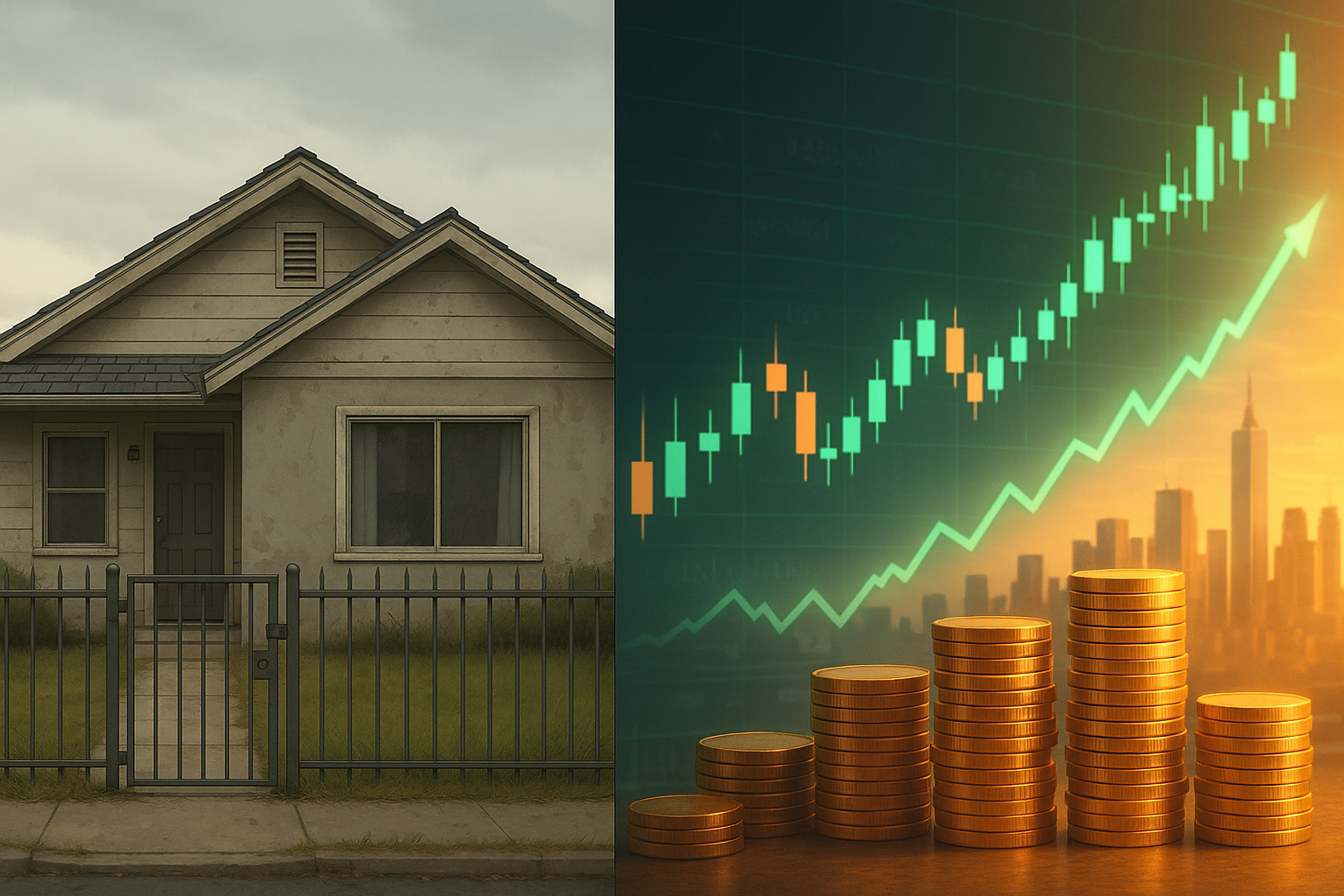
I've spent years watching financial pundits peddle the "homeownership as wealth-builder" narrative. It's practically sacred in American culture. But here's the uncomfortable truth that nobody wants to talk about at dinner parties: your house isn't making you rich—stock ownership is. And most Americans are getting left behind.
The numbers tell a stark story. A whopping 88% of all equities in America are controlled by the top 10% of households. Just sit with that figure for a moment. The next 40% of Americans manage to scrape together about 12% of stock market ownership. And the bottom half? Well, they're mostly acquainted with debt, not assets.
"It's always been this way," a veteran Wall Street portfolio manager told me last week. "But the gap is widening faster than most people realize."
Look, I'm not trying to rain on anyone's homeownership parade. There's something genuinely satisfying about having your own patch of dirt. Paint the walls whatever hideous color you want! No landlord can stop you. But as a wealth-building strategy? The math simply doesn't add up.
Consider the returns. The S&P 500 has delivered roughly 8% annually over three decades. With recent monetary expansion (money printer go brrr), that figure has jumped to about 11%. And if you've focused on tech stocks? You're looking at a jaw-dropping 16% annual growth. At that rate, your money doubles every five years.
Houses? Not even close.
I recently reviewed an analysis comparing lifelong renters who invest versus traditional homebuyers. The results were, frankly, embarrassing for the homeowner crowd. Over a lifetime, the renter who placed equivalent capital in stocks ended up with approximately four times—yes, FOUR TIMES—the wealth of the mortgage-payer.
When I shared these figures at a financial literacy workshop last month, you'd think I'd suggested canceling Christmas. The defensive reactions were immediate and passionate.
"But what about the stability?" one attendee demanded.
Stability is wonderful. So is wealth. Why choose?
The homeownership model saddles you with a parade of wealth-draining expenses: property taxes (which only go up), surprise maintenance costs (always at the worst possible time), and renovation expenses (whatever your contractor quoted, double it). Meanwhile, your capital remains trapped in an illiquid asset that historically underperforms the market.
This isn't just a financial issue—it's deeply psychological. Homeownership has become so embedded in our cultural DNA that questioning its wealth-building potential feels almost... un-American. Meanwhile, the truly wealthy quietly accumulate equities and watch their wealth compound at rates that make real estate appreciation look like watching paint dry.
The cruel irony? Many Americans stretch themselves thin buying homes, leaving little or nothing for stock market investments—effectively locking themselves out of the actual wealth engine driving our economy.
(Confession: I made this mistake in my twenties, pouring everything into a starter home instead of building an investment portfolio. The opportunity cost still makes me wince.)
Now, I'm not suggesting homeownership is worthless. It provides stability, community connection, and protection from rental market fluctuations. But as a pure wealth-building strategy? The data doesn't lie, however uncomfortable the message might be for the mortgage-burdened masses.
Perhaps the most rational approach involves renting modest accommodations while channeling maximum capital into low-cost, diversified equity funds. But rationality rarely wins popularity contests in personal finance, especially when competing against deeply entrenched cultural narratives about the "American Dream."
So before you commit to decades of property taxes and unexpected plumbing disasters, maybe—just maybe—run the numbers on what that same capital might generate in the equity markets. The difference could fund the retirement you actually want, not the one your mortgage allows you to afford.
After all, which would you rather have: bragging rights at the neighborhood barbecue or four times more money in retirement?
I think I know which one pays the bills.


