
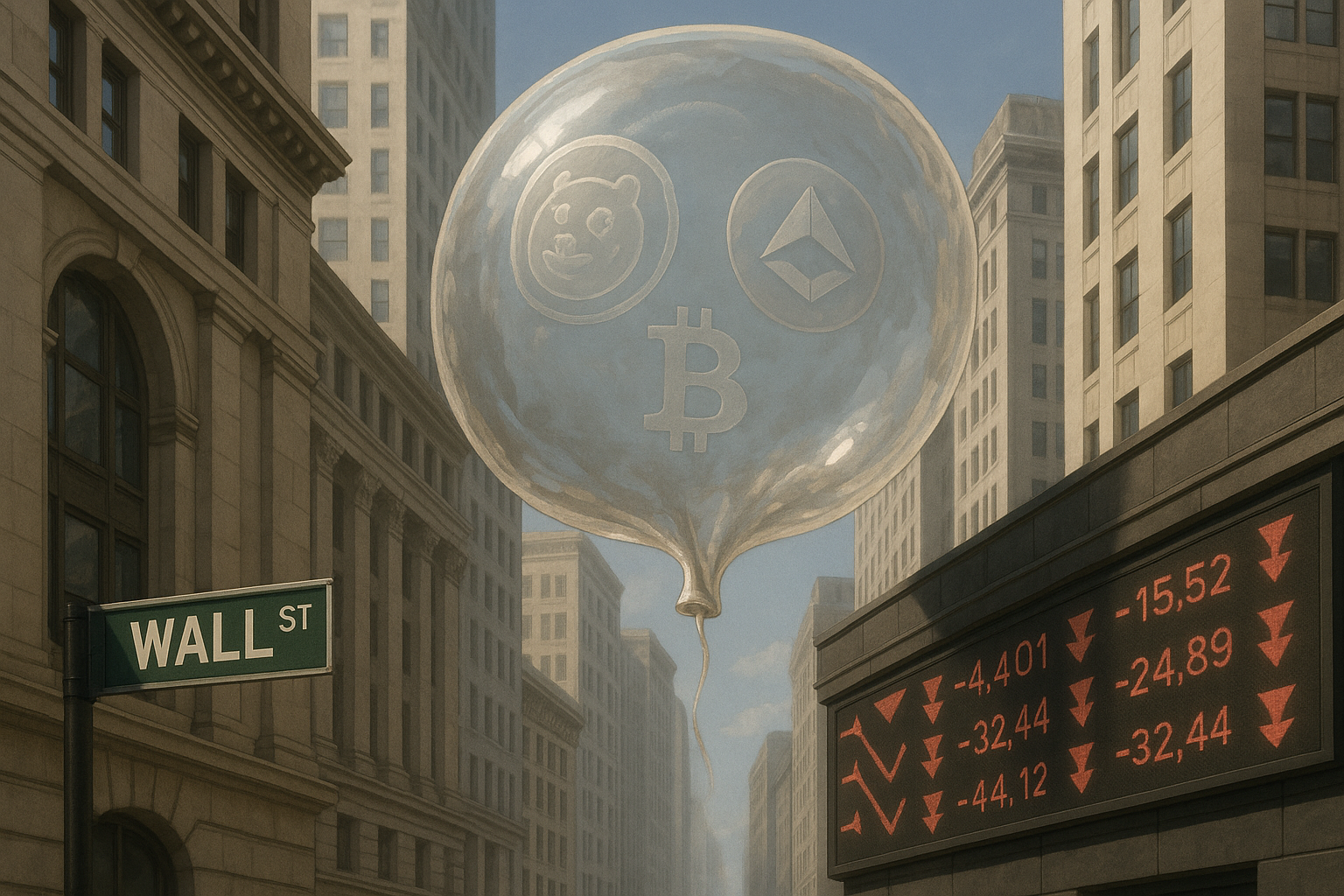
The speculative edge of the market is crashing, and if you listen closely, you can hear the muted applause from Wall Street's veterans. It's not schadenfreude exactly—more like the collective sigh of professionals who've been watching a train wreck in slow motion.
Andrew Slimmon of Morgan Stanley didn't mince words when speaking with MarketWatch. "I am delighted by what's happening," he declared, with the kind of blunt honesty that most PR departments would immediately try to walk back. Why so cheerful about a market downturn? "What is being brought down are the things that were too speculative in nature."
Look, we've seen this movie before. It's the financial equivalent of parents watching their teenager learn a painful but necessary lesson. The grown-ups in finance have been nervously eyeing the flood of cash into increasingly questionable "investments"—those leveraged ETFs that practically require a physics degree to understand, random nuclear stocks because someone on Reddit posted about uranium demand, and (my personal favorite) tech companies with slick presentations and a profound allergy to profitability.
The cycle is as old as markets themselves. Powell hints at rate cuts while standing in front of some mountains in Wyoming, and suddenly everyone's a financial genius again! Money floods into whatever's shiny, people start quitting stable jobs to become full-time traders, and your barber is suddenly giving you tips on blockchain technology.
And then? Reality checks in.
Tuesday was particularly brutal for the true believers. The Roundhill Meme Stock ETF (yes, that's really a thing) crashed to an all-time low. There's something almost poetically just about this, considering this fund is actually the zombie reincarnation of a similar product that already failed once before. Second time's the charm? Apparently not.
Meanwhile, over in crypto-land... well, you know how crypto people always insist volatility is actually good? They're getting plenty of what they claim to love. Bitcoin took a nosedive below $100,000, representing roughly a 20% drop from recent highs. In traditional markets, we'd call that a bear market. In crypto, they call it Tuesday afternoon.
What's fascinating isn't just the bloodbath in speculative assets (that happens periodically, like financial clockwork). It's the barely concealed relief in the commentary from market veterans. When Slimmon notes this frenzy is "consistent with a very late-cycle bull market," he's using professional-speak for "this is what happens right before things go sideways for everyone."
I've been covering market cycles since the dot-com days, and there's always this moment—this inflection point where professionals start publicly saying what they've been muttering privately for months.
There's a crucial distinction being made, though. When seasoned pros like Slimmon say purging speculation is "good long-term for the market," they're drawing a line between "the market" (actual companies with revenue and earnings) and whatever casino game retail traders have been playing lately.
This split-screen market has defined the post-Covid era. The S&P 500 can have a perfectly reasonable day while some obscure ARK-adjacent ETF implodes spectacularly. On Tuesday, despite the S&P and Nasdaq falling 1.2% and 2% respectively, Mizuho's Farzin Azarm insisted "the market is behaving A-OK." Quite a disconnect, no?
What we're witnessing might be called a "controlled burn" approach to market management. The Fed and other market stewards prefer to see bubbles deflate gradually rather than explode catastrophically. When they see speculative froth starting to spill over, they don't automatically rush to rescue overleveraged traders—especially if the broader market seems stable enough.
Powell's recent pivot, suggesting December rate cuts are "far from" guaranteed, fits perfectly within this framework. Translation: We're not going to keep cutting rates just because your meme stock portfolio is bleeding out.
The Fed has learned some painful lessons here. (Haven't we all?) Alan Greenspan's famous "irrational exuberance" speech in 1996 was followed by—irony alert—more rate cuts and even more exuberance. The resulting "Greenspan put"—the market's assumption that the Fed would always come to the rescue—created a moral hazard that helped inflate subsequent bubbles.
Today's Federal Reserve appears determined to navigate a narrower path: support the actual economy without enabling the worst speculative excess.
For serious investors (the kind who care about boring things like cash flow), this recalibration is welcome news. When the Roundhill Meme Stock ETF crashes while the broader market merely hiccups, it suggests we're seeing a healthy rebalancing rather than anything truly systemic.
The million-dollar question, of course: will this controlled burn stay controlled? History isn't particularly reassuring on this point. These boundaries tend to be porous—problems in speculative corners have an annoying tendency to eventually contaminate the broader market.
For now, though, the adults in the room are cautiously optimistic that the kids' table can catch fire without burning down the entire house.
As Slimmon put it with refreshing directness: "If rates stay higher, it takes the sizzle out of those stocks." And sometimes—just sometimes—a market with a little less sizzle is exactly what we need.


