
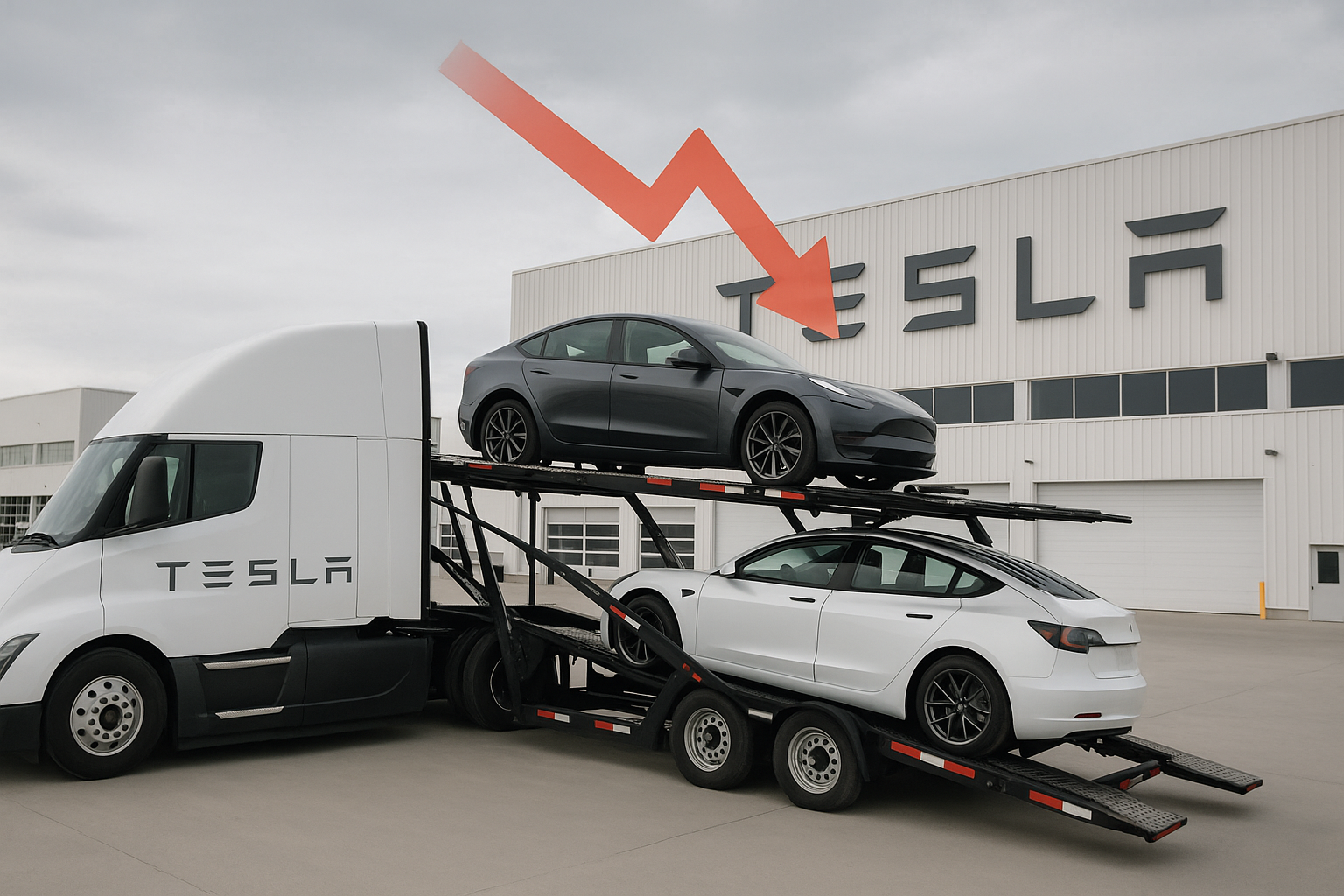
Tesla's Q4 delivery numbers are in, and they're not pretty. The electric vehicle pioneer saw deliveries drop roughly 15% year-over-year, with analysts pegging the figure around 423,000 vehicles.
Let's be honest—this was inevitable. No company maintains exponential growth forever, not even one led by a CEO who seems to consider physics more of a suggestion than a rule.
What's fascinating here isn't just the numbers themselves (though they're certainly attention-grabbing). It's what they represent in Tesla's evolution from scrappy upstart to automotive heavyweight.
I've been covering Tesla since 2018, and I've watched this movie before. The company routinely swings between "unstoppable juggernaut" and "troubled manufacturer" in the public narrative. This latest chapter feels different, though.
Here's why.
Tesla has actually gotten remarkably good at making cars. Their manufacturing efficiency would make Henry Ford proud. The problem? They've run headlong into what I call the "efficiency paradox"—once you've optimized production, you still need to sell those vehicles to actual humans with finite bank accounts and competing priorities.
And that's... complicated.
The timing couldn't be more interesting. Just as Tesla reports this slowdown, traditional automakers are pumping the brakes on their own EV ambitions. Ford, GM, Mercedes—they're all recalibrating their electric strategies, citing (wait for it) softer consumer demand than expected.
Not exactly a ringing endorsement for the "EVs are about to dominate everything" thesis, is it?
Look, one quarter doesn't make a trend. Tesla has made fools of skeptics repeatedly (I should know, I've occasionally been one of them). And there are mitigating factors everywhere—economic uncertainty, interest rates that make car financing painful, and the natural lumpiness of global production schedules.
But a 15% year-over-year decline? That's not a rounding error or a statistical blip. That's the kind of number that makes investors reach for the antacids before recalculating their spreadsheets.
The company faces a fundamental transition that all disruptors eventually encounter—moving from a growth story to an execution story. Wall Street loves growth narratives; they're exciting, full of potential. Execution stories? They're about boring stuff like margins, operational efficiency, and (gasp) actual profits.
Tesla is no longer the only game in town. Competition has arrived from all directions—legacy automakers, startups, Chinese manufacturers who can produce EVs at price points that make American executives break out in cold sweats.
And then there's the Elon factor.
Musk's attention has been... let's say "distributed"... among Tesla, SpaceX, X (the platform formerly known as Twitter), and whatever new venture captures his imagination this week. Markets tolerate CEO distractions during boom times. During slowdowns? Patience wears thinner than the paint on early Model 3s.
I spoke with three institutional investors last week who all expressed similar concerns. "We love the innovation," one told me, requesting anonymity to speak candidly, "but at some point, you need the CEO fully focused on the core business."
What does all this mean for Tesla's future? That's the trillion-dollar question.
The company still dominates EV sales in the U.S. Its brand remains powerful. The manufacturing improvements are real, and its charging network remains a significant competitive advantage.
But the days of infinite growth projections may be winding down. Tesla might have to do something truly radical—operate like a normal car company, with normal automotive multiples and expectations.
(The horror!)
This delivery slump might just be a reset before another growth phase. Or it could signal something more fundamental—that Tesla is entering automotive adulthood, where consistent execution matters more than dazzling promises.
Either way, watching investors process this reality should be quite a show. Because in markets, as in physics, gravity eventually asserts itself. The only questions are when, how quickly, and who's left without a chair when the music stops playing.


