
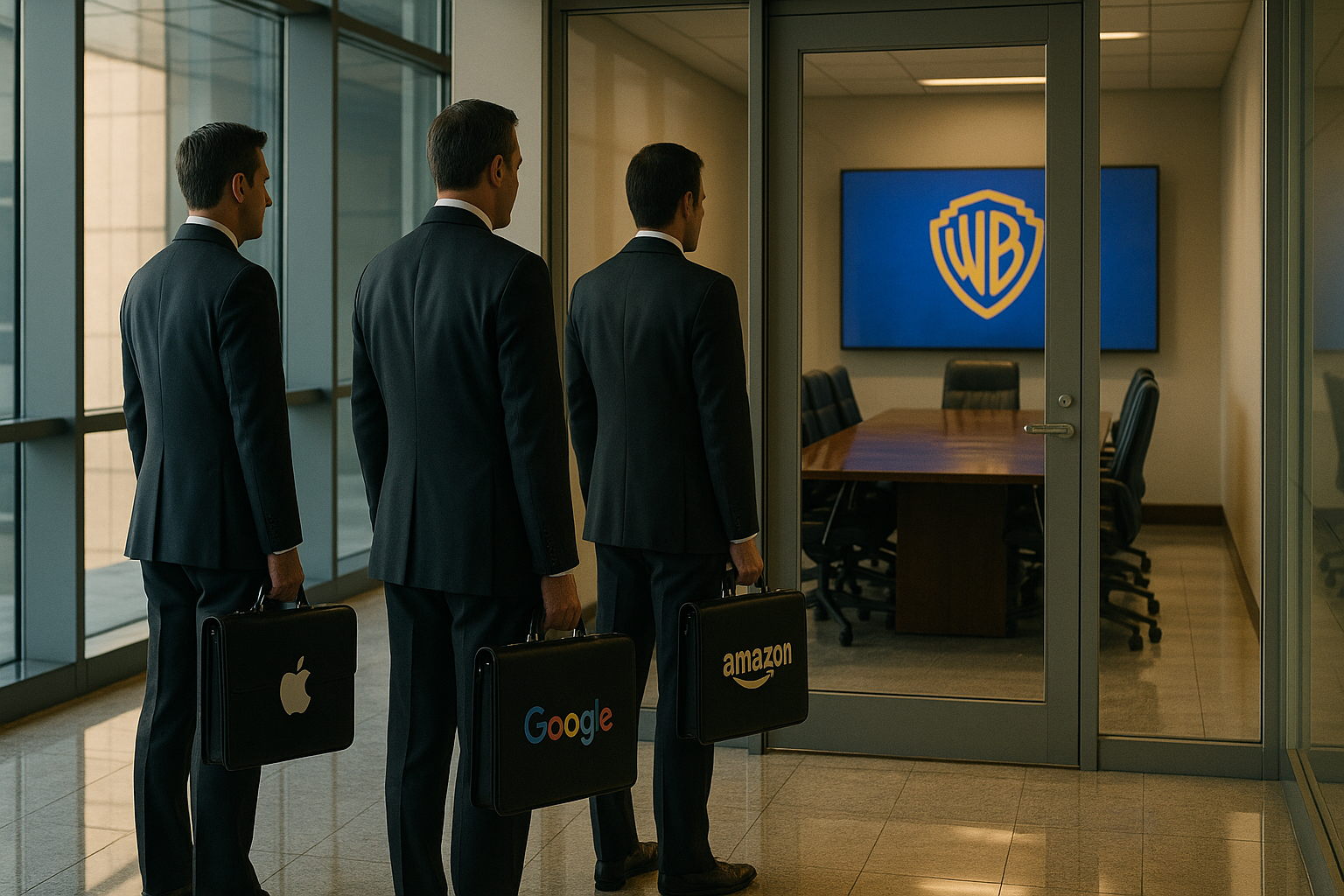
The entertainment industry's latest soap opera—Warner Bros. Discovery fielding courtship calls from Fox and Skydance Media—has everyone buzzing. But have you noticed who's missing from this corporate dating show? The tech giants are nowhere to be seen.
It's puzzling, really. Apple is sitting on a mountain of cash—$162 billion, give or take a few billion. Alphabet (Google's parent) has about $110 billion gathering dust. Amazon, despite Jeff Bezos' penchant for reinvesting every nickel, could write a check without breaking a sweat. Any of these companies could snap up WBD at the rumored $30-per-share valuation and barely notice the dent in their balance sheets.
So why aren't they jumping into the fray?
I've covered media mergers since the AOL-Time Warner debacle (still the gold standard for "what were they thinking?" corporate marriages), and something different is happening here. The tech behemoths' absence speaks volumes.
Look, WBD isn't just any media company. We're talking about the home of Batman, Harry Potter, and whatever dragons survived Game of Thrones. It's CNN, TNT, and the HBO crown jewels. For tech companies awkwardly trying to make streaming happen—I'm looking at you, Apple TV+—this seems like buying an express ticket to relevance.
But here's the thing: what makes WBD attractive is precisely what makes it problematic.
First off, there's the cable network baggage. CNN, TNT, TBS—these are cash cows today but, let's be honest, they're yesterday's business model. Tech companies view traditional cable the way my teenage nephew views my CD collection: quaint, slightly baffling relics from a bygone era. They don't want to manage declining assets; they want growth.
Then there's the regulatory hornets' nest. Can you imagine the antitrust hubbub if Apple—already facing scrutiny on multiple continents—tried to swallow a media giant? The FTC would have a field day. Google? Even worse. Adding media dominance to search dominance would trigger regulatory alarms from Washington to Brussels faster than you can say "monopoly concerns."
Amazon might have the cleanest shot after digesting MGM, but even Bezos might hesitate. The company is already fighting antitrust battles across multiple fronts. Adding another high-profile acquisition might be pushing their luck.
(And don't get me started on the culture clash. AT&T's disastrous WarnerMedia adventure should serve as a cautionary tale. Turns out managing creative talent requires a different playbook than selling cell phone plans. Who knew?)
Apple, particularly, has shown it prefers the boutique approach to entertainment—quality over quantity, carefully curated content that aligns with its brand. Taking on WBD's vast content empire would be like a minimalist suddenly inheriting their hoarder uncle's estate. Where would they even put all that stuff?
There's also a more subtle calculation at work. The economics of content ownership have shifted. Why own the cow when milk prices keep fluctuating? Netflix built an empire largely on licensed content before pivoting to originals. Even Disney—with the most valuable IP on the planet—is struggling to make streaming profitable.
The lesson? Content ownership is expensive and returns uncertain.
Maybe the tech giants are playing chess while everyone else plays checkers. By staying on the sidelines, they let traditional media companies consolidate, struggle with integration headaches, and potentially weaken further. Then, when conditions are right—prices lower, regulatory environment friendlier—they can cherry-pick the jewels they actually want.
Sometimes patience isn't just a virtue; it's a strategy.
Of course, I could be completely off-base here. As I file this article, some tech CFO might be preparing a surprise bid that makes me look foolish. That's the fun of covering this industry—just when you think you've got it figured out, someone rewrites the script.
Kinda like a good HBO show.


