
Former central bankers typically don't make waves. They fade into comfortable retirement, occasionally offering gentle, heavily-qualified economic musings that put insomniacs to sleep faster than warm milk.
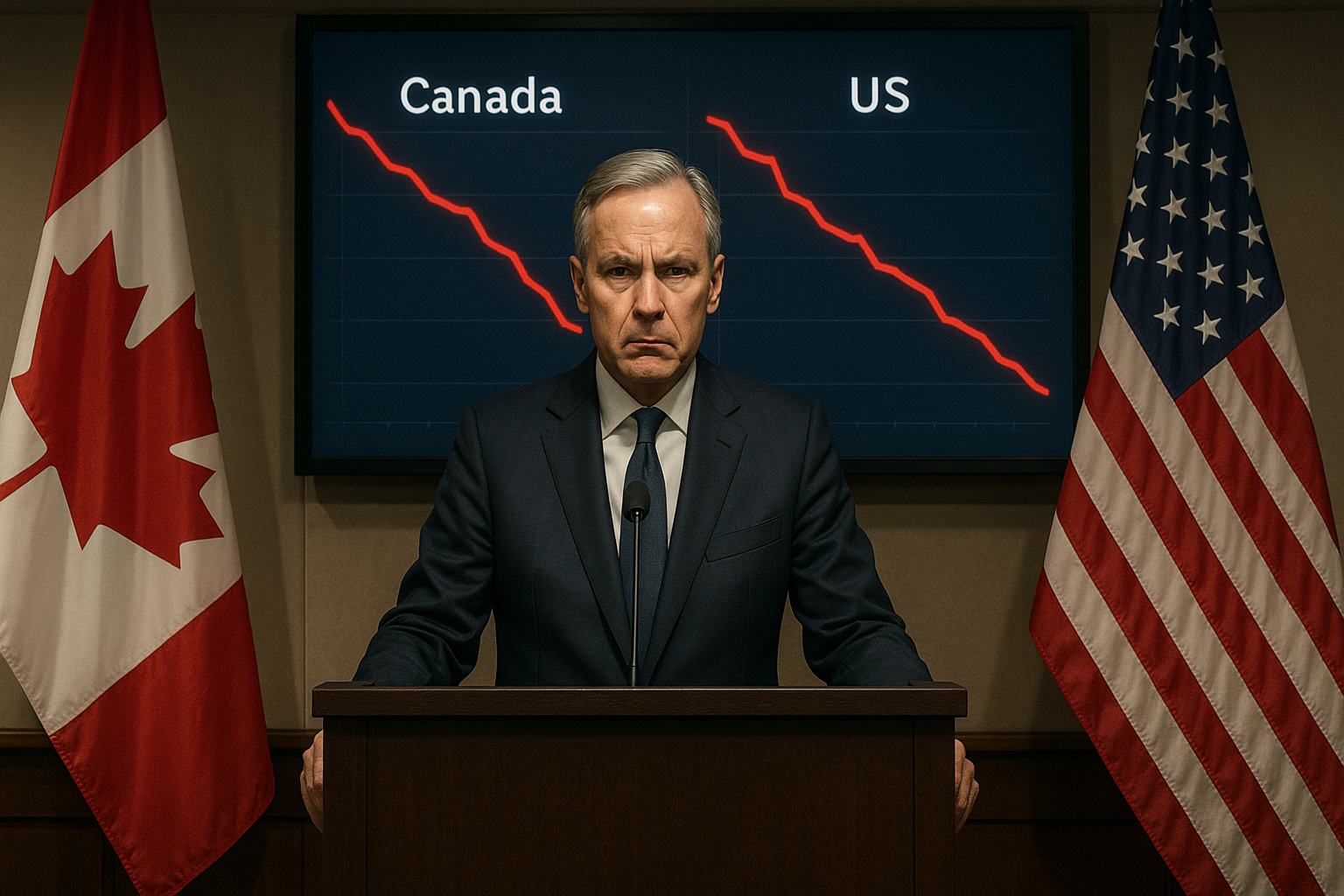
So when a former Bank of Canada governor steps up and bluntly predicts recession for both Canada and the United States? That's about as subtle as a fire alarm during a library's quiet hour.
I've covered monetary policy for years, and let me tell you — this kind of straight talk is rarer than a balanced federal budget. Central bankers communicate in their own peculiar language where "economic headwinds" means "we're in trouble" and "policy normalization" translates to "brace yourselves." Their statements require more interpretation than ancient hieroglyphics.
Which is precisely why this recession warning stands out.
Look, central banking is essentially economic theater. The current performers at the Bank of Canada and Federal Reserve have been insisting they can achieve the mythical "soft landing" — bringing down inflation without crashing the economy. It's a bit like trying to parallel park a cruise ship using only a pool noodle for steering. Technically possible? I guess. Likely? History suggests otherwise.
The timing couldn't be more interesting. Both countries spent 2022 and 2023 hiking interest rates at a pace that would give economic textbooks whiplash. The rate increases were the monetary equivalent of slamming on the brakes while driving downhill on ice — necessary perhaps, but with consequences that take time to fully manifest.
And those consequences are starting to show.
Canada's economy already dipped into negative territory in Q3 2023. Housing markets on both sides of the border are struggling under the weight of higher mortgage rates. (I toured several Canadian housing developments last month that had all the bustling activity of abandoned movie sets.) Consumer spending is showing fatigue after its post-pandemic sugar rush.
The awkward truth — one central bankers rarely admit while in office — is that recessions are sometimes the point. When inflation runs hot, the central bank's toolbox essentially contains various ways to slow economic activity. They're just not allowed to say, "We're intentionally cooling the job market," because that sounds callous. Instead, they talk about "rebalancing supply and demand dynamics."
What makes our former governor's warning particularly noteworthy is its contrast with market expectations. Bond traders have been pricing in multiple rate cuts for 2024, assuming the inflation dragon has been sufficiently slayed. But there's a world of difference between cutting rates because inflation is controlled and cutting rates because the economy is tanking.
One is victory. The other is damage control.
"The central banking community has painted itself into a corner," a senior investment strategist told me last week, speaking on condition of anonymity. "They hiked aggressively, hoping inflation would come down before the full impact hit the real economy. That's not how the timing typically works."
The historical pattern suggests interest rate changes take 18-24 months to fully work through the system — which means we're still digesting rate hikes from early 2023. It's like economic indigestion where the discomfort arrives long after the meal.
Not all recessions are created equal, of course. Some are brief economic hiccups that economists identify months after they've already ended. Others reshape entire industries and leave lasting scars. The former governor's comments suggest something meaningful but not catastrophic — significant enough to force monetary policy reversal without triggering 2008-style existential dread.
Consumers in both countries now find themselves in a bizarre information environment — simultaneously told the economy remains fundamentally strong while recession warnings multiply like rabbits. It's the economic equivalent of your mechanic saying your car is in excellent condition but might want to consider good life insurance before your next road trip... just thinking out loud.
For what it's worth (and free economic predictions are typically worth exactly what you pay for them), recessions have a frustrating tendency to arrive regardless of whether we predict them or not. They're like in-laws that way.
The coming months will reveal whether our forthright former governor was prescient or simply more willing than most to state the obvious. Either way, his departure from central banking's unwritten "don't frighten the public" communication guidelines deserves notice.
Sometimes the most important message is the one that drops the usual euphemisms and simply says what everyone is privately thinking: batten down the hatches; rough seas ahead.


