
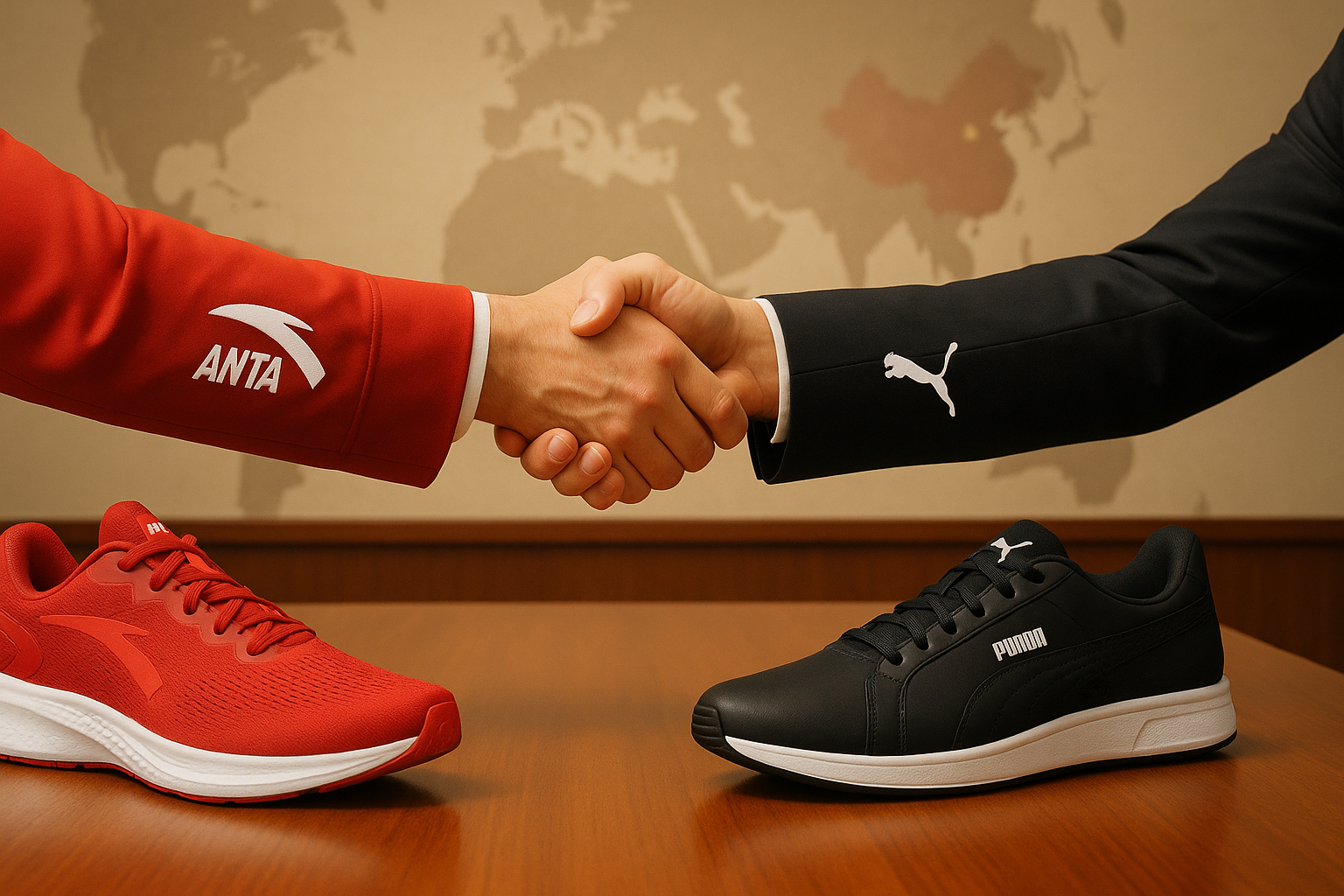
Puma shares jumped—no, leaped—14% yesterday after word got out that Chinese sportswear giant Anta Sports is sniffing around for a potential takeover. This isn't just another corporate flirtation; it's potentially the biggest shake-up in athletic footwear since... well, since Anta bought Finland's Amer Sports back in 2019.
I've been covering the sportswear industry since Nike was just hitting its stride in the 90s, and this possible deal perfectly illustrates something I've been seeing more and more: Asian companies with deep pockets eyeing Western brands that have global recognition but have hit growth ceilings.
Look, Puma has always been the bronze medalist in the global sportswear race. Always trailing behind Nike and Adidas. Never quite catching up. But that third-place position might be exactly what makes it attractive to Anta—a company that's already dominating China's domestic market and clearly harbors grander ambitions.
Manager Magazin broke the story that Anta has already brought in the investment banking cavalry to explore the acquisition. That's serious business. It's like hiring a real estate agent before you've even told your spouse you're thinking of moving.
The timing? Couldn't be more calculated. Puma recently lowered its full-year outlook (citing weak consumer spending), which in the predatory world of acquisitions is basically hanging a "DISCOUNT INSIDE" sign on your corporate headquarters. Nothing makes CEOs more acquisition-friendly than having to explain disappointing numbers to shareholders.
For those who haven't been following Anta's rise (and honestly, outside of industry circles, who has?), the company has been methodically building its empire. Their 2019 acquisition of Amer Sports—owner of Wilson, Salomon, and premium outdoor brand Arc'teryx—was a $5.2 billion statement that they're playing the long game.
Adding Puma to that collection? That's not just buying another sneaker brand. That's acquiring a 75-year-old German sportswear institution with global distribution networks, celebrity endorsements, and the kind of European design heritage that no amount of money can build from scratch.
But here's where it gets interesting. What we're watching isn't just one company buying another—it's the shifting center of gravity in global consumer markets.
For decades (and I've witnessed this firsthand), Western brands expanded into China and wider Asia looking for growth markets. Now? We're seeing the reverse flow—Asian companies with mountains of cash buying Western brands for their prestige and global infrastructure.
It's like watching economic history unfold through the lens of who designs your running shoes.
The market's enthusiastic reaction—that 14% share jump wasn't subtle—suggests investors think this marriage makes sense. But does it? I'm not entirely convinced Puma's leaping cat logo wants to be domesticated by a new owner.
Puma has maintained fierce independence throughout most of its history, even after being briefly owned by French luxury powerhouse Kering (which, by the way, still holds a minority stake). There's a certain German industrial pride at stake here.
And let's not forget the regulatory hurdles. In today's geopolitical climate, Chinese acquisitions of European assets face more scrutiny than a teenager coming home past curfew. German authorities might be particularly protective of a historic national brand founded back in 1948 by Rudolf Dassler (after his famous split from brother Adolf, who went on to found... you guessed it, Adidas).
The sportswear industry has been playing musical chairs for years now. Authentic Brands Group grabbed Reebok. JD Sports snatched up Finish Line. It's getting harder and harder for mid-sized players to go it alone.
That's Puma's dilemma. Too big to be a niche player, too small to truly challenge Nike and Adidas globally. They're caught in that strategic no-man's land that makes corporate strategists break out in cold sweats.
If—and it's still a massive if—this deal happens, we'd be looking at a sportswear powerhouse with complementary strengths. Anta's manufacturing muscle and Asian distribution paired with Puma's design prowess and Western market presence. On paper, it's the corporate equivalent of peanut butter meeting chocolate.
But I've covered enough potential acquisitions to know that many corporate courtships never make it to the altar. Right now, we're just at the exploratory phase—the corporate equivalent of checking someone out across the bar, not proposing marriage.
Still... in a sportswear market where scale increasingly matters more than speed, even the fastest cat might decide it's better to run alongside a larger predator than hunt alone.
I'll be watching this one closely. Sometimes the most interesting stories are about the deals that don't happen.


