
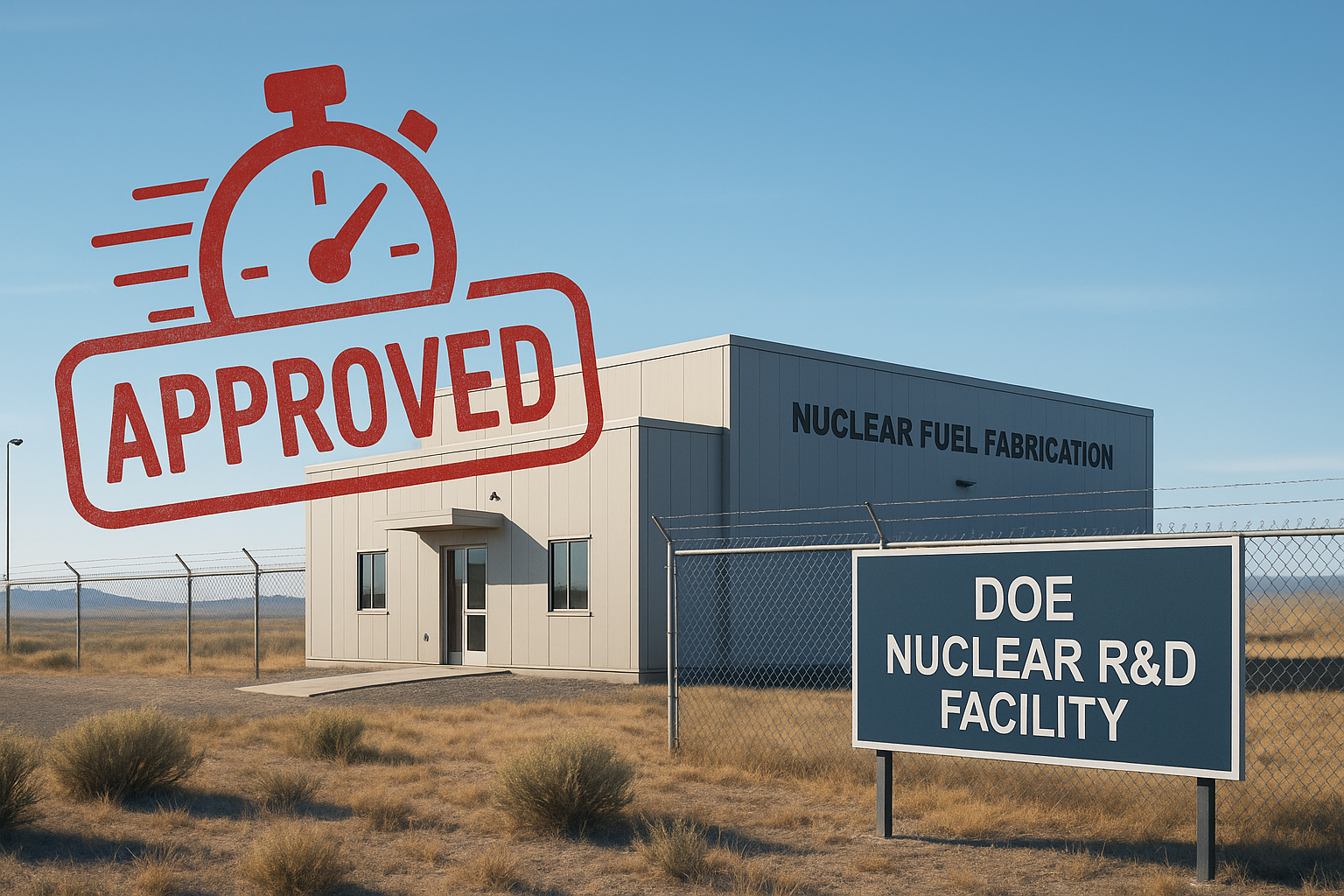
The nuclear industry just scored a rare victory in the race against bureaucratic time. Oklo, one of those advanced nuclear startups that's been generating buzz in clean energy circles, announced something that sounds mundane but is actually revolutionary: the Department of Energy approved their safety design for a fuel fabrication facility in Idaho.
In two weeks.
Let me repeat that: two weeks. Anyone familiar with nuclear regulation knows that's not just fast—it's practically teleportation. Traditional nuclear approvals move at glacial speeds, with companies typically planning for years of review cycles and mountains of paperwork.
What's happening here isn't just a one-off win. It represents something far more significant—the emergence of what amounts to a parallel regulatory universe for nuclear energy development.
While the Nuclear Regulatory Commission continues its methodical (some would say excruciating) safety reviews for commercial facilities, the DOE is effectively creating a regulatory sandbox on government property where innovation can move at something resembling market speed.
I've covered energy regulation since 2016, and this dual-track approach is unlike anything I've seen in the nuclear sector before.
The economics here are fascinating. Traditional nuclear regulation functions essentially as a massive fixed cost imposed at the beginning of projects—creating an entry barrier so high that only utilities with the deepest pockets can hope to climb it. This economic pressure historically pushed nuclear toward gigantism, with plants getting bigger and bigger until the economics collapsed under their own weight.
Oklo is flipping the script.
By working through DOE on federal land, they can build smaller demonstration facilities and establish that their technology actually works before tackling the full NRC commercial licensing gauntlet. It's regulatory arbitrage in the best sense—creating options value for the company while still maintaining rigorous safety standards.
"This approach gives us the opportunity to demonstrate our technology while working through the commercial licensing process," an Oklo representative told me when I inquired about their strategy. "It's about creating parallel paths rather than sequential ones."
The fuel aspect deserves special attention. Oklo isn't mining new uranium or creating more waste. They're planning to use recycled fuel from the Experimental Breeder Reactor-II, which operated from 1964 to 1994. It's essentially turning what was considered waste into an energy resource—a bit like discovering your compost pile could power your house.
But—and there's always a but when it comes to nuclear—this approach raises questions about public perception. Will a faster approval process on federal land build confidence or undermine it? The nuclear industry has always struggled with public trust, and "we're testing new nuclear technology under streamlined review processes" might not be the reassuring message advocates hope for.
When I spoke with energy policy experts about this dual-track approach, opinions were decidedly mixed. Some see it as necessary innovation in a regulatory framework that has strangled nuclear development. Others worry it could create the appearance of cutting corners on safety.
Look, this isn't unique to nuclear. We've seen similar regulatory innovations in fintech (regulatory sandboxes for crypto), healthcare (FDA breakthrough designations), and transportation (autonomous vehicle testing zones). Heavily regulated industries often develop these parallel paths when the main highway becomes too congested.
From an investment perspective, what's happening should change how we evaluate nuclear startups. The technology itself is only part of the story—regulatory strategy might actually be the determining factor in which companies succeed. Wall Street hasn't quite figured out how to price this regulatory innovation premium.
I remain skeptical that nuclear will overcome its notorious cost problems anytime soon. The technology has consistently delivered budget overruns that would make Pentagon procurement officers wince. But if there's a viable path forward, it probably looks something like this: smaller, standardized designs with streamlined (yet still rigorous) regulatory pathways.
What's happening in Idaho might seem like bureaucratic reshuffling, but it represents a potential turning point in nuclear commercialization. If this parallel track proves successful—still a big if—it could dramatically accelerate deployment timelines for next-generation nuclear.
In this emerging landscape, the markets for nuclear energy aren't just about technology anymore. They're increasingly markets for regulatory certainty.
And in that market, Oklo just made a very interesting move.


