
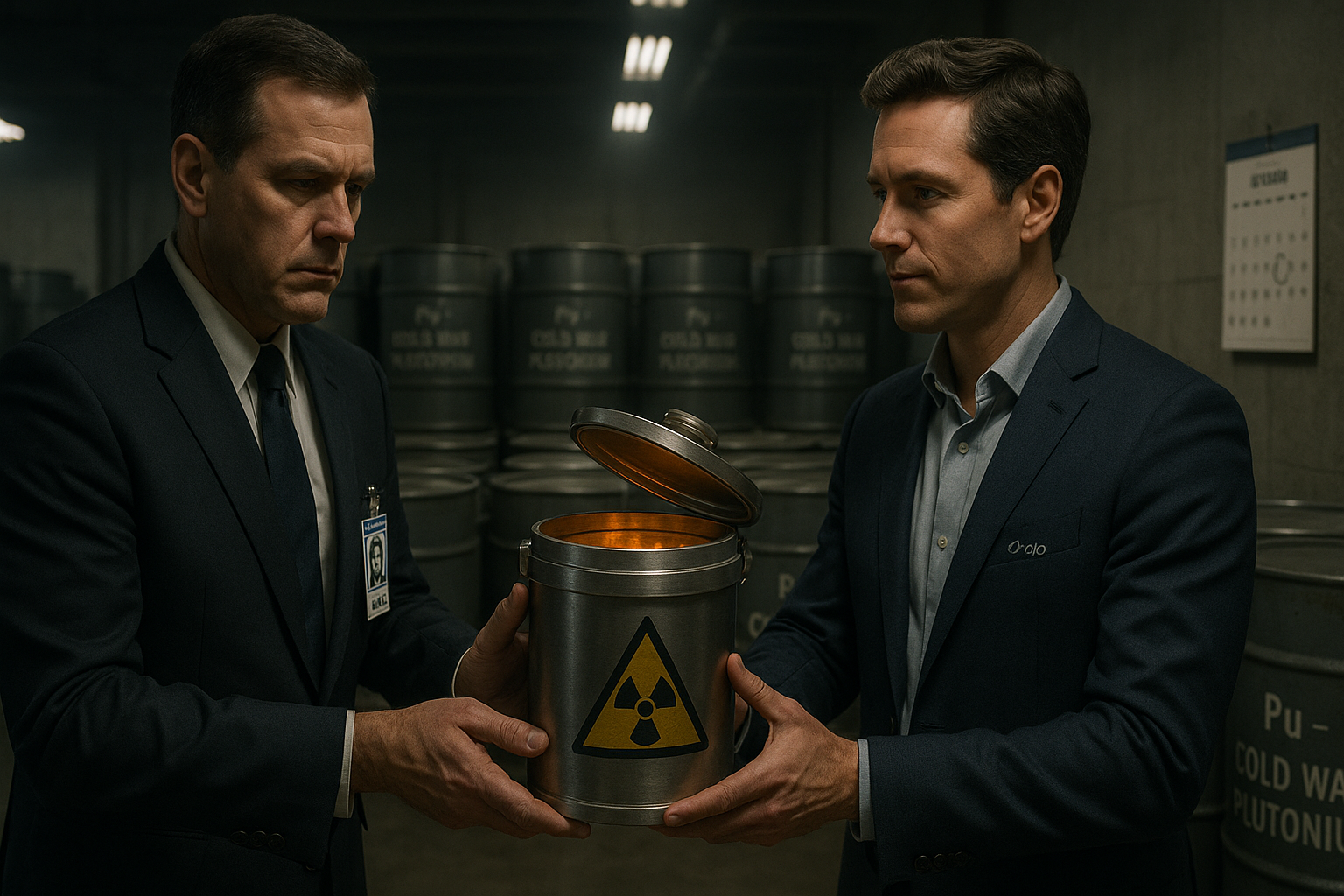
The Department of Energy stands on the brink of announcing what might be history's most radioactive holiday gift exchange. By tomorrow, we'll learn which companies get to unwrap portions of nearly 20 metric tons of Cold War-era plutonium—material with a stubborn half-life of roughly 24,000 years.
Look, there's something wonderfully bizarre about this whole scenario. The government is essentially hosting a plutonium pageant with a year-end deadline, transforming what was once considered dangerous waste into coveted fuel.
Oklo—that nuclear startup with the minimalist logo you've probably seen on tech websites—appears to be the frontrunner. Having followed the nuclear sector since 2019, I've watched them methodically advance their "Aurora" microreactor plans while larger companies made splashier but less substantial moves.
The economics here are fascinating (and frankly a bit absurd). This plutonium cost American taxpayers billions to produce during decades of superpower rivalry. Then it became an embarrassing liability when we realized, oops, we had built enough warheads to end civilization multiple times over.
But here's the twist: Through the magical alchemy of policy change—specifically Biden's executive order from May—this stockpile transforms from balance sheet nightmare into valuable asset.
"It's essentially turning lemons into lemonade," one industry analyst told me last week, "except the lemons are radioactive and the lemonade could power cities for decades."
The previous government strategy? Something called "dilute and dispose"—a fancy way of saying "mix it with other stuff and bury it real deep." That approach would've cost taxpayers substantial sums while permanently wasting potential energy.
For Oklo and other advanced reactor developers, this plutonium represents a massive competitive advantage. Traditional nuclear plants need freshly enriched uranium—a supply chain that's about as stable as a first date conversation. Just ask anyone who relied on Russian fuel before international sanctions complicated everything.
The application deadline passed on November 21st. I imagine the DOE offices that day looked like a nuclear-themed version of Shark Tank, with engineers making passionate technical arguments about neutron efficiency and passive safety systems. Were there PowerPoint slides with too many decimal points? Almost certainly.
There's something strangely appropriate about this atomic redistribution happening at year-end—like the government is clearing its radioactive accounts before the ball drops in Times Square. The DOE essentially moves these assets from the "expensive problem" column to the "someone else's opportunity" column.
This development creates several market dynamics worth watching.
First, it establishes a new type of competitive advantage in the nuclear space. Who has access to legacy government fuel? That question now matters enormously.
Second, it potentially accelerates deployment timelines for next-generation reactors. Fuel acquisition has been a major hurdle; this could remove it for select players.
Third... well, it's plutonium. The stuff still carries significant technical and regulatory challenges. It's not like receiving a gift card.
The winners don't get ready-to-use fuel rods. They get raw plutonium that requires processing and fabrication—a bit like inheriting a valuable vintage Ferrari that's been disassembled and stored in unlabeled boxes. The opportunity is there, but so is a massive engineering challenge.
For companies like Oklo, this represents both incredible opportunity and sobering responsibility. The material comes "at low or no cost" according to DOE documents I've reviewed, but handling one of humanity's most controversial substances isn't exactly a carefree endeavor.
Success means establishing a sustainable domestic nuclear fuel cycle that produces carbon-free electricity while reducing waste stockpiles. Failure? That would mean costly delays, regulatory complications, and potentially feeding anti-nuclear sentiment that the industry has worked decades to overcome.
What strikes me most is how this policy shift represents a fundamental rethinking of nuclear waste—from viewing it as a terminal problem to seeing it as an interim resource. In our resource-constrained world, even our most problematic materials are being reconsidered.
By this time tomorrow, we'll know which companies our government trusts with this plutonium inheritance. For the winners, it's both Christmas miracle and long-term challenge—a stockpile of potential energy paired with the responsibility of proving that yesterday's nuclear excess can indeed become tomorrow's clean power solution.
And isn't that the nuclear industry in a nutshell? Enormous potential wrapped in equally enormous challenges, with the outcome still very much unwritten.


