
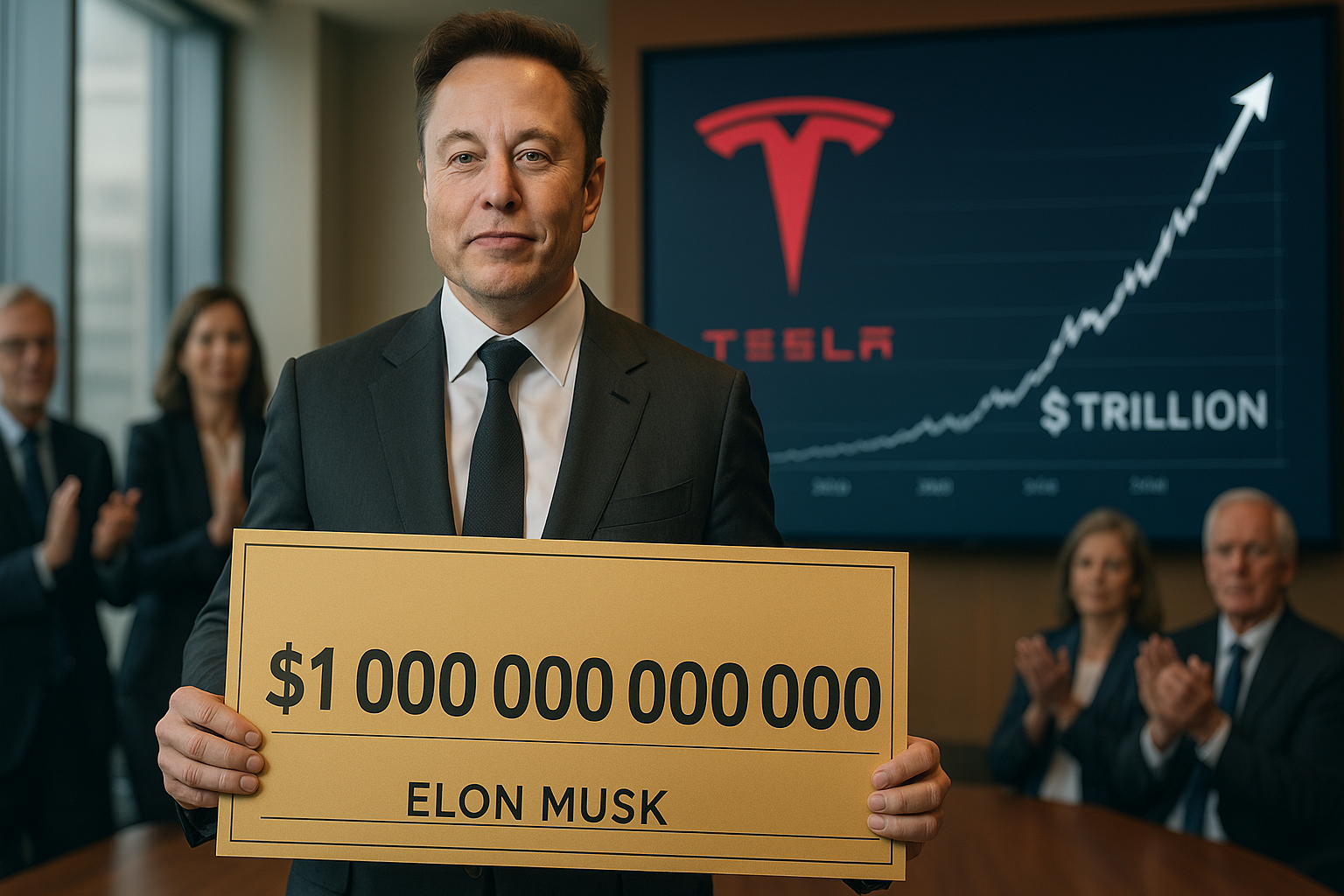
Tesla shareholders just handed Elon Musk what might be the most jaw-dropping compensation package in corporate history. With over 75% voting in favor, the company approved a potential $1 trillion payday for the world's richest man—because apparently having hundreds of billions just doesn't cut it anymore.
I've seen some outrageous executive compensation packages in my time covering corporate America, but this one? It's in another galaxy entirely.
Let's break down what actually happened here. After a Delaware court invalidated Musk's previous $56 billion package (mere pocket change, really), Tesla's board—about as independent as a toddler at a candy store—decided the logical next step was to propose something even more astronomical.
The structure is fascinating, if not borderline absurd. Musk gets his first chunk of money when Tesla hits a $2 trillion market cap, with additional tranches as the company grows by $500 billion increments up to $6.5 trillion, then two final bonuses at the $7.5 and $8.5 trillion marks.
For perspective, that final valuation would make Tesla worth more than Apple, Microsoft, Alphabet, Amazon, Nvidia, and Meta... combined. For a car company. An electric car company, sure—but still fundamentally a manufacturer of vehicles with wheels.
The package includes some operational goals too: 20 million vehicle deliveries (they've delivered 8 million total in their entire history), 10 million active Full Self-Driving subscriptions, a million robots, and a million robotaxis.
That last one made me chuckle. Tesla has been promising fully autonomous vehicles are "just around the corner" since, what, 2016? 2017? I remember covering Musk's early autonomy promises when Obama was still in office.
But here's where things get really slick. Buried in the fine print—and Reuters caught this—Musk could collect tens of billions even if Tesla misses most of these targets. There's a convenient escape hatch of "covered events" including wars, pandemics, and regulatory changes that could excuse underperformance.
Because who could possibly imagine geopolitical instability or regulatory challenges for an auto company in the 2020s? Completely unforeseeable circumstances! (Insert eye roll here.)
The whole saga exposes the theater of modern corporate governance. Both major proxy advisors—ISS and Glass Lewis—recommended against the package. But when the world's richest man threatens to take his genius elsewhere, apparently rational analysis goes right out the window.
Look, this is the same Elon who publicly demanded 25% voting control earlier this year or he might develop AI "somewhere else." And—what a coincidence!—this package will boost his stake from about 13% to roughly 25%. Funny how that works, isn't it?
There's a phenomenon in executive compensation I've tracked for years called the "irreplaceability premium." Most CEOs aren't worth what they're paid, but certain founders—particularly the charismatic ones—create such a perception of unique value that boards and shareholders convince themselves the company would implode without them. Musk has weaponized this concept to an unprecedented degree.
And let's not forget Musk's... extensive extracurricular activities. He's currently running SpaceX, X/Twitter, Starlink, xAI, Neuralink, and The Boring Company, while also apparently reshaping the federal government for Donald Trump's second term. Either Musk has discovered some secret to bending the space-time continuum, or Tesla shareholders are paying a trillion dollars for a part-time CEO.
The darkest comedy in all this? We're watching a CEO effectively hold his company hostage. "Give me an unprecedented compensation package or I'll focus on my six other companies!" And three-quarters of shareholders just paid the ransom without blinking.
I've been covering corporate governance issues since the early 2000s, and I can't recall a more blatant case of shareholder capitulation. The power dynamic is almost fascinating to observe—if it weren't so concerning for what it says about the state of corporate America.
Will it be worth it? Either Tesla becomes the most valuable enterprise in human history, or shareholders just approved history's most expensive golden handcuffs that don't actually keep the executive's hands cuffed to anything.
Meanwhile, in other news that almost feels quaint by comparison: The Fed cut rates by another 25 basis points today, surprising absolutely no one... Activist investors are circling Starbucks after a challenging year... and Goldman Sachs' private equity arm is reportedly raising $25 billion for its latest fund. Because apparently there's still money sloshing around out there somewhere.


