
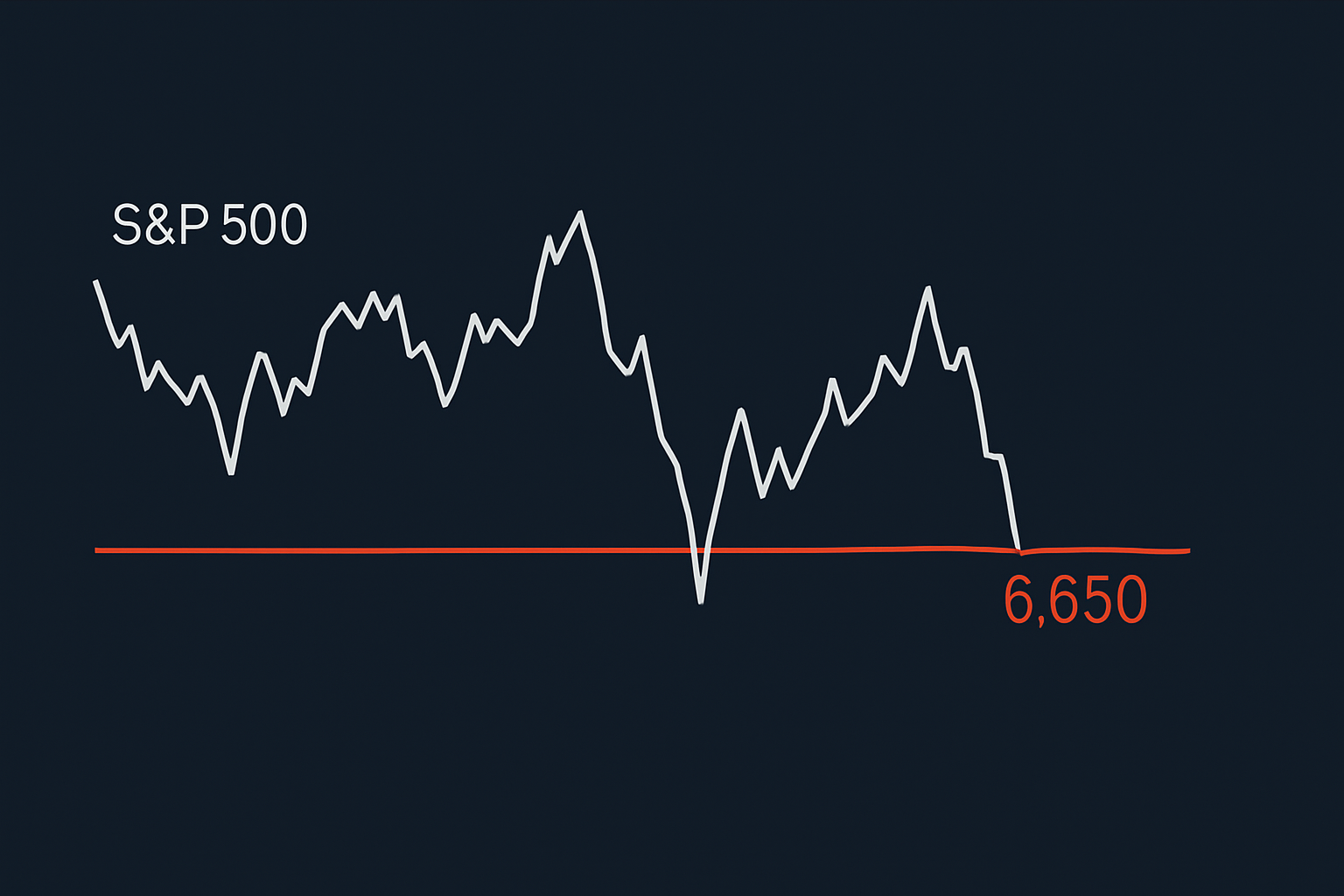
The S&P 500 has been playing an anxious game of tag with the 6,650 level this week—approach, retreat, approach, retreat. Like a teenager trying to work up the courage to ask someone to prom, the market just can't seem to commit.
After Washington finally ended its 43-day government shutdown—the longest in American history—investors initially popped the champagne. But the celebration fizzled faster than a cheap sparkler as economic reality crashed the party.
The Government Remembers Its Job Description
Monday kicked things off with something resembling optimism. The Senate hammered out a deal to reopen the government, and stocks jumped about 1% at the open before climbing to a 1.5% gain by closing bell.
On the same day, Warren Buffett announced he's stepping back from writing Berkshire's annual report and "talking endlessly" at the company's annual meeting. Funny timing, that. The Oracle of Omaha picking this particular moment to scale back—makes you wonder what he sees coming.
The shutdown-ending bill cleared the Senate Tuesday with the House vote penciled in for Wednesday. Meanwhile, Goldman Sachs estimated the U.S. economy lost some 50,000 jobs in October thanks to the shutdown. Real people, real paychecks, real pain—all because politicians couldn't do the bare minimum of their jobs for six weeks.
Wednesday brought the House vote, and Thursday finally saw Trump's signature end the whole sorry saga. The Dow crossed 48,000 for the first time—one of those meaningless milestones financial TV loves to trumpet with flashy graphics. Tech investors, meanwhile, seemed to think this was a perfect moment to cash in some chips.
Rate Cut Dreams Meet Economic Reality
Then Thursday happened. A brutal 1.5% selloff blindsided investors who thought the reopening would spark a sustained rally. What changed? Well, all that economic data that had been locked in a filing cabinet during the shutdown started leaking out, and suddenly the market's favorite bedtime story—imminent rate cuts—started looking more like a horror novel.
By Friday, Fed official Mary Daly was explicitly saying a December rate cut would be "hard to support." The market odds of a December cut plunged to 45%, down from what was practically a certainty just a couple weeks ago.
Look, I've been covering these markets long enough to know that nothing terrifies investors like the prospect of the Fed keeping rates higher for longer. The entire rally since last October has been built on rate cut expectations. Take that away, and what's left?
Gold and silver, which had been climbing on shutdown anxiety, suddenly reversed course. Even Michael Burry—last week's market darling—picked this moment to shutter his hedge fund. Either brilliant timing or terrible timing. We'll know in six months which one.
The Support Level Ritual
Three times now—three!—the S&P 500 has touched that 6,650 level and bounced. Last Friday it kissed that level and rebounded. This Friday, same story. Technical analysts are probably drawing all sorts of complicated chart patterns right now, but the simple version is: we've found a floor... until we haven't.
The index closed the week up a microscopic 0.08%—essentially flat, but hey, green is green in the ledger books.
The past month tells the story better than I could: - Oct 17-24: +1.92% - Oct 24-31: +0.71% - Oct 31-Nov 7: -1.63% - Nov 7-14: +0.08%
This isn't a bull or bear market. This is a confused market. A market searching for a narrative now that its favorite one—imminent rate cuts—seems increasingly doubtful.
What Happens Next?
The next couple weeks will be crucial (aren't they always?). The Commerce Department has announced that the Q3 GDP second reading arrives November 26, alongside the PCE inflation index—the Fed's preferred inflation gauge. And don't forget, we'll finally get that long-delayed September jobs report this Thursday.
In my conversations with several institutional traders this week, the mood was decidedly... cautious. "We're in wait-and-see mode," one portfolio manager at a major Boston firm told me. "The shutdown was a convenient excuse for volatility, but now we need to see what the economic fundamentals are actually saying."
Meanwhile, expect the S&P to keep dancing around that 6,650 level. Support levels are like superstitions—they work until they don't. Just ask anyone who thought $20,000 was absolute bedrock for Bitcoin back in 2021. (Spoiler alert: it wasn't.)
So, did you ride this week's government reopening rally? Or are you, like Burry, thinking this might be a good time to stand aside and let the dust settle? Either way, the second half of November promises plenty of action as markets digest the backlog of economic data and recalibrate their increasingly feverish rate cut dreams.
Sometimes the most honest market position is admitting you don't know what happens next. This feels like one of those times.


