
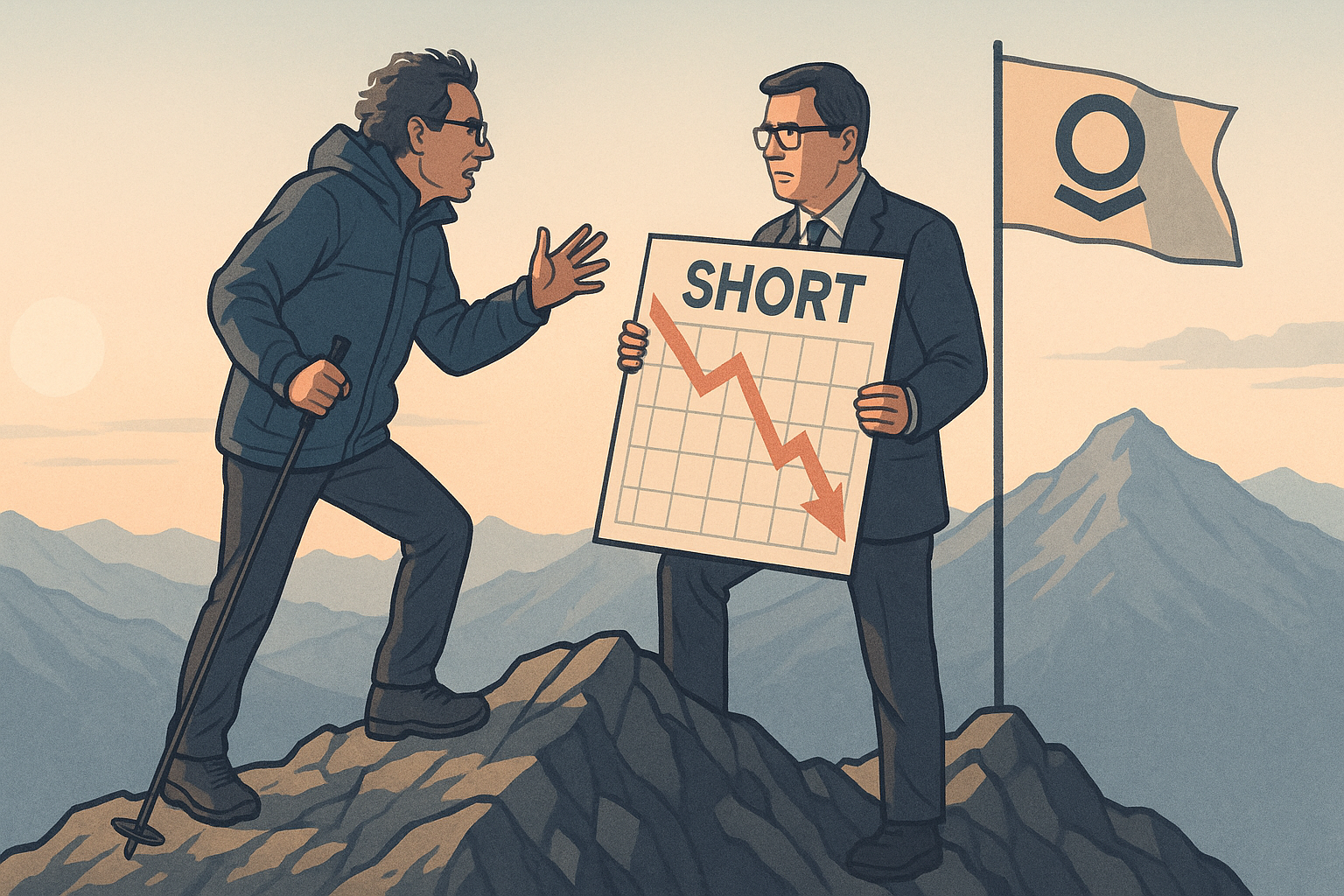
When Palantir CEO Alex Karp went on CNBC yesterday to call legendary investor Michael Burry a "lunatic" for shorting his company, I couldn't help but scratch my head. Here's a tech executive whose company is trading near all-time highs, yet he's spending valuable airtime swatting at critics? It's like watching someone frantically check for leaks in a boat that's winning the regatta.
The timing is... interesting. Palantir's stock has soared roughly 300% in the past year. Its market cap hovers around $100 billion on annual revenue of just $2.4 billion. That's a price-to-sales ratio that would make even the frothiest tech startups blush—about five times higher than AI darling Nvidia's, for perspective.
So why pick this fight now?
I've covered CEO behavior patterns for years, and they typically avoid engaging with shorts altogether. "The numbers will speak for themselves" is the standard playbook. When they break this unwritten rule, they're usually telling us something without meaning to.
Think about it. CEOs who aggressively combat short sellers typically fall into predictable categories:
Those hiding something (remember Enron's executives?) Those with thin skin (Musk has entered the chat) Those rallying their retail investor base (AMC's Adam Aron wrote this playbook) Those playing chess while we're playing checkers
Karp doesn't neatly fit any of these boxes, which makes this whole episode fascinating.
Look, Palantir isn't your typical tech company. Founded nearly 20 years ago as a secretive government contractor, it only went public in 2020. Since then, it's positioned itself as an AI powerhouse—quite successfully, judging by that stock chart.
But there's something odd about this particular confrontation. Burry isn't leading some massive short campaign against Palantir. He hasn't published detailed negative research or held presentations declaring the company the next house of cards. He's just... taken a position.
So why is Karp so bothered?
Perhaps it's what Burry represents rather than what he's actually doing. After all, Palantir does have nearly 40% short interest—a staggering figure for a company supposedly firing on all cylinders.
Or maybe it's just Karp being Karp. This is, after all, a CEO with a PhD in philosophy who prefers cross-country skiing to Silicon Valley schmoozing. His earnings calls often veer into philosophical territories that would make most CFOs reach for the panic button.
But there's a third possibility that keeps nagging at me. Karp may understand something fundamental about narrative management in today's market that most executives don't.
By attacking Burry specifically—a name big enough for headlines but not necessarily an expert in software valuations—he's controlling the battlefield. It's clever, really. With earnings coming next week, he's already framed the conversation: if numbers are good, he's vindicated; if they disappoint, well, he's already identified the "lunatics" responsible for any fallout.
(Having sat through more earnings calls than I care to admit, this kind of pre-emptive framing is rare but effective when done right.)
What should investors make of all this? For one, even wildly successful companies can show surprising insecurity. Second, executive behavior—especially unusual behavior—often contains signals worth decoding.
Palantir might absolutely deserve its lofty valuation. Its government relationships run deep, its commercial business is growing, and AI spending shows no signs of slowing down.
But when a CEO goes out of his way to attack critics from a position of apparent strength... wouldn't you wonder what he might be seeing that the rest of us aren't?
Then again, sometimes a cigar is just a cigar. And sometimes a CEO calling a short seller a "lunatic" is just a philosophical skier who doesn't like being told his company is overvalued.
We'll know more next week, I suppose. Markets, like philosophy, are complicated that way.


