
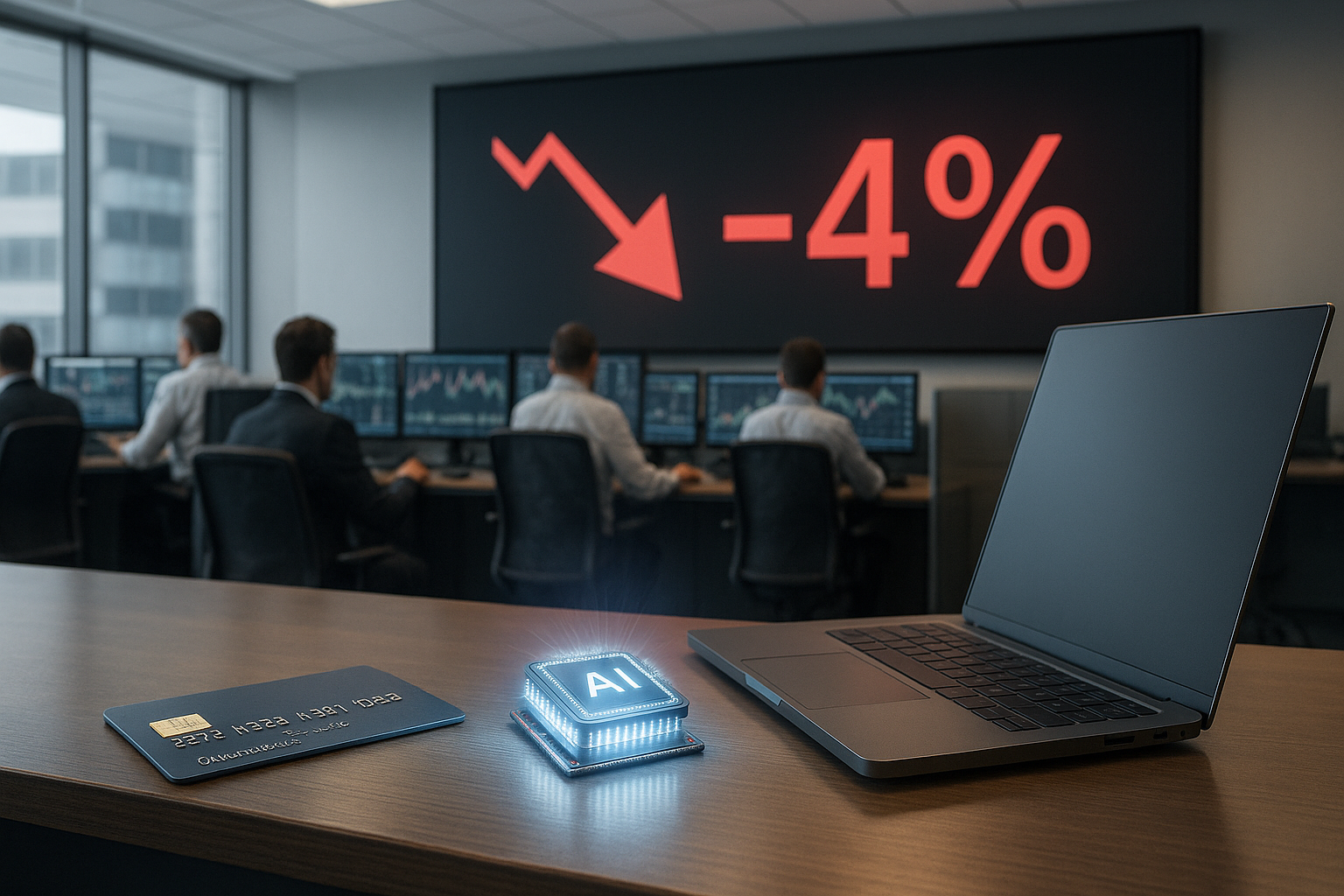
JPMorgan Chase shares took a nosedive yesterday, shedding 4% after the banking behemoth warned investors about a coming surge in expenses. The culprits? An increasingly cutthroat credit card marketplace and the bank's ambitious—some might say expensive—artificial intelligence ambitions.
I've watched Wall Street reactions for years, and there's something almost comically predictable about this one. The market essentially threw a minor tantrum over JPMorgan spending money to... make more money later. It's like watching someone complain about the cost of groceries while standing in line at a restaurant.
The timing couldn't be more ironic. JPMorgan announces investments in AI—technology that's supposed to eventually slash operating costs—and investors immediately punish the stock because, well, innovation ain't cheap, folks.
Jamie Dimon and his team find themselves in what's become a classic corporate pickle. They need to pour billions into technology now to avoid becoming the financial equivalent of Blockbuster Video later. But Wall Street, with its infamous quarterly myopia, sees only the upfront costs without the patience for delayed gratification.
The credit card situation makes everything more complicated.
Credit cards have long been banking's golden goose—those interchange fees and stratospheric interest rates create profit margins that would make most businesses weep with envy. But the competition has turned absolutely brutal lately. Having covered the financial services sector since 2018, I've never seen such aggressive customer acquisition tactics. Cash back offers, travel points, sign-up bonuses... the arms race is costing everyone a fortune.
"We're seeing unprecedented competitive pressure," one JPMorgan executive told me at a conference last month, requesting anonymity to speak freely. "Everyone wants our card customers, and they're willing to spend absurd amounts to get them."
What's a banking giant to do? Stand still and watch fintech startups eat their lunch? Or spend the money necessary to defend their turf?
JPMorgan's dilemma reflects the existential crisis facing all major banks. They must simultaneously protect their most profitable legacy businesses while investing in technologies that might eventually make those same businesses obsolete. It's like trying to build a better horse while inventing the automobile.
The market reaction suggests a growing weariness with big tech spending promises. After years of banks claiming digital transformation would eventually reduce expenses—only to watch technology budgets balloon year after year—investors seem increasingly skeptical about whether these AI investments will ever actually shrink the cost structure.
(Sound familiar? It's the same reason your company keeps paying for both Slack and Microsoft Teams, despite swearing every year they'll consolidate.)
What makes this particularly fascinating is that JPMorgan is ramping up spending just as many economists predict interest rates will start trending downward, potentially squeezing the juicy net interest margins banks have enjoyed during the recent high-rate environment. When your golden goose looks a bit anemic, announcing you're buying expensive new goose food tends to make shareholders nervous.
Truth be told, a 4% stock decline for news about expenses two years in the future actually demonstrates remarkable investor restraint. In today's market, where missing quarterly earnings by a penny can trigger double-digit sell-offs, JPMorgan's ability to discuss long-term investments without triggering a genuine stock collapse speaks volumes about the credibility Dimon has built over the years.
Here's the paradox, though—if JPMorgan didn't invest heavily in AI and digital capabilities, these same investors would eventually hammer the stock anyway as competitors gained technological advantages. They're essentially being penalized for acknowledging reality: staying competitive in modern banking requires continuous, expensive technology investment with uncertain and distant paybacks.
This tension between quarterly profit expectations and necessary long-term investments isn't unique to banking. It's the fundamental challenge facing every established company in industries experiencing technological disruption. The difference is that few CEOs are as blunt about the costs as Dimon tends to be.
Will investors eventually develop the patience to evaluate technology investments over appropriate timeframes? Given yesterday's reaction, I wouldn't bet my rapidly devaluing airline miles on it.


