
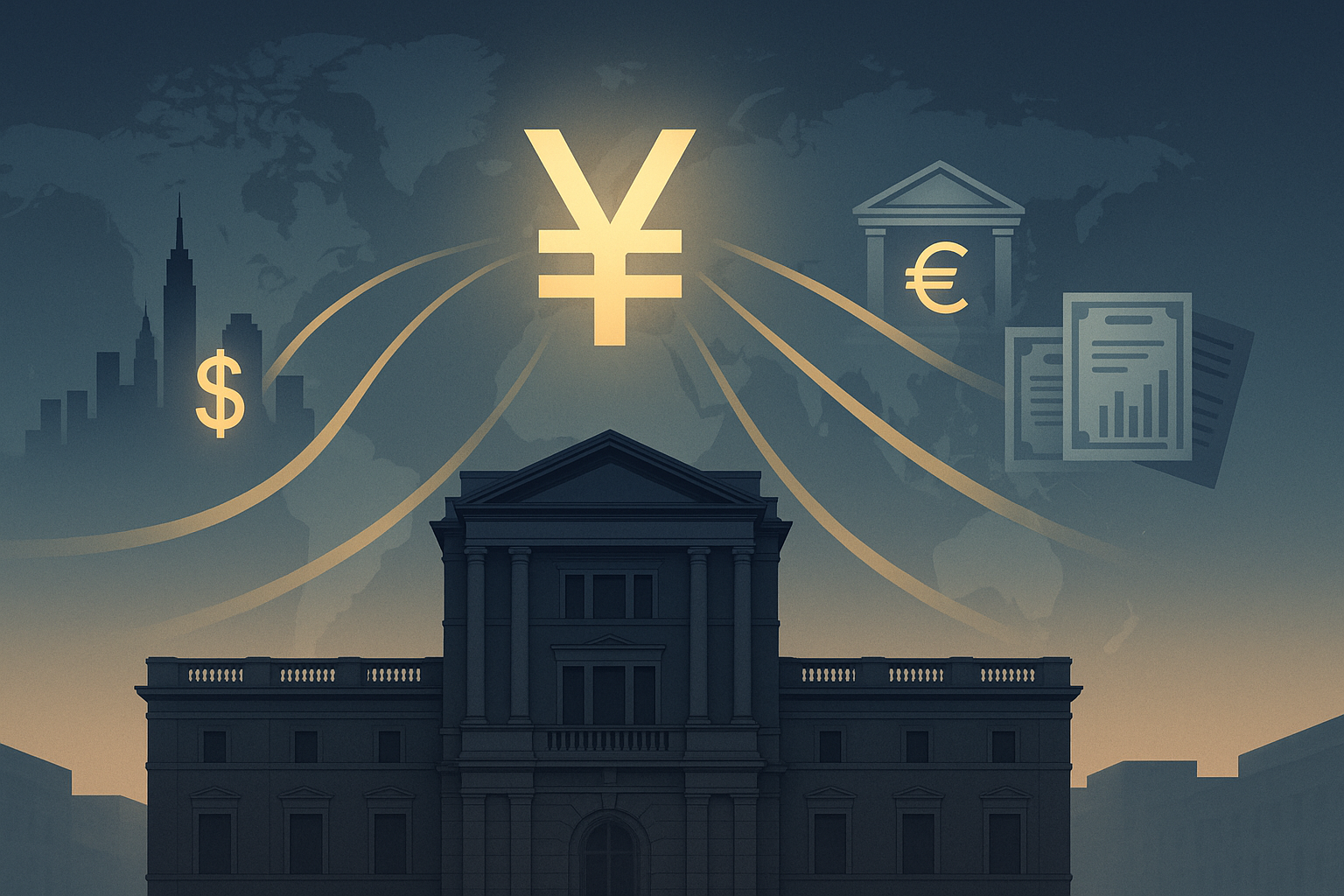
In financial circles, Japan doesn't command headlines like Fed decisions or Treasury yield curves. Yet this island nation—perpetually overshadowed by louder market narratives—keeps surfacing in serious conversations among those who understand where real market power lies.
I've spent years watching how seemingly minor policy shifts from Tokyo ripple through global markets. The effects aren't always obvious at first glance, but they're profound.
So why does Japan matter so much? Let me break it down.
The Yen Carry Trade: Wall Street's Favorite Addiction
Since the 1990s, Japan has essentially functioned as the world's discount financing window. While most central banks maintained some semblance of normal interest rates, the Bank of Japan kept money practically free. Zero interest rates. Sometimes even negative ones. (Yes, they actually paid borrowers to take their money—financial madness that somehow became normalized.)
This created the infamous "yen carry trade." The mechanism is brilliantly simple and dangerously effective: borrow cheaply in yen, convert to other currencies, then invest wherever returns look juicier. Rinse, repeat, profit.
"It's been the backbone of countless investment strategies for decades," a veteran hedge fund manager told me last week, requesting anonymity because his firm is still neck-deep in these positions. "Take away that cheap Japanese funding, and a lot of portfolios need serious restructuring."
The Butterfly Effect, Tokyo Edition
Here's where things get interesting—and potentially troubling for market stability.
After what seemed like forever, Japan finally started nudging interest rates upward in 2023. Even microscopic moves matter enormously because, well, Japan isn't small potatoes. We're talking about the world's third-largest economy and its biggest creditor nation.
Look, when Japan adjusts monetary policy, it's like moving furniture in a house of cards. Everything shifts.
Those carry trades? They start unwinding. Assets purchased with that cheap Japanese funding? Suddenly under pressure to be sold. The domino effect can be startling.
I remember watching markets in December 2022 when the BOJ merely widened the trading band for government bond yields. Global markets threw an absolute tantrum! Treasury yields jumped, stock futures plunged. All because of a technical adjustment that most casual observers completely missed.
The BOJ: Quantitative Easing Before It Was Cool
While the Federal Reserve gets all the attention, the Bank of Japan has been the true pioneer of monetary experimentation. They've been doing massive quantitative easing since before most American economists could properly define the term.
The numbers are staggering. The BOJ owns approximately half of all Japanese government bonds. They're major shareholders in countless Japanese companies through ETF purchases. Their balance sheet makes other central banks look positively restrained by comparison.
And yet... how often do you see BOJ Governor Kazuo Ueda's face splashed across financial news? Almost never. The influence-to-publicity ratio is completely out of whack.
JGBs and Treasuries: Joined at the Hip
Japanese Government Bonds (JGBs) and US Treasuries move in mysterious synchronicity—except it's not really mysterious if you understand the mechanics.
Japanese financial institutions hold over $1 trillion in US Treasuries. When domestic Japanese yields rise, these massive institutional investors face a straightforward calculation: sell American paper to buy higher-yielding bonds at home.
This helps explain why US yields sometimes move for reasons that leave American analysts scratching their heads. The puppet master might be sitting in Tokyo, not on Wall Street or in Washington.
Having tracked these relationships for years, I've seen Treasury market moves that made no sense until you factored in overnight developments in Japanese markets.
The Current Market Puzzle
The debate raging now—are we in a bubble or at the start of something sustainable?—hinges significantly on liquidity conditions. Japan has been among the last major holdouts maintaining ultra-accommodative policy.
As they normalize (a process moving at glacial speed by Western standards but lightning-fast by Japanese ones), the global liquidity environment changes. The punch bowl isn't being taken away, perhaps, but it's certainly getting watered down.
Is Japan alone going to crash markets? Of course not. That's simplistic thinking.
But Japan represents a crucial piece of the global liquidity puzzle, especially with the Fed potentially cutting rates later this year. If Japan tightens while America loosens, well... markets hate mixed messages almost as much as they hate bad news.
The Takeaway
Japan matters because global finance is ultimately plumbing, not headline-grabbing personalities. The pipes carrying money around the world run through Tokyo as surely as through New York and London.
When Japanese rates move, global liquidity shifts. Asset prices everywhere—from Manhattan penthouses to German Bunds to emerging market currencies—feel the effects, whether immediate or delayed.
So next time someone dismisses Japanese policy developments as irrelevant to their portfolio? They're missing a fundamental piece of the market puzzle.
In the interconnected world of global finance, sometimes the quietest voice in the room is the one you should listen to most carefully. Japan has been whispering for decades. Smart investors have learned to lean in and listen.


