
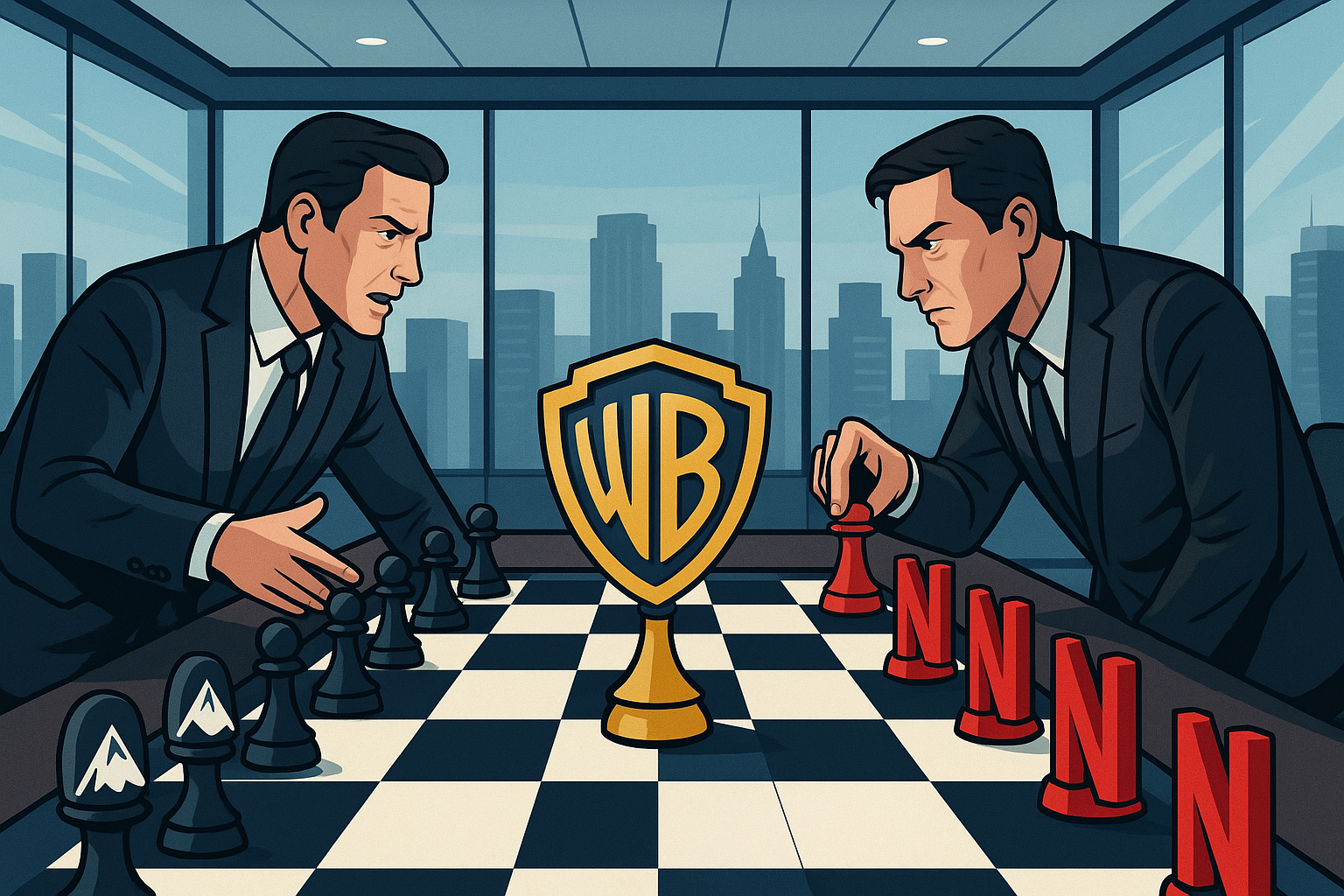
The entertainment industry boardrooms are buzzing with the kind of drama that would make for a hit limited series. Paramount Skydance has just launched what can only be described as a hostile takeover bid for Warner Bros. Discovery, offering $30 per share in cash—a move that comes right as Netflix appears poised to cherry-pick WBD's most valuable assets.
It's a fascinating corporate chess match. Or maybe it's more like a high-stakes version of Old Maid, where nobody wants to get stuck holding the traditional TV networks when the music stops.
I've been covering media consolidation since the early streaming wars, and I've never seen anything quite like this three-way power struggle. The timing is what makes this particularly intriguing.
Here's the situation: David Ellison of Skydance (son of Oracle billionaire Larry Ellison) is essentially sending a blunt message to WBD shareholders—"Take my money now before you're left holding nothing but declining cable assets." It's the corporate equivalent of offering to buy someone's house after they've already sold all the good furniture.
The psychological dynamics at play are fascinating. Paramount is betting on what behavioral economists call "loss aversion"—that primal fear we humans have about ending up on the losing end of a deal. Their pitch is basically: "Look, Netflix is taking all the good stuff. We're your emergency exit."
(The irony that Paramount itself has been shopping for a buyer isn't lost on industry insiders I've spoken with.)
What we're witnessing is the death throes of the integrated media company model. Remember when "synergy" was the magic word that justified every mega-merger? When combining content creation with distribution networks was supposed to create unbeatable competitive advantages? Those arguments now sound as outdated as VHS rental late fees.
Netflix's strategy makes perfect sense. They want HBO's prestige content factory and Warner's film studio—assets that complement their streaming business perfectly. The cable networks? Well... those would be about as useful to Netflix as a fax machine in a Tesla factory.
"This is the final phase of the streaming wars," one senior executive at a major studio told me yesterday, requesting anonymity to speak candidly. "The winners are now carving up the losers and taking only what serves their future vision."
The question facing WBD shareholders couldn't be more stark: take Paramount's guaranteed money now, or gamble that whatever remains after Netflix finishes shopping will somehow be worth more.
It's worth noting that this dismantling of media empires represents a profound shift in how the industry views its future. These conglomerates spent decades building walled gardens and forcing bundled packages on consumers. Now they themselves are being unbundled and sold for parts. There's a certain poetic justice there, isn't there?
For industry veterans who've watched countless rounds of mergers and acquisitions, this latest chapter feels different—more desperate, more existential. The traditional media companies aren't just combining to get bigger; they're frantically reshuffling assets in a last-ditch effort to stay relevant.
The outcome will likely hinge on whether WBD shareholders buy Paramount's argument that keeping these assets together preserves value, or if they accept Netflix's implicit position that the future belongs to companies focused exclusively on premium content delivery.
One thing seems certain—when this particular game of musical chairs ends, someone's going to be left standing with a bundle of cable networks that nobody wants. And in today's media landscape, that's a starring role no executive wants on their résumé.


