
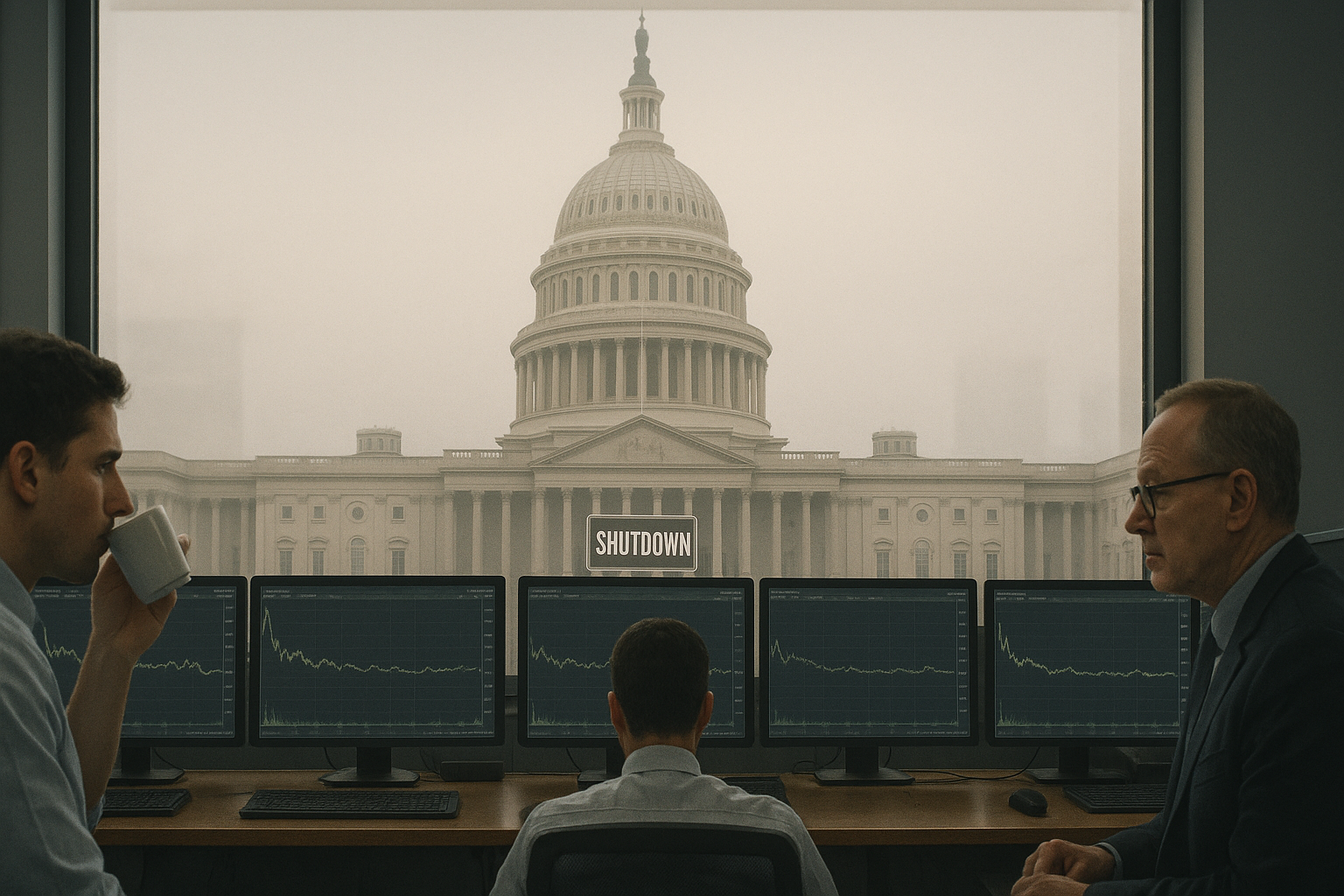
I've been covering government shutdowns since the Obama administration, and let me tell you—they're getting less dramatic but somehow more exhausting each time. Like a TV series that should've ended seasons ago.
The longest government shutdown in U.S. history (35 days under Trump) is about to be dethroned. Yesterday's Senate failure to pass yet another appropriations bill surprised exactly no one. We're watching history unfold at the pace of drying paint.
But here's what's genuinely interesting: Wall Street's collective yawn.
It's not that investors are irrational. They've just seen this movie before—several times—and know how it ends. Markets have developed what I'd call a "Delayed Consequence Theory" regarding political theater. They simply don't react until something tangibly affects the economy.
"Markets have become desensitized to these shutdowns," explained Marcus Townsend at Capital Market Strategies when I spoke with him yesterday. "It's noise until it isn't."
Look at the historical pattern. Markets typically maintain their composure until federal employees miss multiple paychecks or economic data gets delayed to the point where analysts are essentially throwing darts at a GDP board. Only then does reality set in.
This time might be different, though. Not because of the shutdown itself (yawn), but because of timing.
We're smack in the middle of an earnings season sending mixed signals. Consumer confidence is showing hairline fractures. The economic backdrop isn't as forgiving as during previous government tantrums.
The traditional "this is fine" market response—picture that meme with the dog in the burning room sipping coffee—might not hold if this extends substantially further.
Cash positions are quietly increasing among institutional investors. Not dramatically (yet), but noticeably. It's not panic—more like prudence.
I've been tracking investor sentiment shifts during these shutdowns for years, and there's a subtle psychological transition that happens. Each day moves market psychology incrementally from "political noise" to "economic signal." It's not a switch flipping but a gradual dial turn.
What we're seeing now? Investors holding long-term positions while simultaneously increasing hedges and cash allocations. Not irrational in the slightest.
The real question isn't whether markets will eventually react (they absolutely will if this drags on), but at what point the cumulative economic drag becomes impossible to ignore. Federal workers missing mortgage payments, delayed tax refunds, reduced consumer spending—these aren't theoretical concerns. They're the inevitable dominos of extended government dysfunction.
(Side note: Has anyone noticed how we've normalized government dysfunction to the point where it's basically expected? That's... concerning on a whole different level.)
For investors wondering what to do—don't panic, but don't be complacent either. Markets have historically recovered quickly from shutdown-related dips, making them terrible timing mechanisms for major portfolio shifts.
That said, having some dry powder rarely hurts.
The irony is almost predictable: by the time markets fully price in shutdown concerns, we're typically approaching resolution. By the time everyone's worried, it's often nearly over—which is precisely why trying to trade around these events is a fool's errand for most investors.
For now, the most rational approach is watching and waiting, perhaps with slightly higher cash reserves than usual. Not because the sky is falling, but because preparation beats panic every time.
Meanwhile, tech earnings continue creating individual stock volatility while broader indexes remain weirdly stable. The Fed watching game continues. And international markets are... well, they're doing their own thing with surprising resilience.
I'll keep watching this slow-motion train wreck. Just don't expect markets to care until they suddenly do.


