
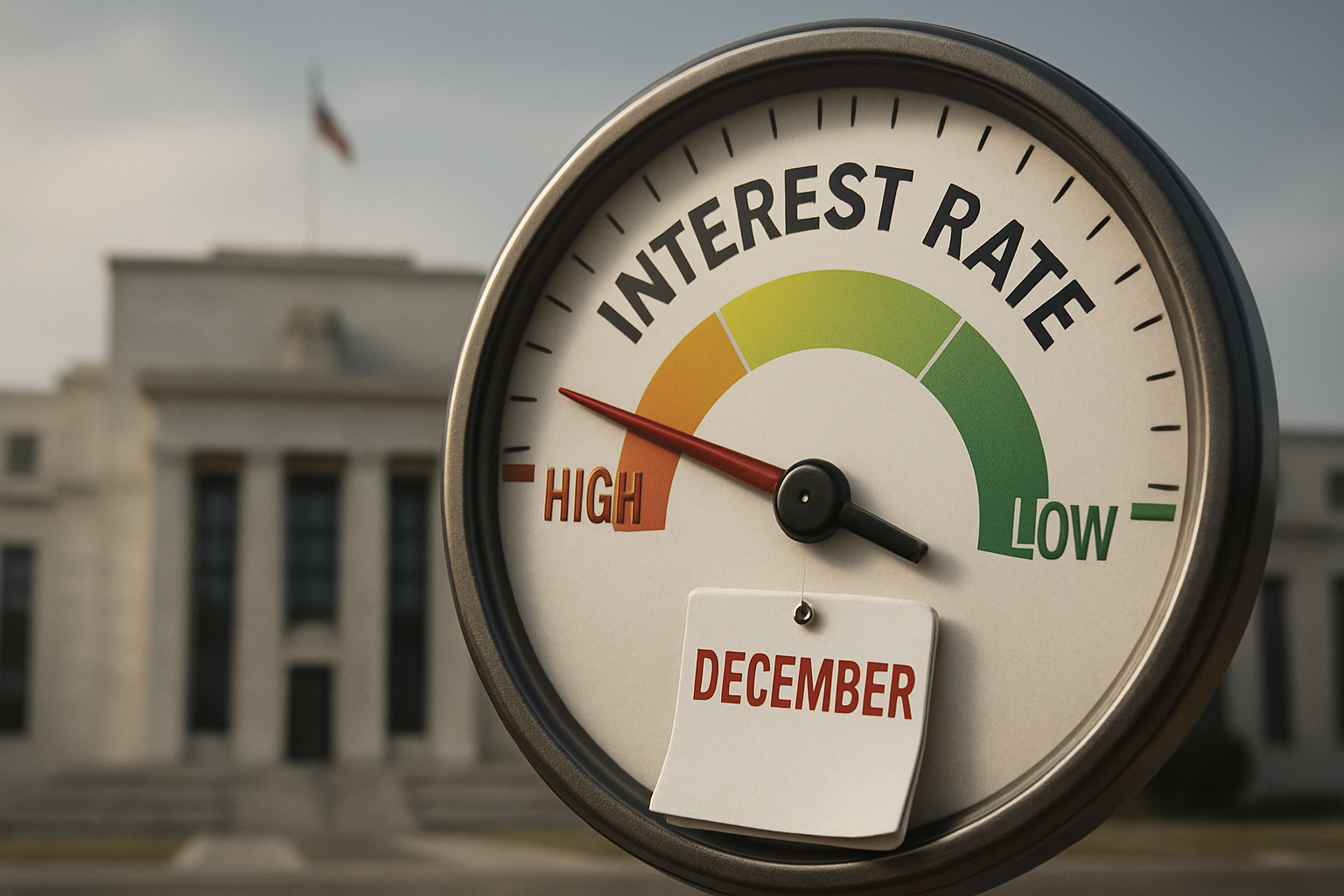
Federal Reserve Governor Christopher Waller has made what can only be described as a dramatic shift in his stance on monetary policy, indicating he now supports an interest rate cut in December due to concerns about deteriorating labor market conditions.
This is a remarkable reversal for Waller, who had been among the Fed's most consistent inflation hawks throughout the post-pandemic period. His sudden focus on employment data suggests a broader shift may be underway within the Federal Open Market Committee.
"It's almost like watching someone discover gravity exists," a veteran Wall Street economist told me yesterday. "The labor market trends have been visible for months."
The timing is particularly interesting. Job growth has been moderating since early summer, with several recent reports showing clear deceleration. Wage growth has likewise cooled, and corporate layoff announcements have been trickling in with increasing frequency. None of this developed overnight.
For months, the Fed's story has been consistent—perhaps too consistent. Inflation remains the primary enemy, unemployment is historically low, and therefore patience is both possible and prudent. But markets have been signaling disagreement with that assessment since spring.
Look, central banking requires balancing risks. I've covered monetary policy for years, and there's always tension between acting too soon and acting too late. But what we're witnessing here feels like what economists sometimes privately call "recognition lag"—the time between when a problem emerges and when policymakers acknowledge it.
Bond markets, which had already priced in a December cut with remarkable confidence, reacted with the financial equivalent of "told you so." Stocks jumped on Waller's comments, with the S&P 500 pushing higher as traders recalibrated their rate expectations.
The Fed's communication approach continues to fascinate. Rather than clear forward guidance from the chair, we see this gradual migration of individual opinions that eventually crystallizes into consensus. It's almost organic—like watching a school of fish change direction without any single fish making the decision.
What remains unclear is whether December might bring a standard quarter-point reduction or something more aggressive. The Fed typically favors incrementalism (they're not exactly known for dramatic gestures), but the economic data between now and their meeting could certainly shift the calculus.
"When the Fed pivots, they all tend to pivot together," noted Sarah Bianchi at Evercore ISI. "Waller moving means others will follow."
The irony, of course, is palpable. After months of markets practically begging for rate cuts while the Fed stood firm in its inflation-fighting stance, Waller's conversion likely signals that the entire committee is nearing consensus. Central bankers have finally caught up to where market participants have been pointing for quite some time.
Is it better late than never? Probably. But in monetary policy, timing is everything—the difference between engineering a soft landing and scrambling to address a recession that's already begun. The Fed is trying to land an economic aircraft that's already experienced considerable turbulence.
One thing seems certain—central banking remains as much art as science, and sometimes even the most data-dependent artists don't recognize they've been painting themselves into a corner until they're already there.


