
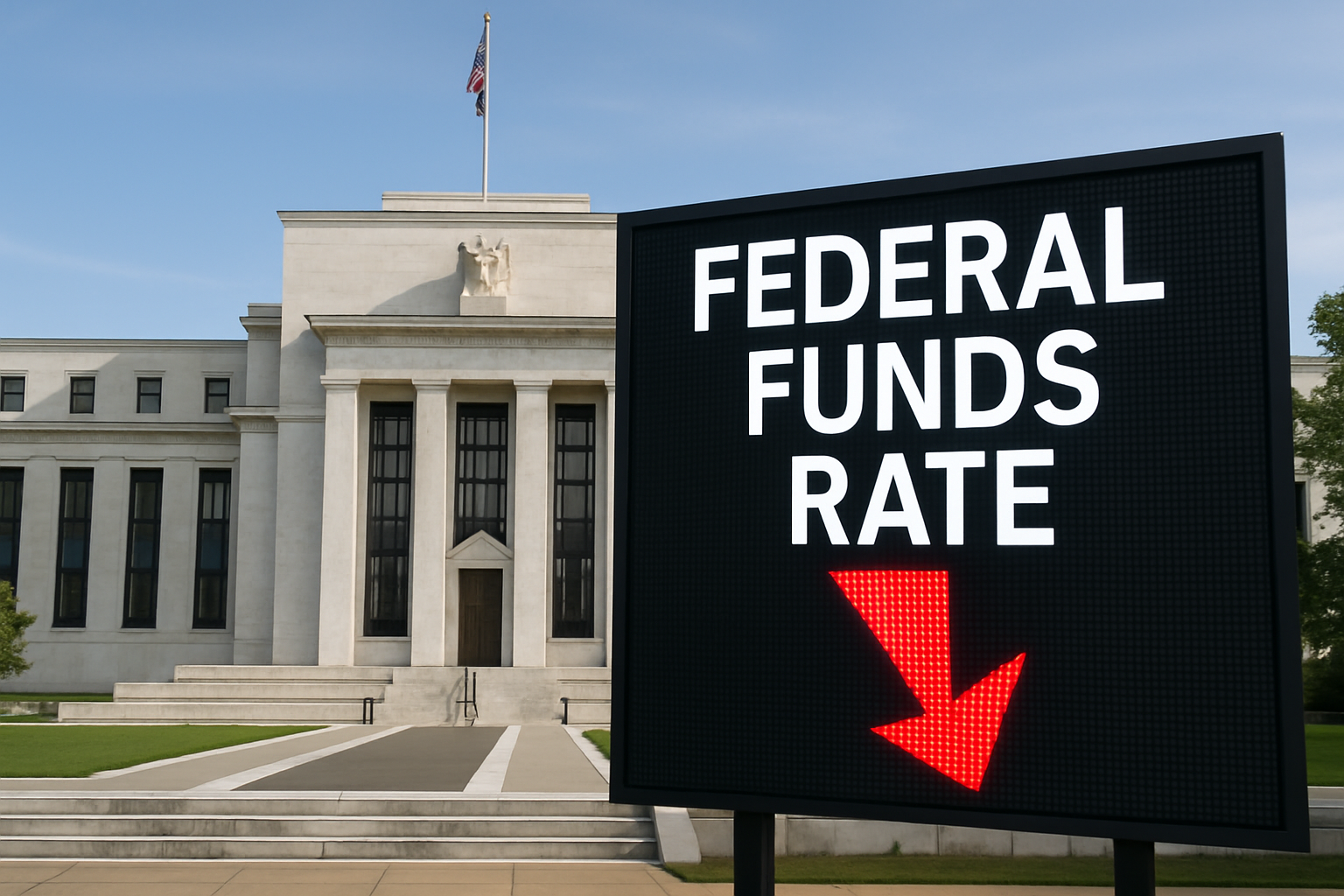
The Federal Reserve is about to cut interest rates for the third time this year. That much seems clear. What happens after that? Well, that's where things get complicated.
We're witnessing the unwinding of what was arguably the most aggressive tightening cycle in recent memory. Remember the days when Fed officials were practically tripping over themselves to sound hawkish? That era is fading into the rearview mirror as the central bank pivots—cautiously, deliberately—toward easing.
Markets have already digested the likelihood of this third cut. No surprises there. The real drama lies in what 2024 holds, and I've never seen such wildly divergent forecasts from normally staid economic analysts.
Talk to five different Wall Street economists and you'll get five different rate trajectories. Some see a few modest "insurance cuts" before rates stabilize at a new equilibrium. Others are penciling in dramatic reductions that would take us back toward the zero-bound territory we thought we'd left behind. The gap between these predictions is, frankly, stunning.
The Fed itself appears genuinely uncertain about the path forward. Powell has elevated ambiguity to an art form, delivering marathon press conferences that somehow leave listeners with fewer certainties than they had before. (This skill, I should note, is probably necessary in his position.)
What's driving this uncertainty? For one thing, the economic signals are all over the place.
Manufacturing is in the doldrums. Has been for months. The factory sector looks about as healthy as a chain smoker after running a marathon.
Yet services? Still humming along. And American consumers—despite constant complaints about prices—continue spending with remarkable resilience. Every time analysts predict they'll finally pull back, shoppers prove them wrong.
The labor market presents its own puzzles. It's cooling, yes, but in a strangely uneven way. Some sectors are shedding jobs while others can't hire fast enough. Unemployment has ticked up, but remains historically low. It's like watching ice melt in patches rather than uniformly.
I've covered monetary policy for years, and I often think of the Fed's job as trying to parallel park a semi-truck while blindfolded. They're making consequential decisions based on imperfect, backward-looking data that's frequently revised. Not exactly ideal conditions.
Looking toward next year, there's another wild card in the deck: presidential politics. The Fed insists—with complete sincerity, I believe—that politics never influences their decisions. But let's be real. An election year creates an environment where every rate move will be scrutinized for potential political motivations.
Could the fear of appearing political itself affect their timing? It's not a crazy question.
The economic fundamentals will ultimately drive decisions, of course. If inflation continues its downward glide while unemployment climbs more rapidly than expected, we'll likely see an accelerated cutting cycle. If, however, inflation proves sticky at levels above the Fed's 2% target, Powell might tap the brakes on rate reductions.
The market narrative has evolved considerably over the past six months. "Higher for longer" was the mantra earlier this year. Now it's more like "we're cutting, but don't get carried away." Traders parse every syllable of Fed communications with the intensity of biblical scholars examining ancient texts.
Will we eventually view this period as the start of a sustained easing cycle or merely a calibration to slightly less restrictive territory? That remains to be seen.
Look, monetary policy isn't exactly everyone's idea of thrilling content. But for those of us who follow these developments closely—and for anyone with a mortgage, savings account, or retirement plan—the Fed's next moves matter enormously.
In a world full of uncertainties, at least we can count on one thing: more speculation about what Powell and company might do next. Some traditions never die.


