
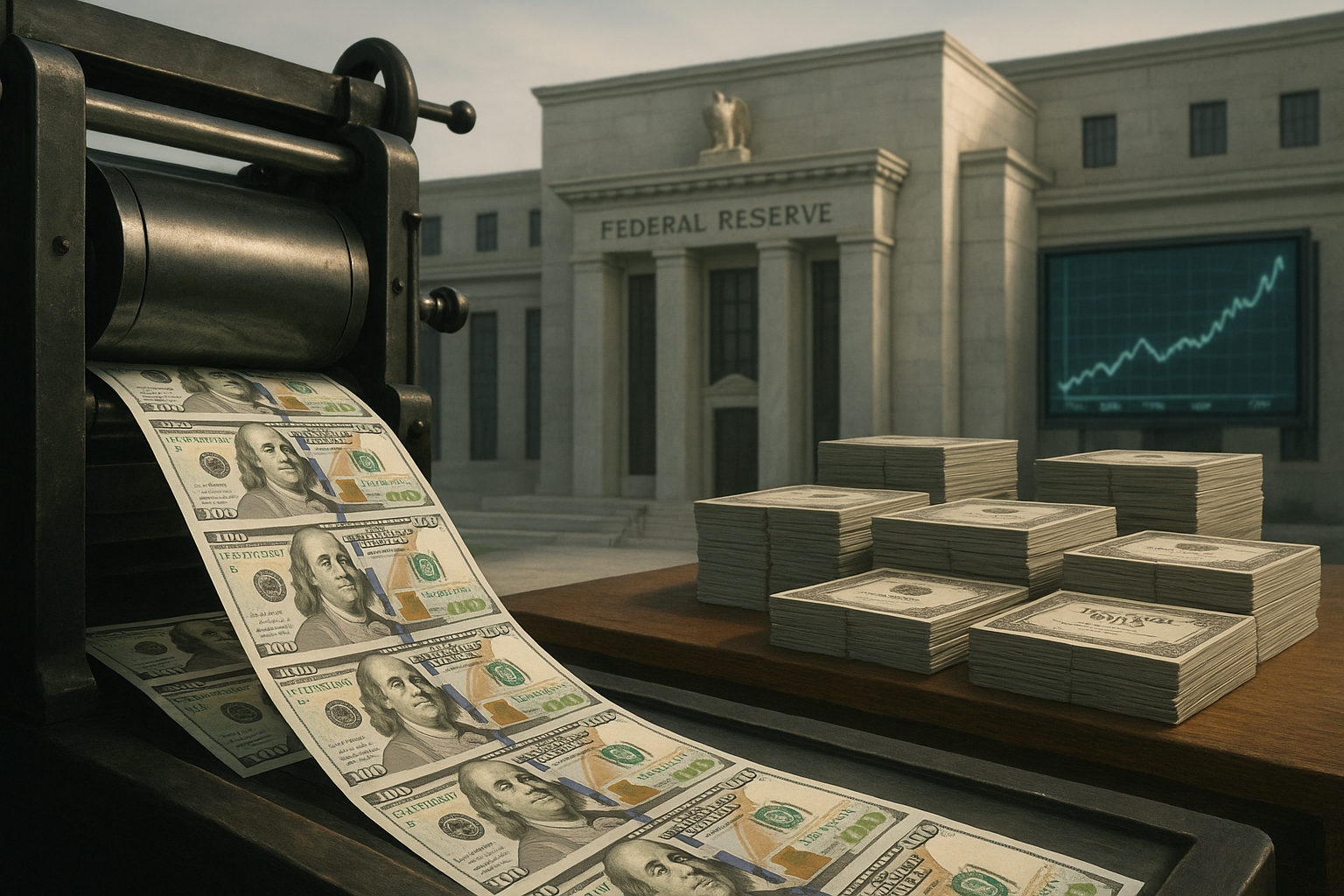
The Federal Reserve is pulling out its well-worn emergency playbook again. Quantitative easing—that curious economic maneuver where money materializes from digital ether to buy government bonds—is apparently back on the table.
I've watched this cycle play out so many times now it's almost comical. Market hiccups? Fire up the QE. Banking wobbles? More QE. Global pandemic? Flood the zone with QE.
It's like watching someone whose only cooking technique is microwaving trying to prepare a five-course meal. "This dish features artisanally microwaved ingredients with hints of... also microwaved components."
What's striking isn't just that they're doing it again—it's how utterly normalized this once-radical policy has become. Remember those early days when Bernanke introduced QE? The financial press treated it like he was performing experimental surgery on the economy while blindfolded. Now? It's basically economic Tylenol.
The mechanism itself isn't particularly complex. The Fed buys assets (usually Treasury bonds) from banks, pumping money into the financial system, which theoretically should increase lending and investment throughout the economy. But there's something almost painfully optimistic about how policymakers describe this transmission process—as though money injected at Wall Street will magically find its way to Main Street rather than just inflating asset bubbles.
Look, QE clearly does something. The question worth asking is whether what it does aligns with what average Americans actually need.
The S&P 500 responds to QE announcements like a puppy hearing the treat jar open. But its record on generating real wage growth or addressing fundamental economic inequalities? That's... complicated.
Then there's the withdrawal problem. The Fed has attempted to unwind its balance sheet before, only to discover that markets react with all the emotional stability of a teenager denied WiFi access. Turns out, once the economy gets hooked on monetary sugar highs, the crashes are brutal.
(Having covered monetary policy since the 2008 financial crisis, I've lost count of how many times we've seen this pattern repeat.)
What's the long-term plan here? Does anyone actually know?
The cognitive dissonance is particularly fascinating when you notice that many folks who clutch pearls about government spending seem utterly unfazed by central banks creating trillions out of thin air. It's like watching someone obsess over calories while downing diet sodas by the gallon.
This latest round will likely follow the established script: markets will rally, the wealthy will get wealthier, and economists will publish contradictory papers about whether it was necessary. And when the next crisis inevitably appears—probably something we haven't even imagined yet—we'll crank the presses even harder.
Because in today's economic landscape, when your primary tool is monetary expansion, suddenly everything resembles a liquidity problem. And nothing quite says "modern economic management" like addressing structural issues with temporary liquidity solutions.
We'll see how it plays out this time. I'm not holding my breath for different results.


