
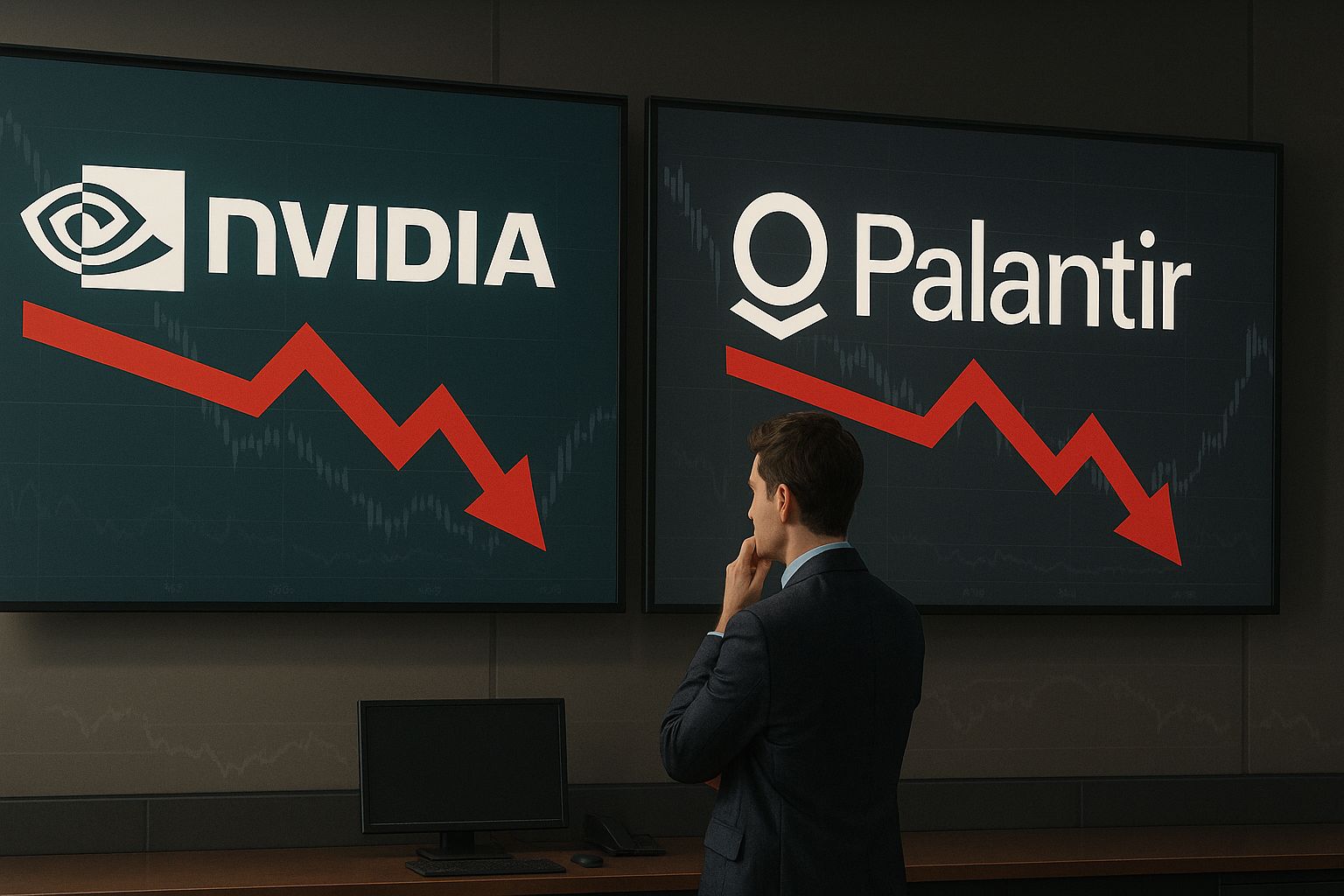
Michael Burry is at it again—this time taking aim at Silicon Valley's most cherished darlings.
The famously reclusive investor, whose prescient bet against the housing market was immortalized in "The Big Short," has just revealed substantial put positions against Nvidia and Palantir, essentially wagering that the AI frenzy powering these stocks to stratospheric heights is due for a reality check.
Look, betting against the AI narrative in 2023 feels like standing in front of a freight train. These aren't just any tech stocks—they're the standard-bearers of what many consider the most transformative technological wave since the internet itself.
I've covered market contrarians for years, and Burry's move here feels particularly bold, even by his standards. It's like watching someone confidently walk into a hurricane because they've calculated that atmospheric pressure can't possibly sustain these wind speeds much longer.
The Timing Question
Burry has made a career out of being early. Sometimes painfully early. And occasionally spectacularly right.
His housing market call was initially dismissed as apocalyptic fantasy—until suddenly everyone realized he'd been right all along. But his post-2008 record? More complicated. He's predicted market collapses that never materialized and made high-profile bets (like his Tesla short) that likely cost him dearly.
The thing about being a contrarian is that you need two distinct skills to succeed: correctly identifying the mispricing and—this is the hard part—surviving long enough for the market to eventually see things your way.
Nvidia shares have skyrocketed about 700% since 2022. Palantir? Up a dizzying 400% in just the past year. Both have become the market's favorite vehicles for betting on AI dominance.
Which raises the question: Even if Burry's thesis is ultimately correct, can he withstand potentially months (or years) of continued momentum before any correction materializes?
Valuations in the Stratosphere
Having tracked tech valuations through multiple cycles, I find the current numbers genuinely eye-popping.
Nvidia trades at roughly 37 times forward sales and 70 times earnings. For perspective, that's not just expensive—it's pricing-in-perfection territory. These multiples assume not only continued market dominance but also substantial growth for years to come.
Palantir isn't any less ambitious at 30 times sales. The market is essentially betting that the company's AI pivot will dramatically accelerate its growth trajectory—a trajectory that, until recently, had been somewhat disappointing since its public debut.
For these valuations to make mathematical sense, you have to believe a perfect storm of positive factors will converge:
- The AI investment boom continues unabated
- These specific companies capture disproportionate value from that trend
- Competition somehow doesn't erode margins
- No regulatory or technological surprises disrupt their positions
That's... well, that's a lot of dominoes that need to fall exactly right.
Echoes of Bubbles Past
I spoke with several veteran tech investors who see uncomfortable parallels to previous technology bubbles. The pattern feels distressingly familiar: revolutionary technology → legitimate excitement → investor frenzy → disconnection from economic reality.
Remember Cisco during the dot-com boom? A genuinely important company selling critical infrastructure for a legitimate technological revolution. At its peak, Cisco traded at over 150 times earnings. Two decades later, despite being a successful enterprise, its stock has never again touched those heights.
The AI revolution is undoubtedly real (I've seen the technology's capabilities firsthand). But the question isn't whether AI will transform business—it's whether investors are already paying 2043 prices for 2023 companies.
Reading Burry's Mind
Burry hasn't publicly detailed his reasoning for these particular shorts. He's become increasingly cryptic in his market commentary, often deleting his social media posts shortly after making them.
But based on his previous commentary and investment patterns, we can make some educated guesses:
- He likely sees the current AI investment cycle as front-loaded, with companies over-investing in speculative initiatives that may not generate proportional returns
- For Nvidia specifically, he probably views their remarkable market share as vulnerable to increased competition from AMD, Intel, and custom chips from the tech giants
- With Palantir, he may see their AI pivot as more marketing than substance—essentially a rebranding of existing capabilities to ride the AI wave
And perhaps most significantly, he's betting that the higher-for-longer interest rate environment will eventually force a painful reckoning with these lofty valuations. (When capital costs more, speculative growth becomes less attractive—a lesson many newer investors haven't experienced firsthand.)
The Risks to Burry's Bet
Betting against powerful market narratives has destroyed many smart investors. AI enthusiasm could persist for years, particularly if these companies keep delivering knockout results. Nvidia has consistently beaten already-elevated expectations. Palantir recently returned to accelerating growth rates after a period of stagnation.
There's also the very real possibility that we are genuinely witnessing the early stages of a transformative technological revolution comparable to the early internet or the mobile computing wave. If AI delivers even half the productivity gains that optimists project, today's seemingly stretched valuations might eventually look quaintly conservative.
And let's not forget the structural factors working against shorts in today's market: passive investment flows, momentum-based trading algorithms, and good old-fashioned FOMO from both retail and institutional investors terrified of missing the next big thing.
The Takeaway for Normal Investors
Whether Burry ultimately ends up right or wrong (and we may not know for years), his position raises important questions for all market participants.
Are we witnessing a rational repricing of companies positioned to benefit from a generational shift? Or are we in the euphoric phase of a bubble, where the narrative has detached from economic fundamentals?
I don't have the definitive answer. Neither does Burry, despite his legendary status. Neither, frankly, does anyone else—that's what makes markets so endlessly fascinating and treacherous.
But when someone with Burry's track record makes a substantial bet against the market's most beloved narrative, it at least deserves thoughtful consideration.
One thing's certain: these AI valuations contain minimal margin for error. The companies must execute flawlessly for years just to grow into current prices, let alone exceed them.
In the end, markets don't particularly care what Michael Burry thinks. Or what I think, for that matter. They'll eventually find their own equilibrium, as they always do.
But history suggests that when valuations reach these atmospheric levels, investors might want to consider whether they're buying growth stocks or lottery tickets. Sometimes they're the same thing—until suddenly, they're not.


