
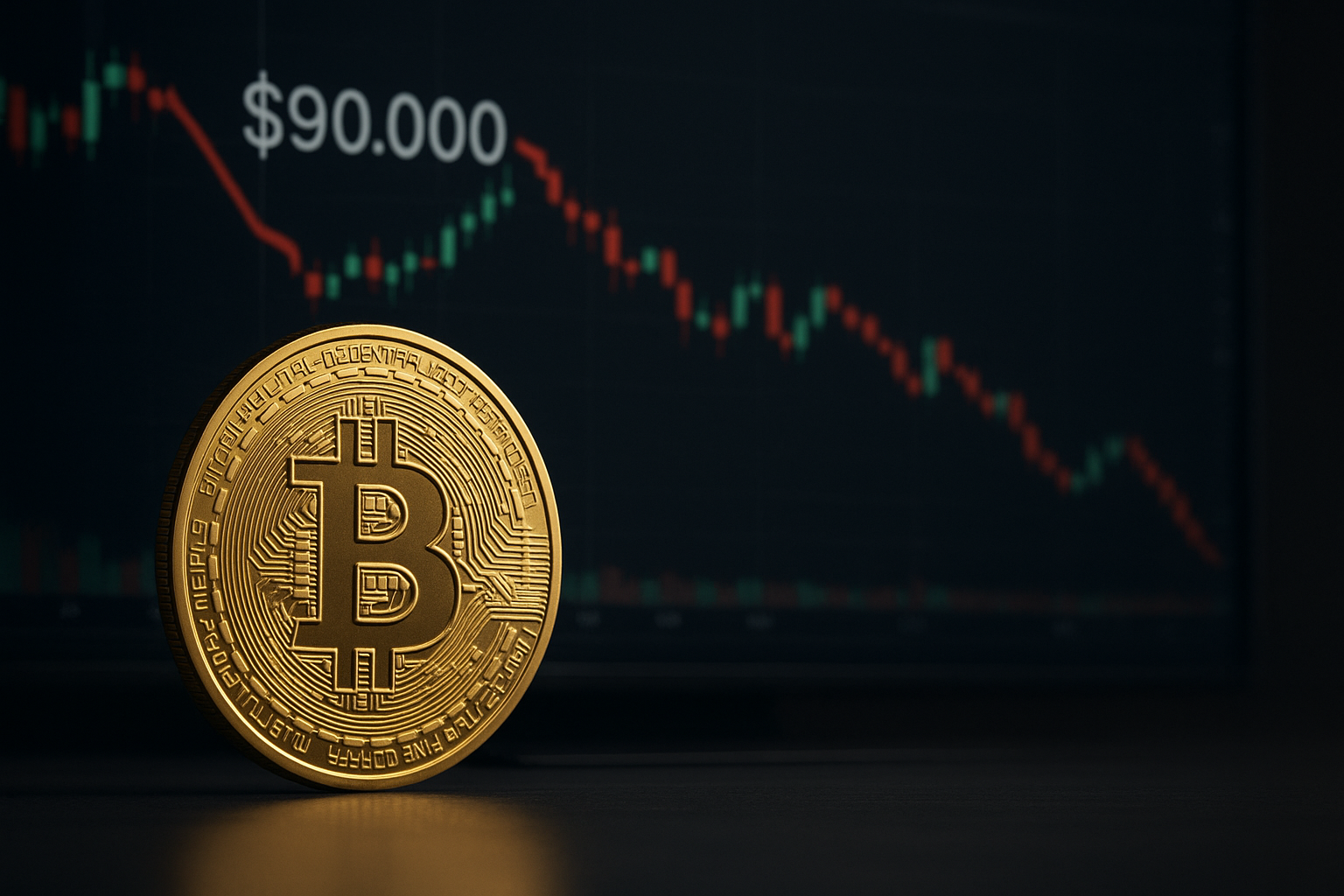
Bitcoin has dipped below the $90,000 mark—which, let's be honest, feels a bit like complaining that your private jet can only fly 4,000 miles instead of 4,500. Still, in the hyper-sensitive world of cryptocurrency, this pullback has investors on edge.
The post-halving euphoria that rocketed Bitcoin to stratospheric heights seems to be giving way to what market veterans euphemistically call a "healthy correction." I've watched these patterns repeat for years now, and there's always something fascinating about how quickly the dominant narrative can flip.
Just last week, crypto Twitter (or X, or whatever we're supposed to call it these days) buzzed with confident predictions about Bitcoin hitting $100,000 by summer. That nice, round number has served as a kind of psychological North Star for Bitcoin enthusiasts since the days when breaking $10,000 was considered miraculous.
What's driving this mood shift? Several factors seem to be at play.
First, there's simple technical resistance. Markets get weird around big, round numbers—it's why you see houses priced at $999,000 instead of $1 million. The approach to $100,000 created natural selling pressure as profit-takers cashed in.
Macroeconomic concerns are creeping back in, too. The Fed doesn't seem in any hurry to cut interest rates, and that higher-for-longer environment makes non-yielding assets like Bitcoin relatively less attractive. (Though try telling that to someone who's watched their Bitcoin holdings double this year while their savings account paid 0.01%.)
Then there's the ETF situation. Remember all that excitement when the spot Bitcoin ETFs launched earlier this year? That initial flood of institutional money has now settled into more of a steady stream. Markets always price in future growth, and some of that future has simply arrived.
Look, crypto markets have always operated in extreme cycles that make traditional markets seem as exciting as watching paint dry. A 10% Bitcoin drop barely warrants a headline anymore. Having covered these markets since 2017, I've seen traders completely unfazed by swings that would send stock market investors reaching for their blood pressure medication.
What's particularly worth noting is how these price movements create their own feedback loops. When prices drop, leveraged positions get liquidated, creating more selling pressure, triggering more liquidations... it's the same mechanism that drives prices up during bull runs, just in reverse.
Does this mean the bull market is toast? I wouldn't go that far.
Adoption metrics remain strong. Institutional interest hasn't disappeared. And historically, Bitcoin's path has never been a straight line—more like a heart monitor during a horror movie: dramatic spikes followed by terrifying plunges.
For the die-hard "HODLers" (that's "hold on for dear life" for the crypto uninitiated), these dips aren't crashes—they're shopping opportunities. Their conviction isn't built on day-to-day price action but on the belief that Bitcoin fundamentally reimagines money for the digital age.
Whether that thesis ultimately proves correct? That's still one of the most fascinating open questions in modern finance.
In the meantime, watching Bitcoin drop below $90,000 and calling it a "crash" seems a bit melodramatic. The asset is still up over 100% year-to-date, which in any other context would have investors popping champagne rather than doom-scrolling price charts.
But that's crypto for you—where even the downturns come with a touch of the absurd.


