
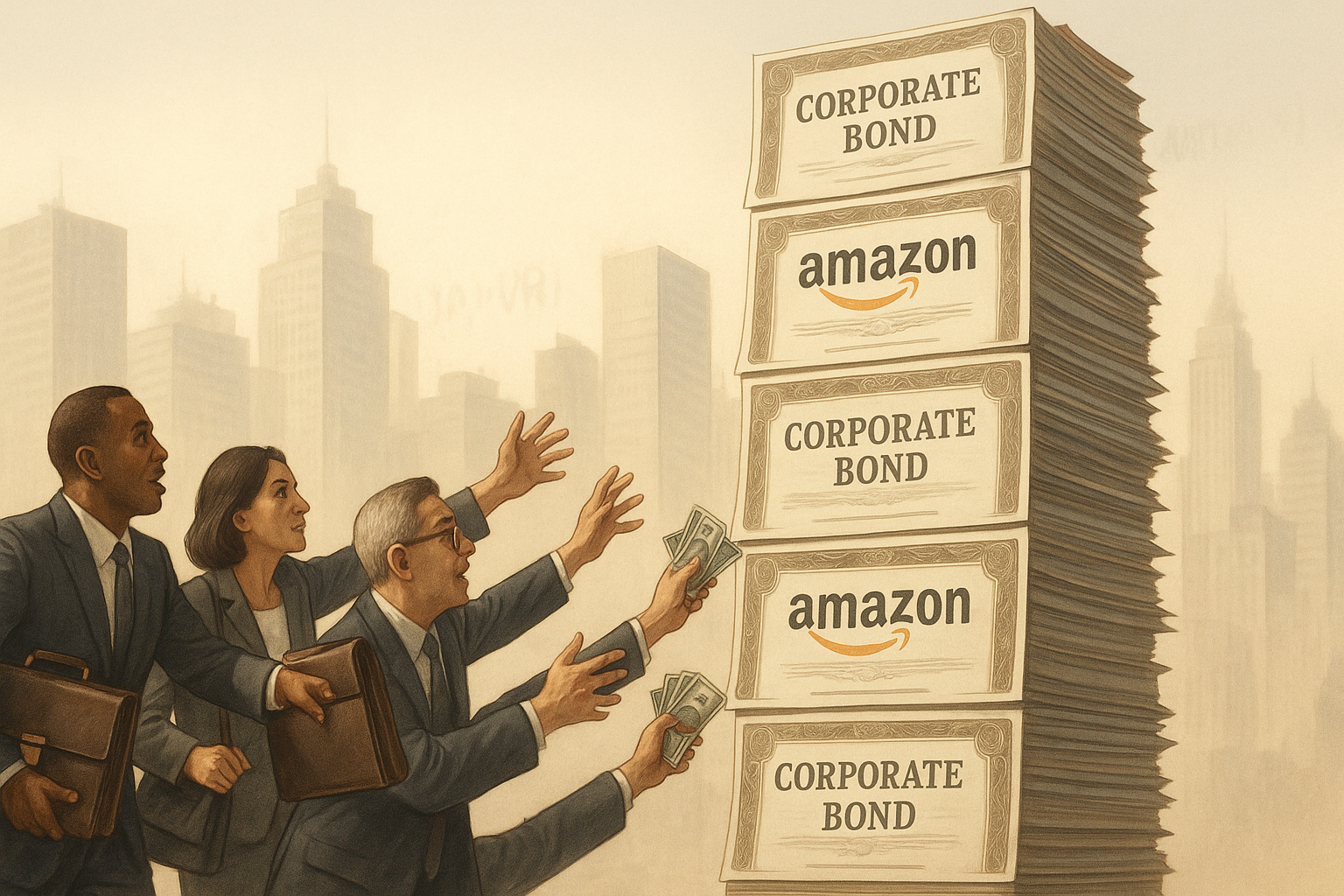
Amazon just pulled off the financial equivalent of showing up to a yard sale with a Black Card. The tech giant's recent bond sale generated an eye-popping $80 billion in orders—that's billion with a B—from investors practically begging to lend money to a company sitting on a cash pile that would make Scrooge McDuck blush.
Let me put this in perspective. Amazon generated $48 billion in free cash flow in the year ending March 2023. They're not exactly checking their account balance before ordering takeout.
So why is a company drowning in cash suddenly thirsty for debt? It's a fascinating question that speaks volumes about both Amazon's strategy and our current economic moment.
I've been tracking corporate debt markets since the pandemic began, and this move follows what you might call the "borrow when you don't need it" playbook. It's counterintuitive, but it makes perfect sense if you think about it. When you're flush with cash and profitable as all get-out, that's precisely when lenders offer their sweetest terms.
Look, even with interest rates higher than they've been in years, corporate spreads have been tightening. For a blue-chip borrower like Amazon, this creates what amounts to a golden opportunity to load up on relatively cheap financing.
The truly stunning part isn't that Amazon is issuing bonds—it's that demand outstripped supply by what appears to be roughly 8-to-1. Eighty billion dollars in orders! That's not just investors showing interest; that's a financial mosh pit of eager lenders shoving each other aside for the privilege of financing Amazon's next moves.
Remember the old days of tech? (I do—I covered the aftermath of the dot-com bust when companies hoarded cash like squirrels before winter.) Tech companies used to wear their debt-free balance sheets as badges of honor. My, how things have changed.
The Amazon of today is nothing like those speculative tech plays from yesteryear. It's a cash-generating machine with tentacles in e-commerce, cloud computing, advertising, and God knows what else they're cooking up in their R&D labs. When your business spits out so much cash that debt service barely registers as a line item, why not leverage up a bit?
What's particularly fascinating (at least to this financial journalist) is how differently the market treats tech's haves and have-nots. While some tech upstarts have been practically locked out of capital markets over the past year and a half, the aristocracy—your Amazons, Apples, and Microsofts—can still command extraordinary demand. It's the financial version of that annoying Matthew principle: to those who have, more shall be given.
This isn't just a financing event. It's a referendum on Amazon's place in the corporate cosmos.
And what does Amazon plan to do with all this borrowed money? They're keeping their cards close, but I'd wager it's some combination of infrastructure expansion, potential acquisitions, and—who knows—maybe even that long-rumored move into some new frontier that'll have us all saying "of course Amazon would get into that business" five years from now.
(I spoke with three bond market analysts about this deal, and they all used the word "strategic" at least twice in our conversations. Make of that what you will.)
The $80 billion order book tells us something else too—something important about market sentiment. Despite all the hand-wringing about tech valuations, debt investors are voting with their wallets that the long-term prospects for tech's biggest players remain exceptionally strong.
And in my experience, when equity markets and debt markets send conflicting signals? Smart money listens to the bond guys. They tend to do more homework.
So while Amazon continues its rain dance in a downpour, the rest of us can only watch in wonder. The company that started selling books online is now commanding the kind of financial respect once reserved for sovereign nations.
Not bad for a company that, technically speaking, doesn't even need the money.


