
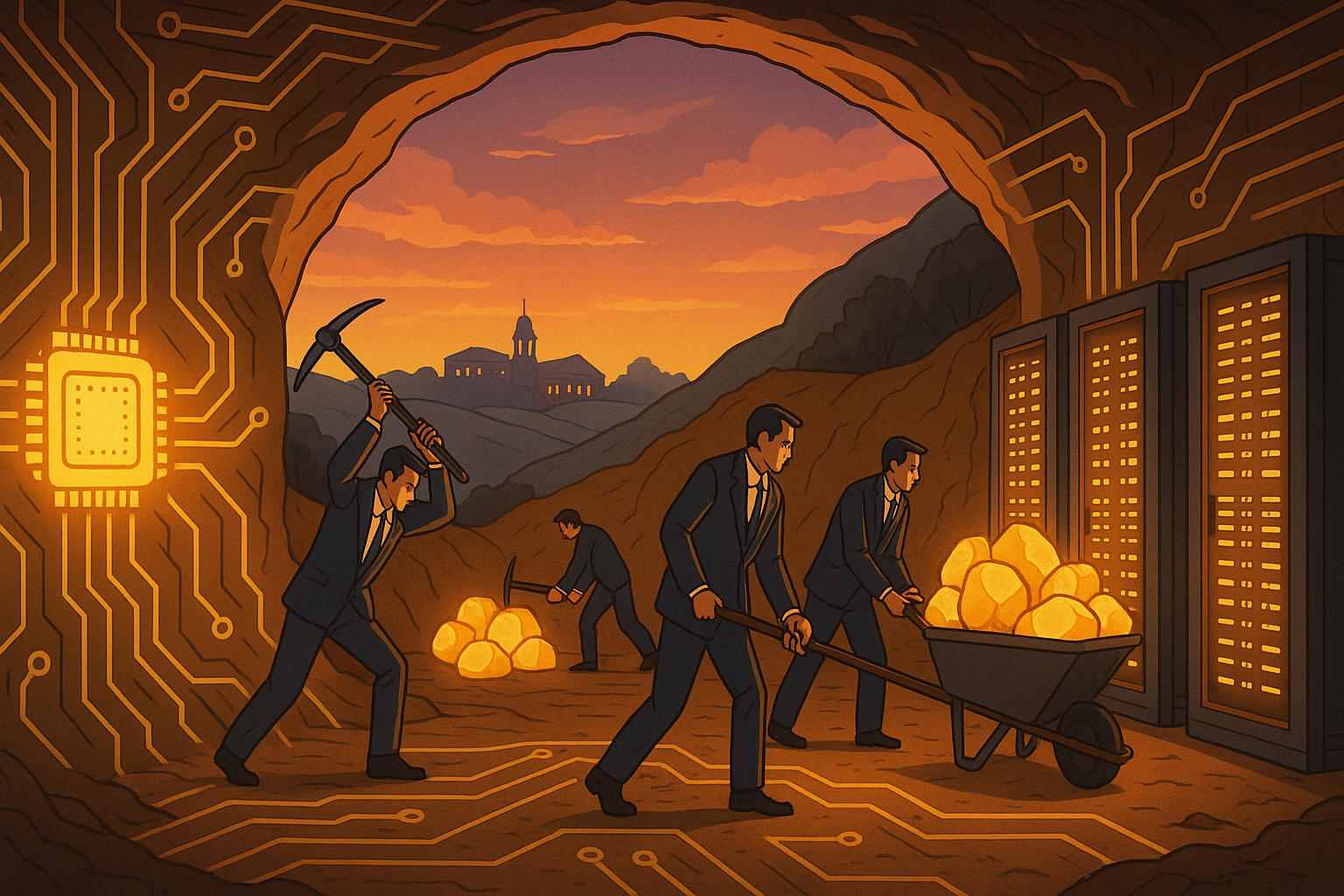
Meta's chief marketing officer Alex Schultz has entered the chat on tech's massive AI spending spree, describing the industry-wide investment boom as "aggressive, but not crazy" — a distinction that feels about as reassuring as hearing "slightly radioactive" or "minimally explosive."
The defense comes as Silicon Valley's biggest players burn through cash at a pace that would make a trust fund kid blush. Meta alone has earmarked somewhere between $35-40 billion for capital expenditures this year, with AI infrastructure eating up a substantial chunk of that figure.
Look, we've seen this movie before. Remember when 3D TV was supposed to revolutionize our living rooms? Or when Facebook dropped $2 billion on Oculus in 2014, convinced we'd all be strapping computers to our faces by now? (Granted, that particular bet is still playing out under the Meta rebrand, but you get my point.)
What's fascinating about Schultz's comments is the claim that Meta's AI investments have already "driven billions in revenue" through improvements to their content ranking systems. This hits at something important about the current AI spending frenzy that separates it from previous tech manias.
Some of these investments are delivering immediate operational benefits — better recommendation algorithms, enhanced user experiences, streamlined processes. Others represent massive bets on future applications and markets that may never materialize. It's a mix of concrete business improvements and Silicon Valley lottery tickets.
I've been covering tech investment cycles since before the iPhone existed, and there's always this tension between genuine innovation and herd mentality. No major tech company wants to be remembered as the one that missed the AI revolution. As one analyst told me last month at a conference in San Francisco, "These companies are more afraid of being left behind than they are of wasting billions."
The pressure to keep pace with competitors creates a self-reinforcing cycle that can cloud judgment. When everyone's dumping money into the same technology, standing back and asking "but does this make sense?" becomes career suicide for executives.
And then there's the energy question. Schultz's comment about AI prompting "productive conversations about energy" might be the understatement of the year. Training large language models consumes staggering amounts of electricity — by some accounts, OpenAI's GPT-4 used enough power during training to run 20,000 American homes for a year.
That's not a "conversation" about energy; that's a four-alarm fire for our electrical grid.
History suggests some of today's AI investments will eventually look brilliant while others will join Quibi and Google Glass in the tech industry's expensive hall of shame. The challenge for investors (and journalists like me) is figuring out which is which before the verdict becomes obvious.
In the meantime, "aggressive, but not crazy" feels like the perfect slogan for our current moment — less bombastic than "move fast and break things," more comforting than "burning unprecedented amounts of shareholder money on speculative technology."
I can already see it on hoodies throughout Menlo Park.
But hey, I still have a WeWork coffee mug somewhere, so what do I know?


