
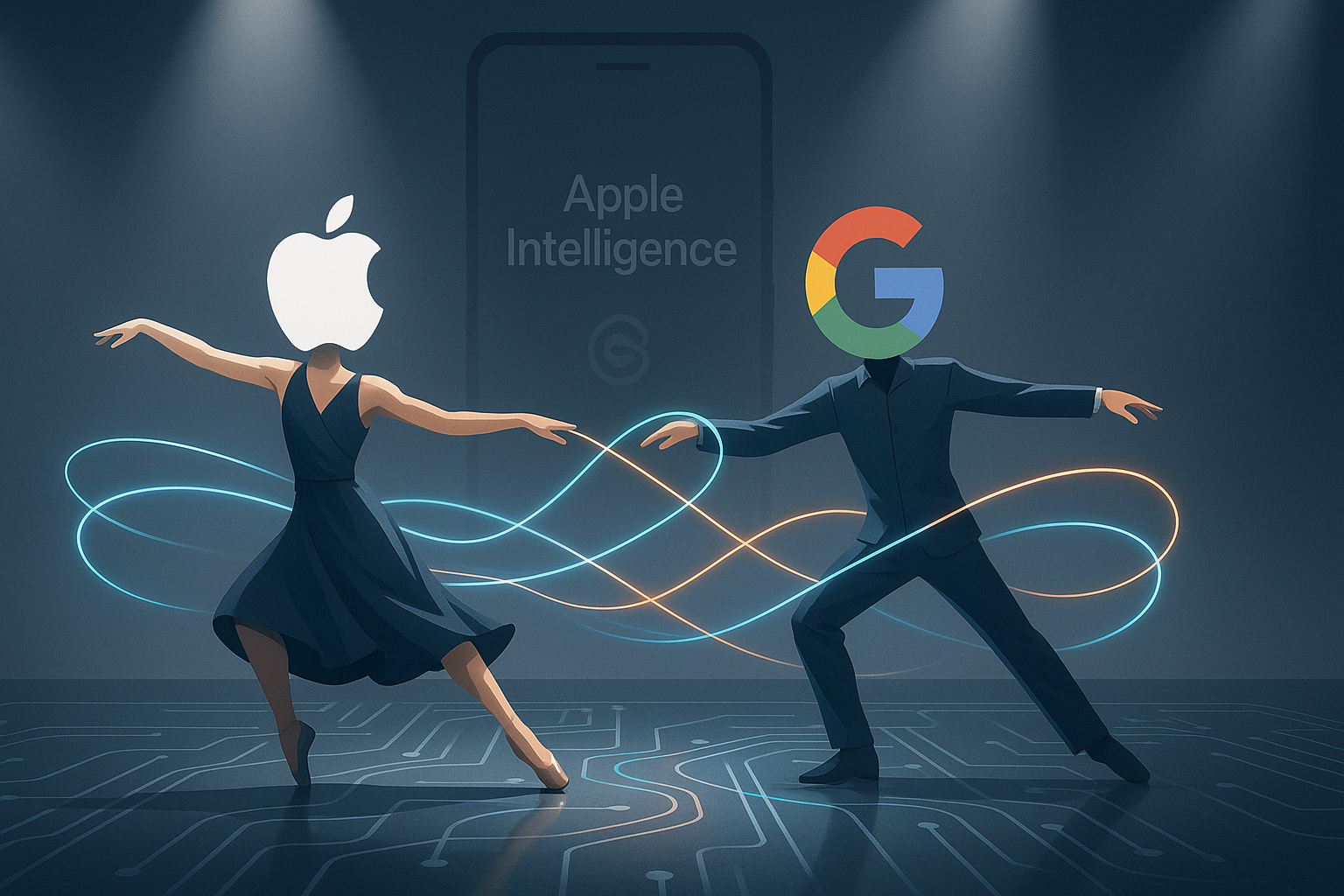
In what might be the tech industry's most intriguing courtship of the year, Apple is reportedly flirting with Google about licensing the Gemini large language model to power aspects of its upcoming Apple Intelligence features. This comes hot on the heels of earlier rumors about Apple cozying up to OpenAI for ChatGPT integration.
Look, the Apple-Google relationship has always been complicated. Frenemies doesn't begin to describe it. They compete fiercely in smartphones and services while Google shells out what's estimated to be $15-20 billion annually just to remain Safari's default search engine. It's like paying your rival rent to live in their house while trying to build a better one next door.
What's particularly fascinating about this potential partnership is what it reveals about Apple's AI strategy—or perhaps its lack of one until recently.
Having watched the AI revolution from the sidelines (with uncharacteristic caution for a company that once prided itself on innovation), Apple now finds itself in catch-up mode. The company that gave us the "Think Different" campaign is... well, thinking similarly to Microsoft, which opted to invest heavily in OpenAI rather than building everything in-house.
The economic reality is stark. Building competitive foundation models requires three things in abundance: massive data sets, extraordinary computing resources, and specialized AI talent. Apple has resources, certainly—but redirecting them quickly enough? That's another question entirely.
So why Google? And why now?
(I've spoken with several industry analysts who believe Apple is deliberately playing the field, evaluating multiple providers before making any final commitment.)
The irony here is delicious. Apple—the company whose famous 1984 commercial portrayed IBM as the oppressive monolith—now potentially becoming dependent on tech rivals for core functionality. Times change, I guess.
For Google, licensing Gemini makes perfect business sense. After pouring billions into AI research, they're looking for return on investment beyond just improving their own products. It's the classic "sell pickaxes during a gold rush" strategy... except these pickaxes cost millions to develop and run on thousands of specialized processors.
What does this mean for your iPhone? Potentially a more capable Apple Intelligence system at launch than would otherwise be possible. But it also means your interactions might be processed by Google's AI brain rather than an Apple-exclusive system.
The privacy implications are... complicated. Apple will doubtless implement rigorous protections—on-device processing where possible, anonymization techniques, contractual limitations. Still, it represents a philosophical shift for the company that made privacy a cornerstone of its brand identity.
Most telling is Apple's apparent hedging strategy. Talking to both OpenAI and Google suggests we might eventually see a multi-provider approach. Your Siri weather request might tap one AI system, while your photo editing leverages another.
This development also highlights just how dramatically AI has reshuffled power dynamics in tech. Ten years ago, who would have imagined Apple needing Google's AI capabilities this badly?
For investors watching from the sidelines, these negotiations represent the next phase in AI monetization. Beyond consumer applications and enterprise tools, the licensing of foundation models to competitors shows how the technology generates value in unexpected ways.
Whatever the outcome, one thing is clear: in the high-stakes AI race, even the most self-sufficient tech giants are finding that cooperation sometimes trumps competition. And that might be the most significant signal about where our technological future is heading.


