
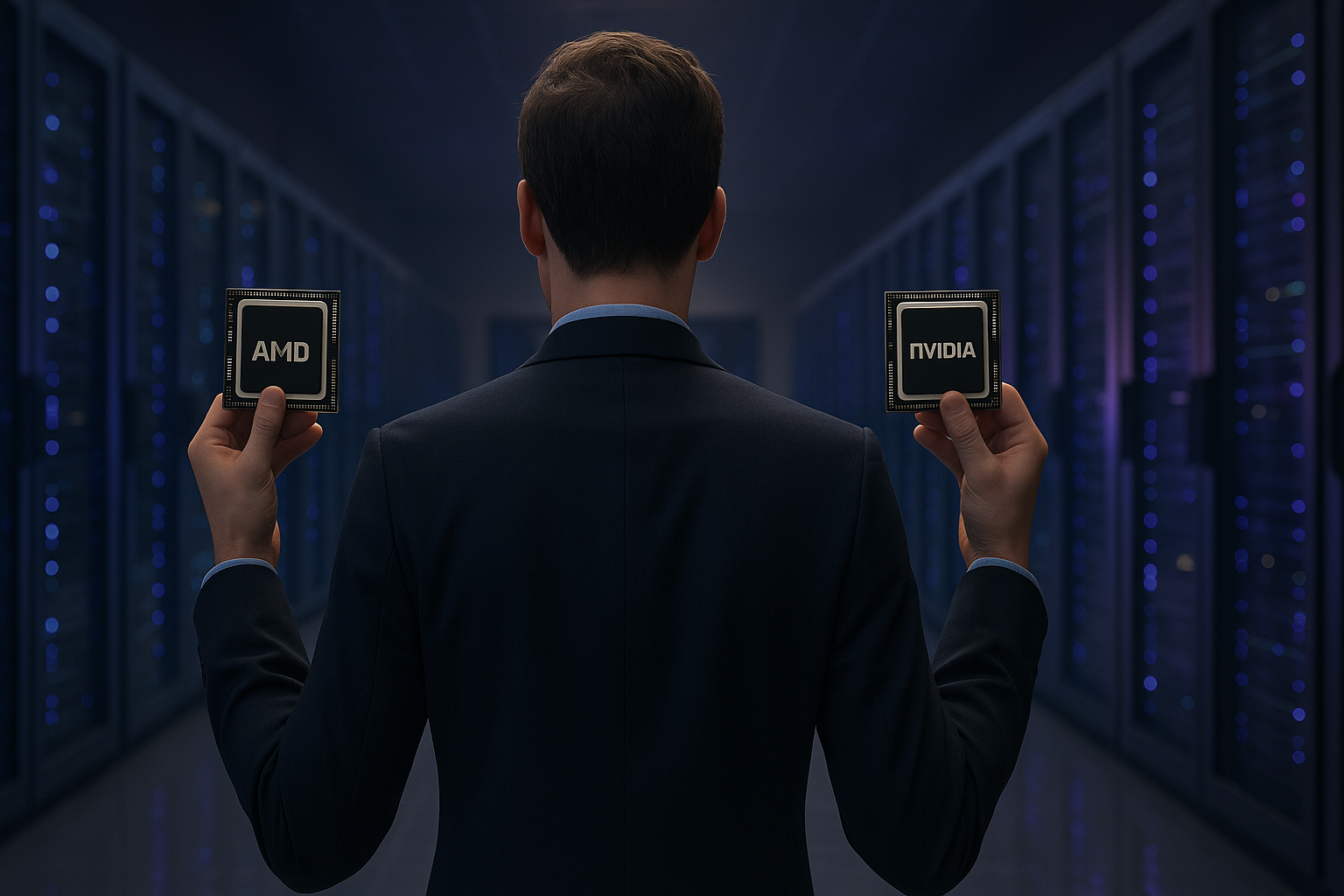
Lisa Su faces a make-or-break moment Tuesday as AMD reports earnings amid the AI gold rush that's transformed the semiconductor landscape. For investors riding this wave—particularly those with portfolios heavily tilted toward AMD and NVIDIA—the coming report represents that classic investor's dilemma we've all faced: cash out now after a spectacular run, or let it ride?
I've been tracking the AI investment narrative since its early stirrings, and what's unfolding now feels eerily reminiscent of previous tech manias. Except... different.
The hyperscaler spending projections for 2026 suggest there's plenty of runway ahead. But when Microsoft's Nadella starts hinting that compute might not be the bottleneck anymore—well, that's the kind of subtle signal that makes veteran tech investors straighten up in their chairs. Tech CEOs rarely dampen enthusiasm for anything they've been aggressively accumulating. It's like watching someone who's been hoarding gold suddenly mention, "You know, there are other interesting metals out there."
Look, market psychology around concentrated positions is fascinating. When you've got nearly 90% of your portfolio split between just two companies (as our investor does with AMD and NVIDIA), you're not just betting on AI's importance—you're betting these specific companies will capture the lion's share of value. And markets? They're fickle beasts.
The power infrastructure limitations might be the most underappreciated wrinkle in this whole saga. Digital ambitions are colliding with physical realities. You can design the most powerful AI chips imaginable, but if the grid can't handle them... well, electrons don't read investor presentations or care about your TAM expansion narratives.
(I've covered three different technology cycles since the early 2000s, and this pattern repeats—physical constraints eventually assert themselves against digital exuberance.)
For AMD specifically, the bar isn't just high—it's stratospheric. The stock has nearly doubled this year! That kind of performance creates expectations that can be nearly impossible to satisfy. The slightest hesitation in guidance language could trigger a sharp reversal. It's the curse of momentum investing—the faster you rise, the harder the market punishes any hint of deceleration.
The investor's NVIDIA trauma is palpable. Selling in January 2023 and missing a 10x move? Ouch. That's the kind of market scar that never fully heals. We've all been there, though perhaps not quite so dramatically. These experiences either make us better risk managers or push us toward revenge trading. Unfortunately, I've seen more of the latter.
What strikes me as particularly sensible is considering PEG ratios in this environment. The market has been surprisingly measured about pricing growth expectations, given the general exuberance. But—and this is crucial—PEG ratios can lead investors astray when growth trajectories are highly uncertain or when margin pressure looms due to intensifying competition.
The suggested portfolio redistribution (selling some AMD/NVIDIA and diversifying into TSM, MU, MRVL, VRT, and GOOG) represents a thoughtful middle ground. It maintains exposure to the AI narrative while acknowledging that even the strongest convictions deserve appropriate position sizing.
Because here's what they don't teach you in investing school: diversification isn't about owning stocks you don't believe in. It's about recognizing the gap between conviction and certainty.
Can you sleep at night with your current allocation? That's ultimately what matters. Market timing is a fool's errand, but risk management is non-negotiable. Perhaps the wisest approach is reducing positions to a size where neither outcome—selling too early or holding through a correction—would cause lasting regret.
After all, successful investing isn't about being right every time. It's about surviving to invest another day.


