
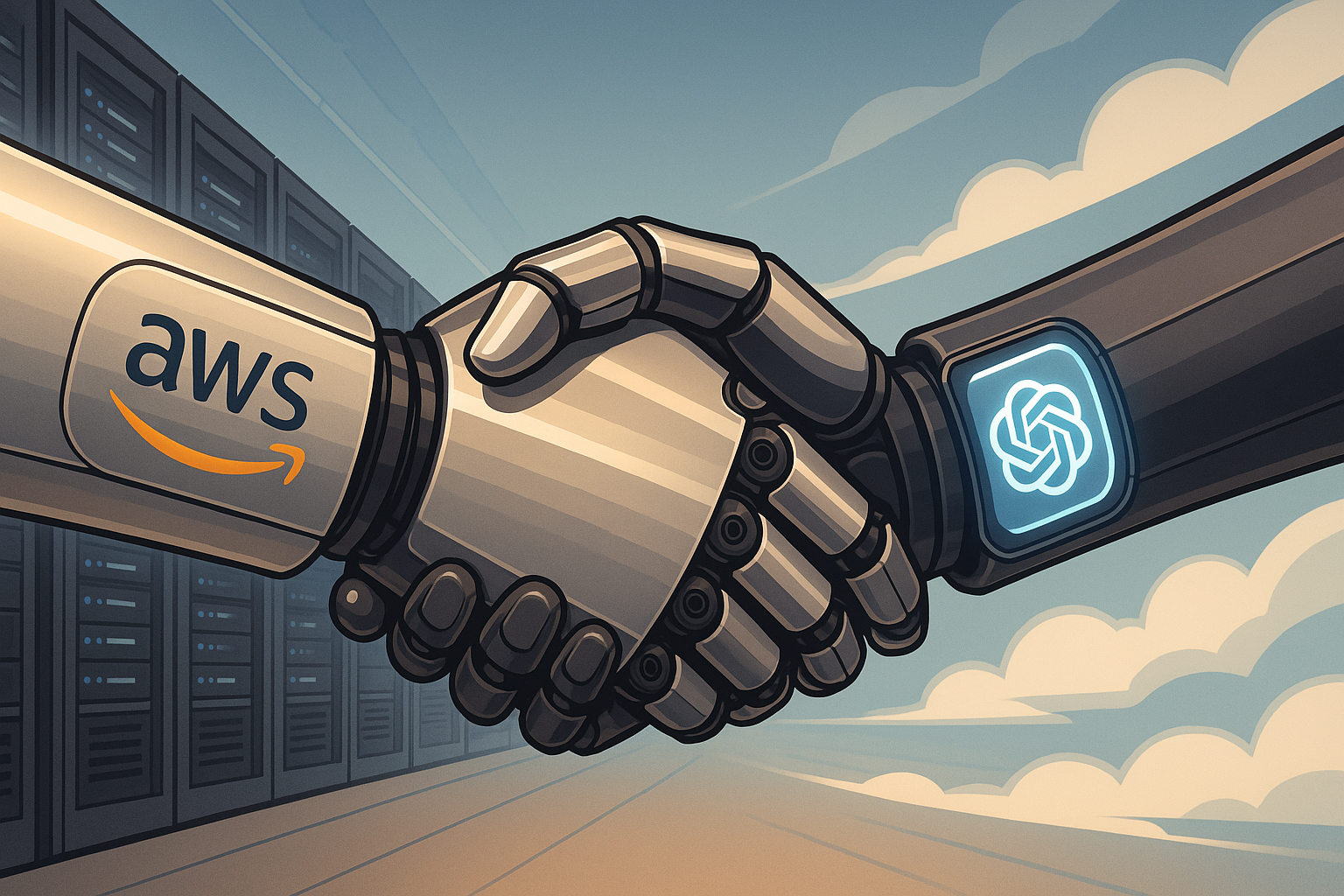
In the high-stakes world of tech partnerships, sometimes the numbers alone tell a story. $38 billion. That's the eye-watering figure attached to the new deal between Amazon and OpenAI—a partnership that feels both inevitable and surprising all at once.
The agreement, announced yesterday, represents OpenAI's first major dance with a cloud provider that isn't Microsoft. It's a significant move that has industry watchers (myself included) reassessing the competitive landscape of artificial intelligence deployment.
I've covered tech partnerships for years, and there's something different about this one. It's not just the dollar amount—though good grief, that's larger than the GDP of some small nations—but the strategic positioning it represents.
Here's what's happening: Amazon Web Services customers will now get access to OpenAI's technology, while Amazon itself plans to implement OpenAI's models across its sprawling business empire. Meanwhile, OpenAI gains access to Amazon's custom chips for training and running its increasingly complex models.
Look, we're witnessing the emergence of what you might call an "AI utility model"—these advanced capabilities becoming something like electricity or water, fundamental infrastructure layers flowing through multiple companies rather than remaining siloed within individual tech giants.
The structure feels deliberately intricate. Amazon becomes essentially a reseller of OpenAI's tech, particularly the GPT-4o model, while gaining computational firepower through those custom Trainium and Inferentia processors (which, let's be honest, most people have never heard of until now).
Is Amazon playing catch-up? Sure, to some extent. Microsoft's earlier and deeper $13 billion investment in OpenAI gave it a significant head start. Google's been developing its own models. AWS, despite its cloud dominance, needed a partner in this dance.
But there's a more nuanced story here. This partnership reveals something fascinating about AI development—it's become so resource-intensive and specialized that even the biggest tech companies are finding cooperation more practical than going it alone. The old "not invented here" syndrome is giving way to pragmatic collaboration.
(The market, predictably, responded with enthusiasm—Amazon shares ticked upward on the news announcement.)
For OpenAI, this represents a major step toward becoming the standard AI layer for enterprise computing. By partnering with both Microsoft and Amazon, they're effectively covering enormous ground in the cloud market. It's a bit like befriending both the popular kids at school—suddenly you've got the social hierarchy covered.
The timing feels significant too. As regulatory scrutiny intensifies and competitors like Anthropic gain momentum, there's a land grab happening for AI infrastructure positioning. This deal helps cement OpenAI's place regardless of which cloud provider ultimately captures the most market share.
I spoke with several industry analysts yesterday who highlighted the interdependence this creates. What happens if the relationship sours? The deep technical integration suggests neither party can easily walk away—a calculated risk on both sides.
What we're really seeing is the industrialization of AI—transitioning from research curiosity to fundamental business infrastructure. The companies positioning themselves as utilities in this new paradigm stand to capture enormous value.
Whether that justifies $38 billion... well, that's the multi-billion-dollar question, isn't it? In the current environment of AI exuberance, it almost seems conservative.
One thing's certain—Microsoft now has to reconsider its competitive advantage. Their deep OpenAI relationship has been a key differentiator for Azure. Now Amazon has similar access. Will this dilute Microsoft's edge? Will customers see less reason to choose Azure over AWS for AI workloads?
Having tracked cloud competition since AWS first dominated the space, I can tell you the dynamics just got considerably more interesting.
In the end, tech partnerships like this one resemble celebrity marriages—flashy, expensive, and perpetually questioned about their longevity. Unlike most celebrity pairings, though, this one might fundamentally change how businesses operate worldwide.
At the very least, it'll make those quarterly earnings calls worth tuning into.


